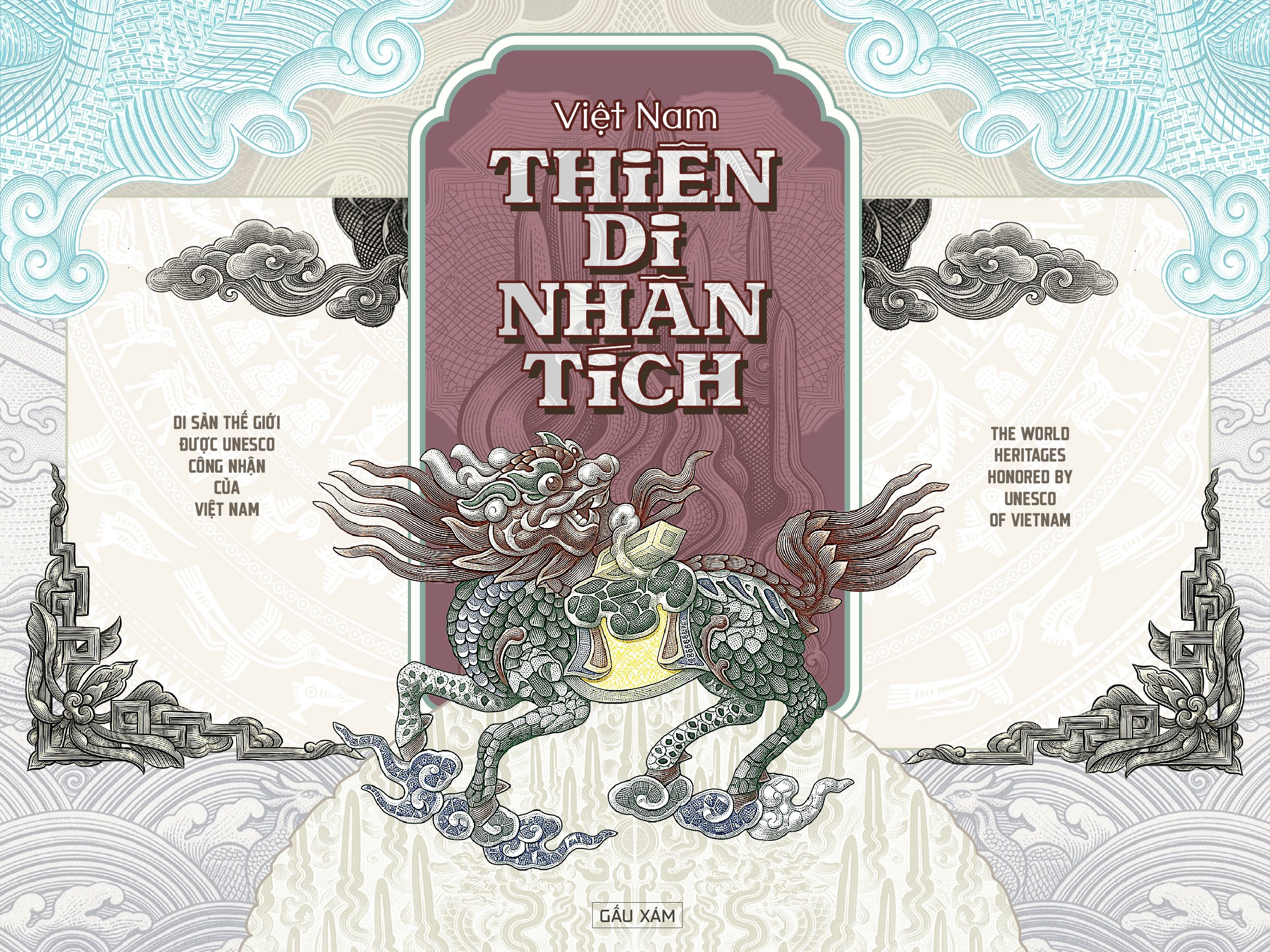
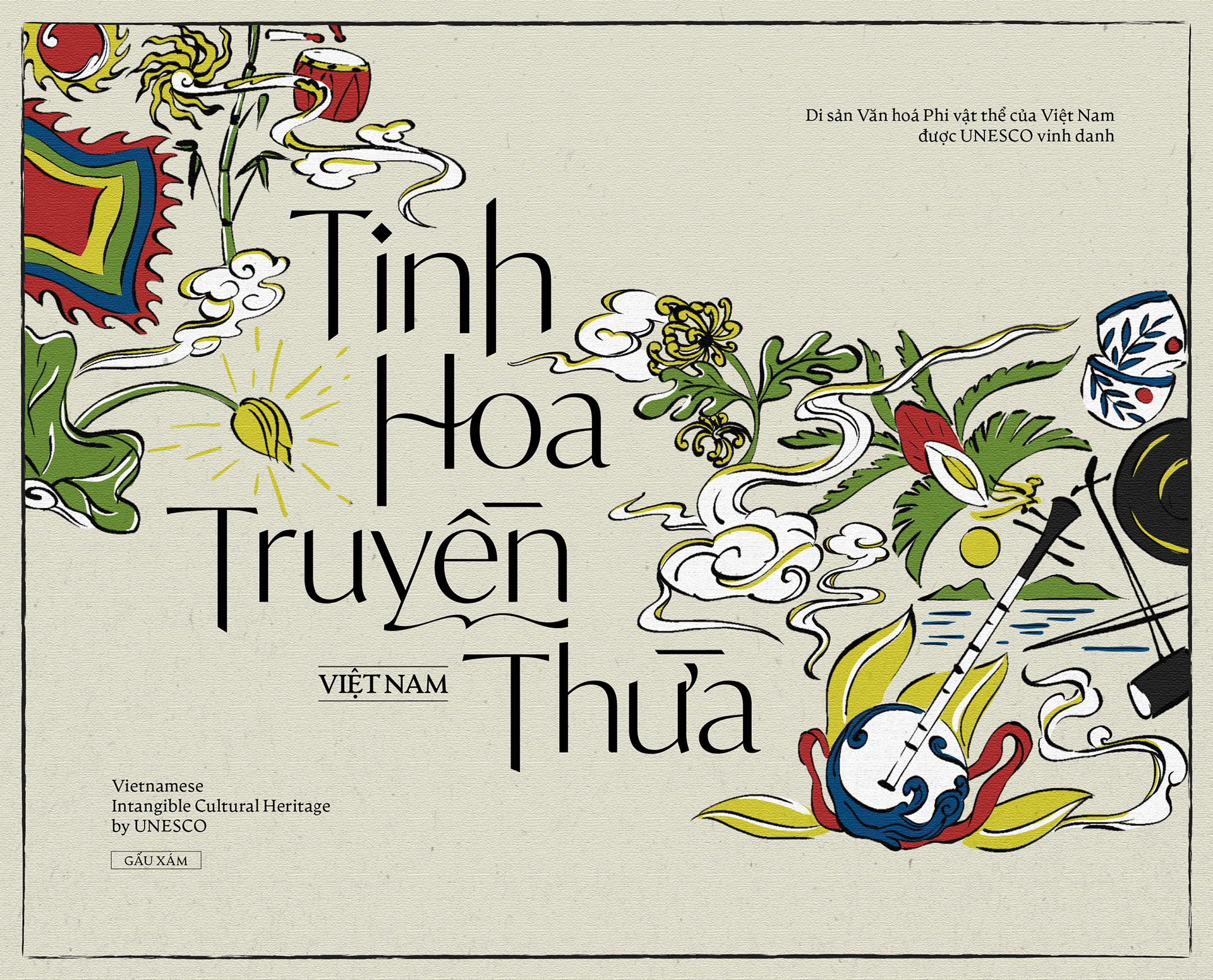
Việt Nam Tinh Hoa Truyền Thừa
The Inherited Cultural Quintessence of Vietnam
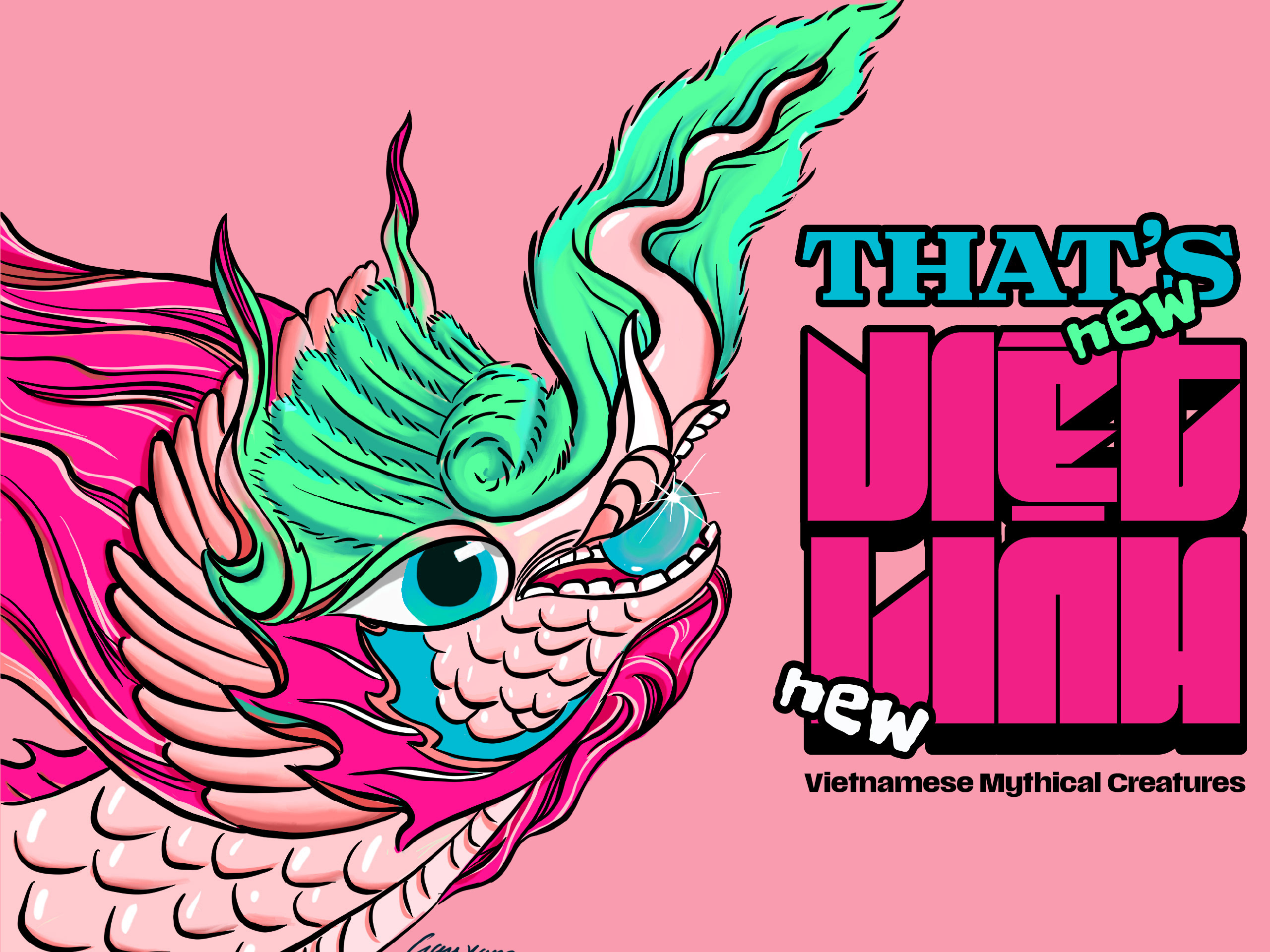
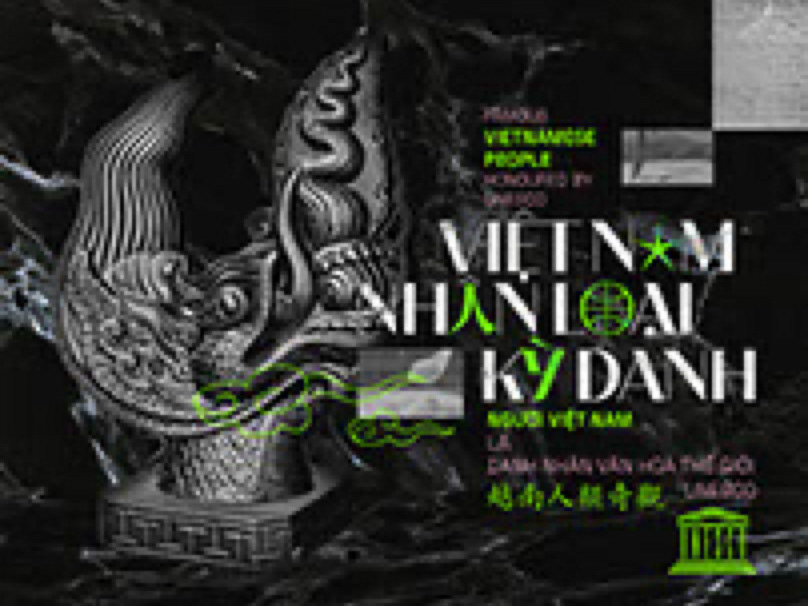
This is an inspiring visual design project that celebrates Vietnam’s intangible cultural heritage recognized by UNESCO. Through this work, I aim to breathe new life into traditional Vietnamese arts, transforming them into a modern visual language that resonates with contemporary audiences. Inspired by folk motifs, the rhythm of calligraphy, and the vibrancy of everyday life, the project reimagines ancient beauty in a lively, modern graphic form.
Each piece encapsulates the spirit of folk literature, performing arts, handicrafts, and rituals passed down through generations — not only showcasing the beauty of heritage but also reflecting the pride and resilient strength of Vietnamese identity. By blending historical symbols with modern typography and composition, I aspire to honor the past and keep it alive in the present.
The visual structure of the project is designed in a circular form, with each segment representing a different heritage. Together, they form an endless loop — a metaphor for the inseparable connection between culture, history, and the spiritual life of the Vietnamese people. It symbolizes the eternal cycle of inheritance and renewal, keeping the nation’s soul ever vibrant.
This project is not merely a tribute; it is a bridge between past and present, emotion and intellect — breathing new life into tradition through design, and reminding us that what we inherit is not only culture but the very essence of who we are.
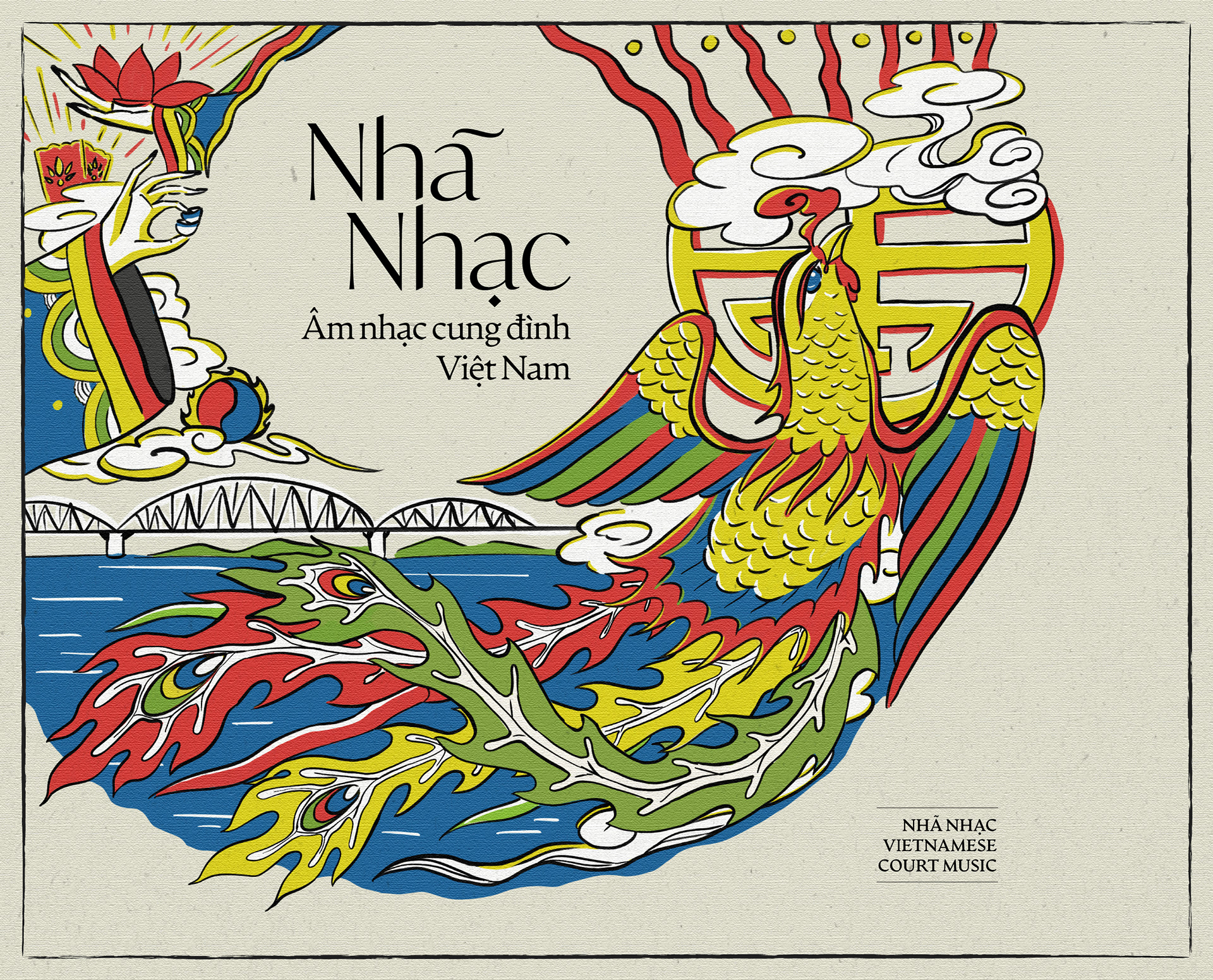
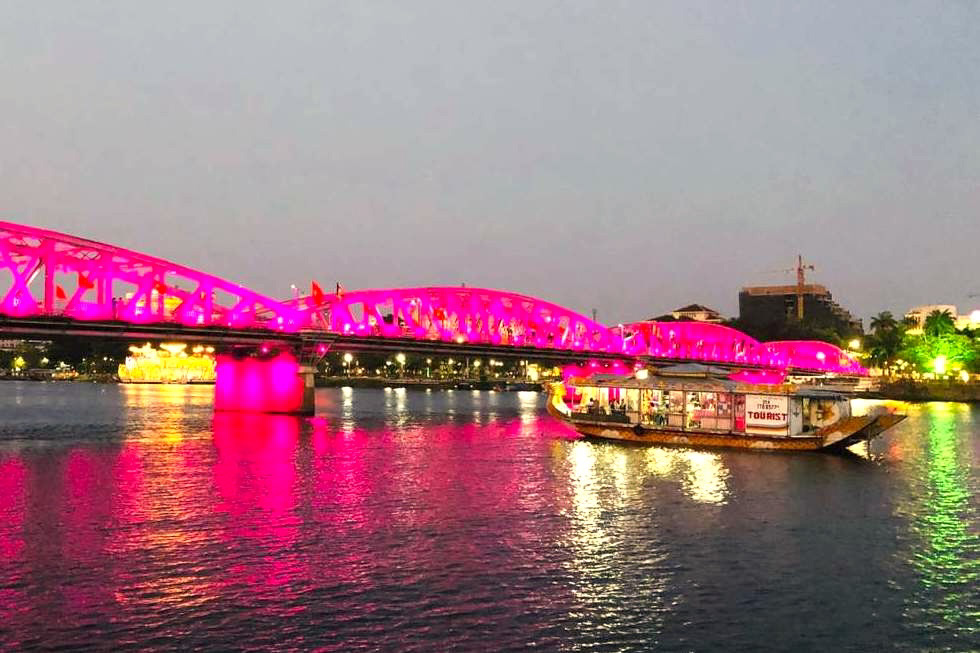
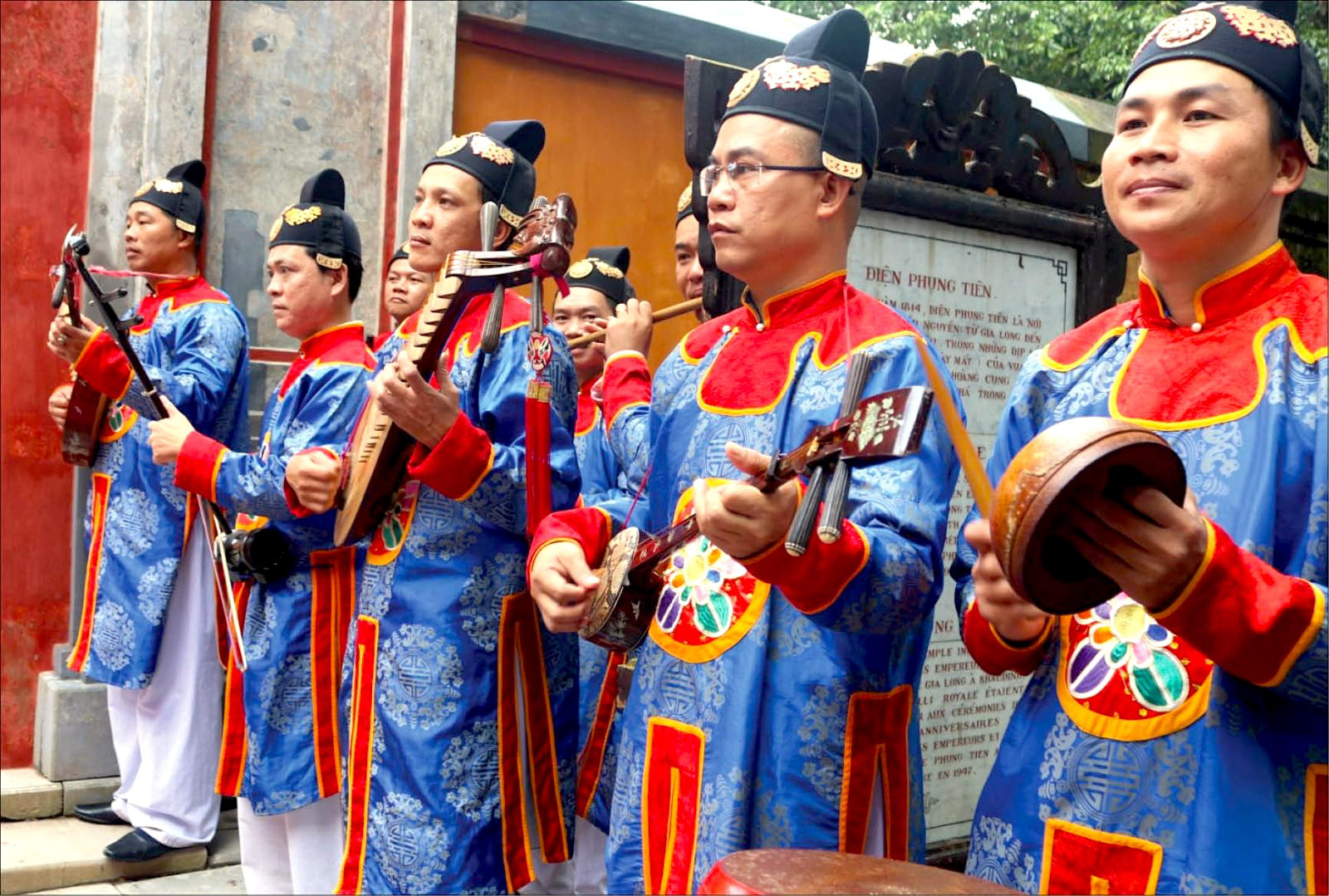
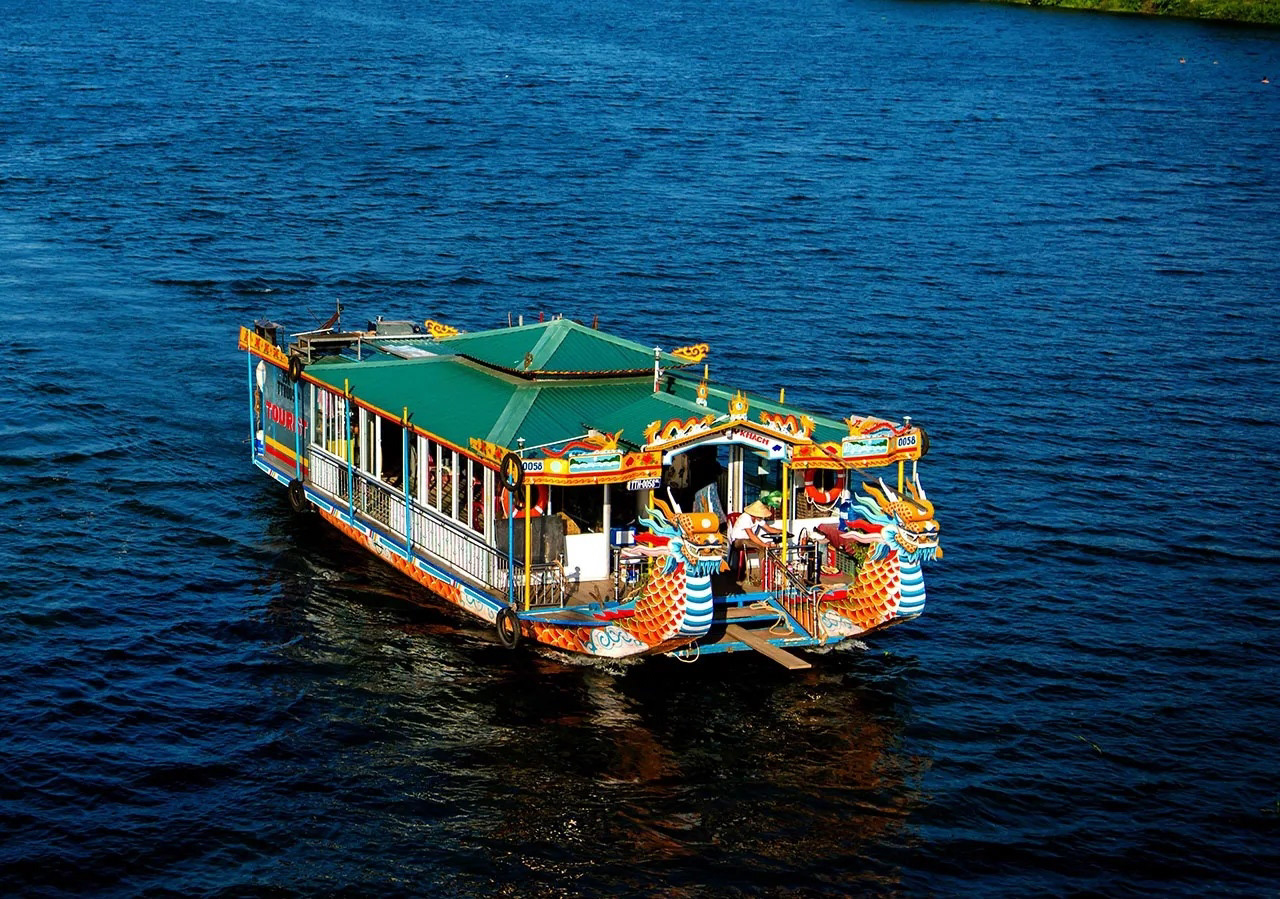
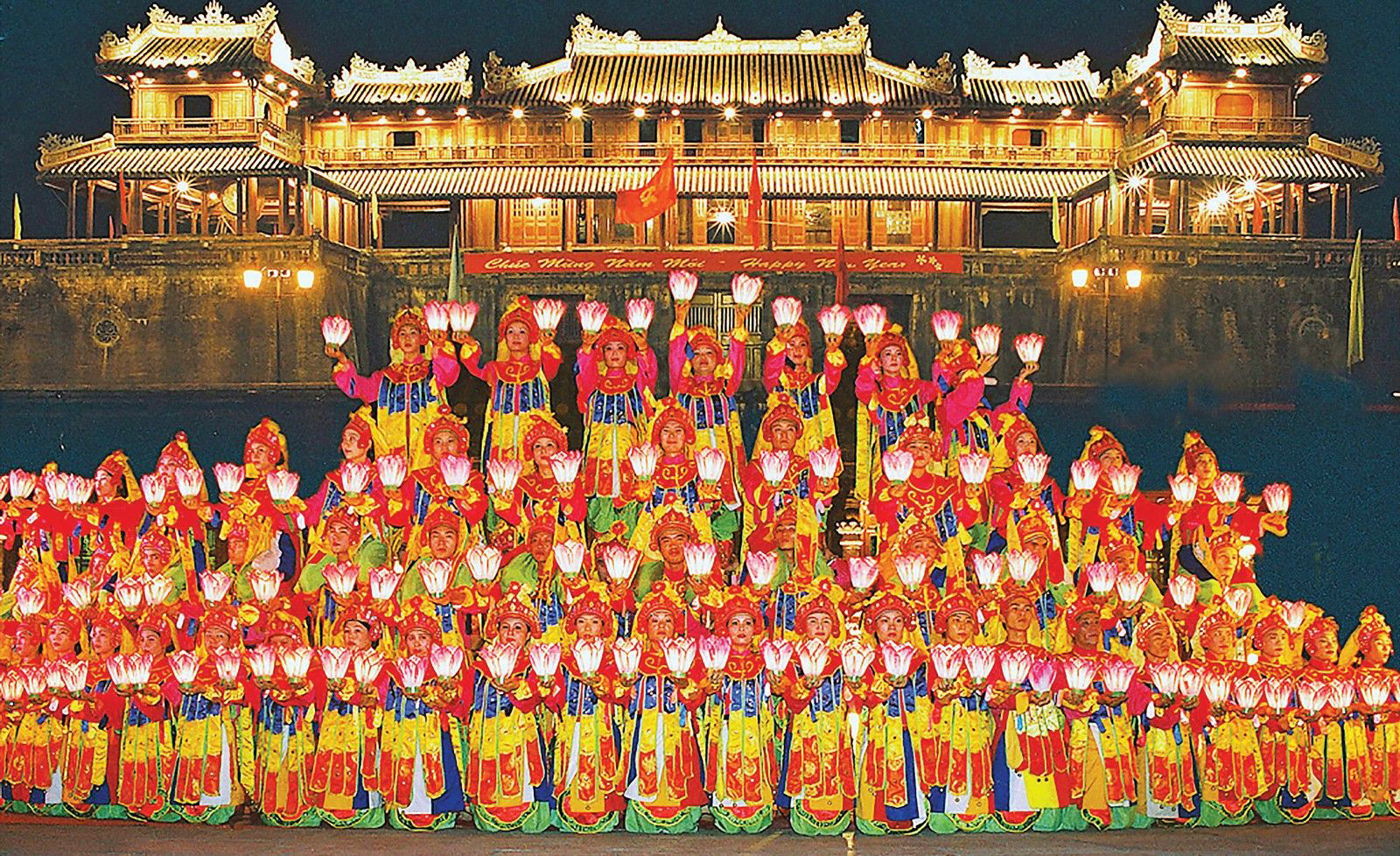
Inscribed in 2008 on the Representative List of the Intangible Cultural Heritage of Humanity (originally proclaimed in 2003)
Nha Nhac, meaning “elegant music”, refers to a broad range of musical and dance styles performed at the Vietnamese royal court from the fifteenth to the mid-twentieth century. Nha Nhac was generally featured at the opening and closing of ceremonies associated with anniversaries, religious holidays, coronations, funerals and official receptions. Among the numerous musical genres that developed in Vietnam, only Nha Nhac can claim a nationwide scope and strong links with the traditions of other East Asian countries. Nha Nhac performances formerly featured numerous singers, dancers and musicians dressed in sumptuous costumes. Large-scale orchestras included a prominent drum section and many other types of percussion instruments as well as a variety of wind and string instruments. All performers had to maintain a high level of concentration since they were expected to follow each step of the ritual meticulously.
Nha Nhac developed during the Le dynasty (1427-1788) and became highly institutionalized and codified under the Nguyen monarchs (1802-1945). As a symbol of the dynasty’s power and longevity, Nha Nhac became an essential part of the court’s many ceremonies. However, the role of Nha Nhac was not limited to musical accompaniment for court rituals: it also provided a means of communicating with and paying tribute to the gods and kings as well as transmitting knowledge about nature and the universe.
The events that shook Vietnam in the twentieth century – especially the fall of the monarchy and the decades of war – seriously threatened the survival of Nha Nhac. Deprived of its court context, this musical tradition lost its original function. Nevertheless, the few surviving former court musicians continue to work to keep the tradition alive. Certain forms of Nha Nhac have been maintained in popular rituals and religious ceremonies and serve as a source of inspiration for contemporary Vietnamese music.
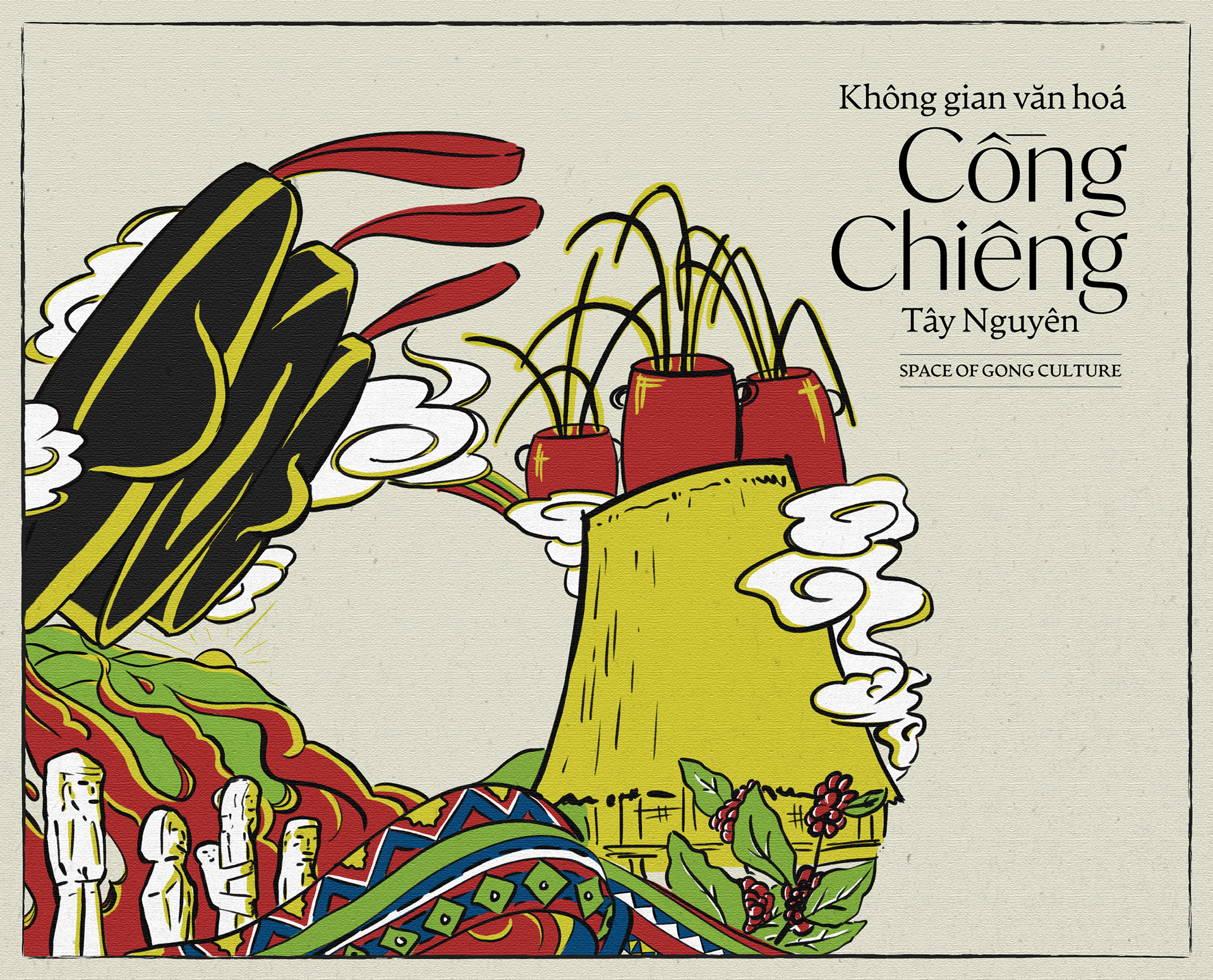
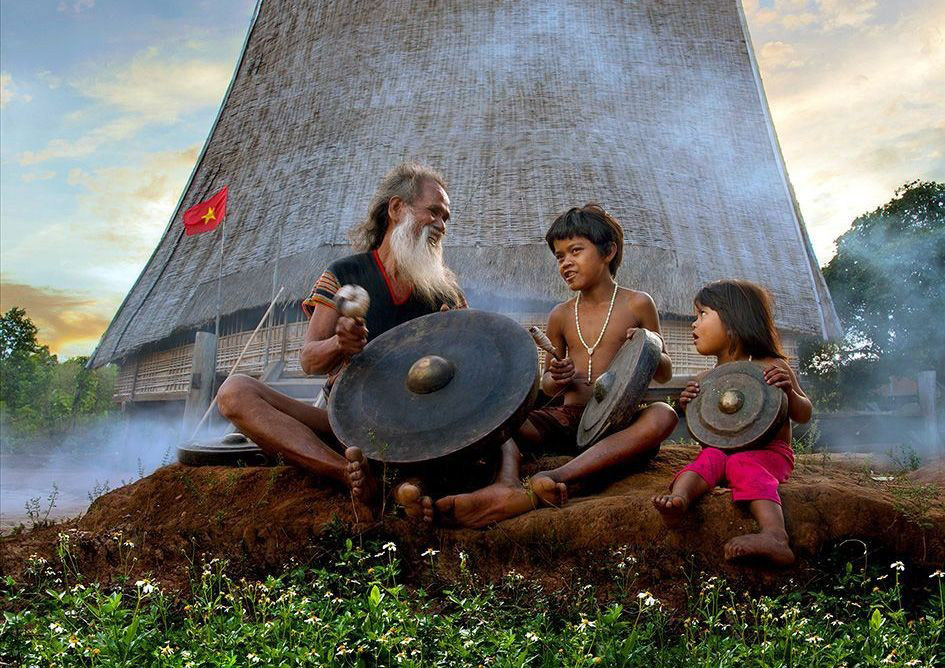
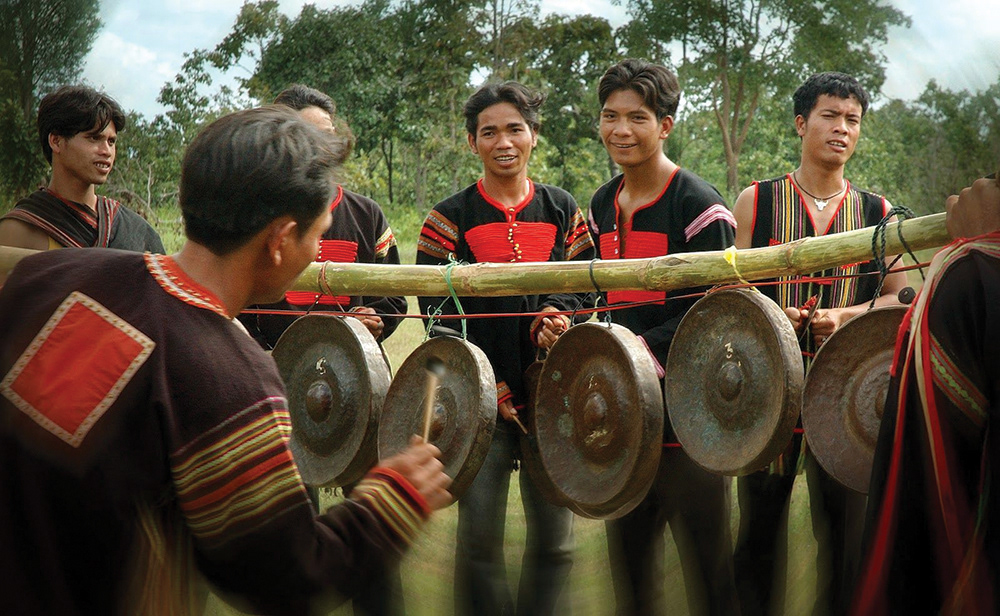
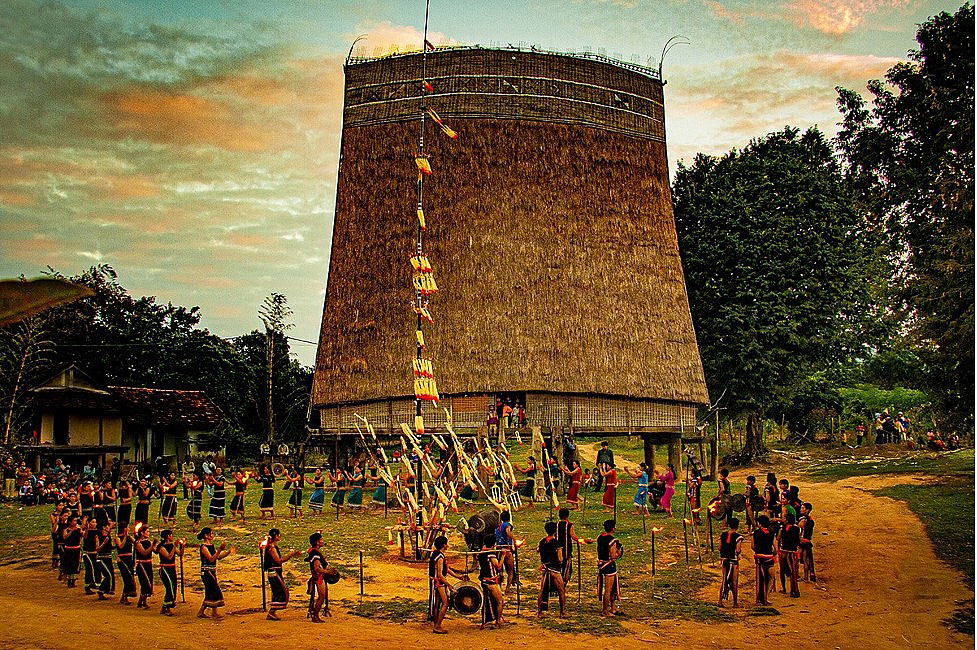

Inscribed in 2008 on the Representative List of the Intangible Cultural Heritage of Humanity (originally proclaimed in 2005)
The cultural space of the gongs in the central highlands of Vietnam covers several provinces and seventeen Austro-Asian and Austronesian ethno-linguistic communities. Closely linked to daily life and the cycle of the seasons, their belief systems form a mystical world where the gongs produce a privileged language between men, divinities and the supernatural world. Behind every gong hides a god or goddess who is all the more powerful when the gong is older. Every family possesses at least one gong, which indicates the family’s wealth, authority and prestige, and also ensures its protection. While a range of brass instruments is used in the various ceremonies, the gong alone is present in all the rituals of community life and is the main ceremonial instrument.
The manner in which the gongs of Vietnam are played varies according to the village. Each instrumentalist carries a different gong measuring between 25 and 80 cm in diameter. From three to twelve gongs are played by the village ensembles, which are made up of men or women. Different arrangements and rhythms are adapted to the context of the ceremony, for example, the ritual sacrifice of the bullocks, the blessing of the rice or mourning rites. The gongs of this region are bought in neighbouring countries, and then tuned to the desired tone for their own use.
Economic and social transformations have drastically affected the traditional way of life of these communities and no longer provide the original context for the Gong culture. Transmission of this way of life, knowledge and know-how was severely disrupted during the decades of war during the last century.Today, this phenomenon is aggravated by the disappearance of old craftsmen and young people’s growing interest in Western culture. Stripped of their sacred significance, the gongs are sometimes sold for recycling or exchanged for other products.
Inscribed in 2009 on the Representative List of the Intangible Cultural Heritage of Humanity
© 2008 Vietnam Institute of Culture and Arts Studies
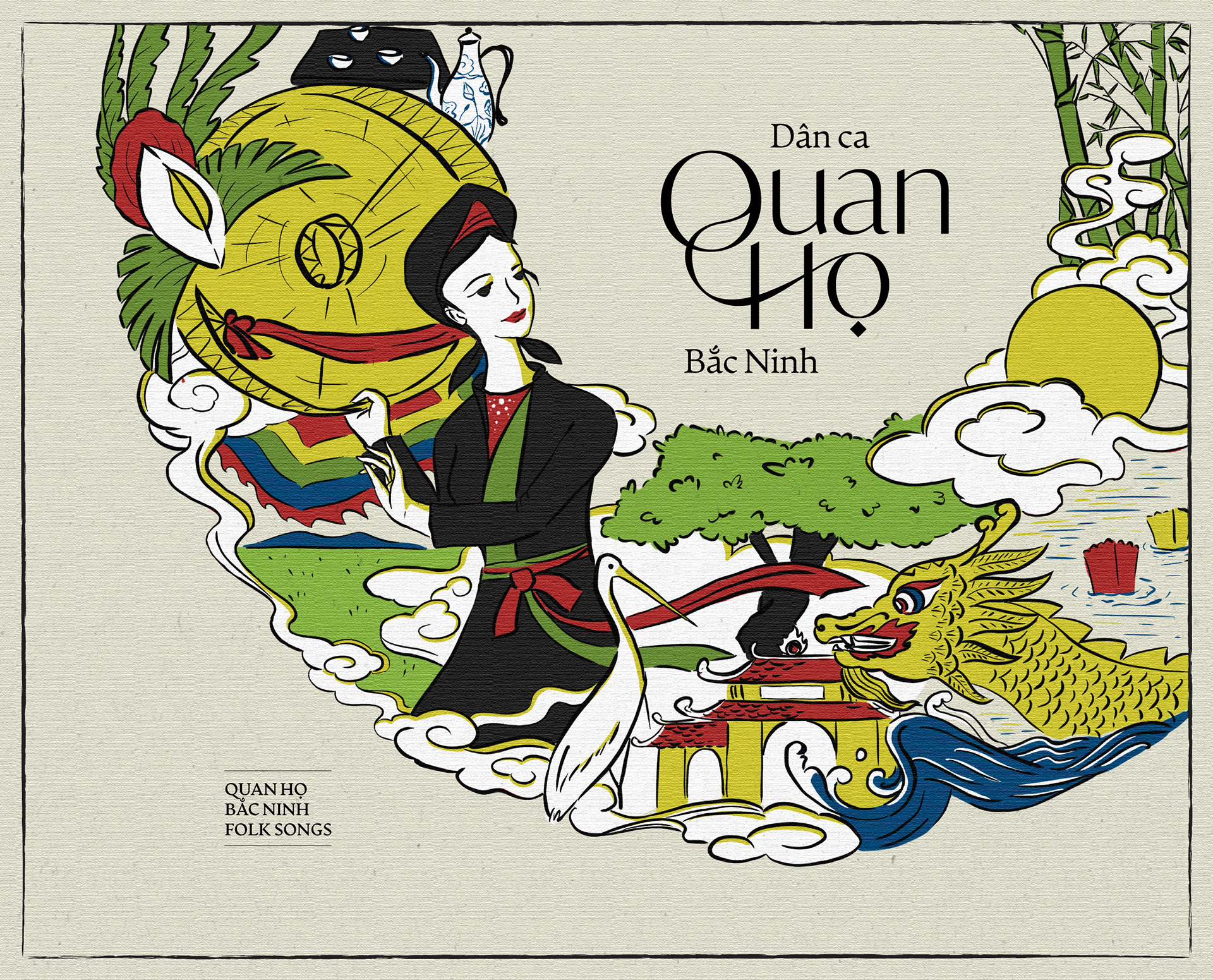
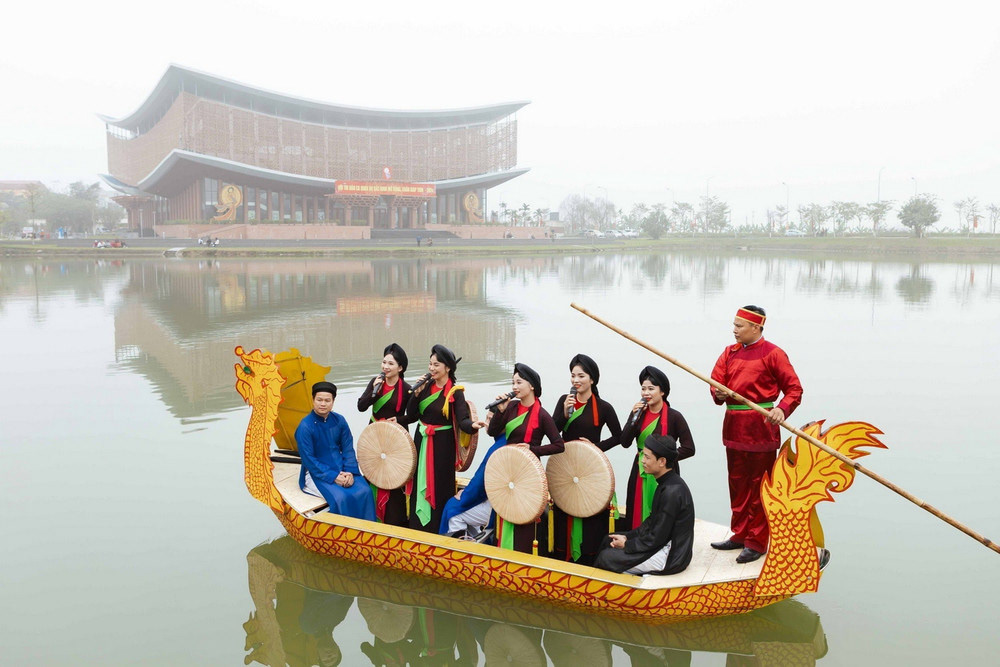
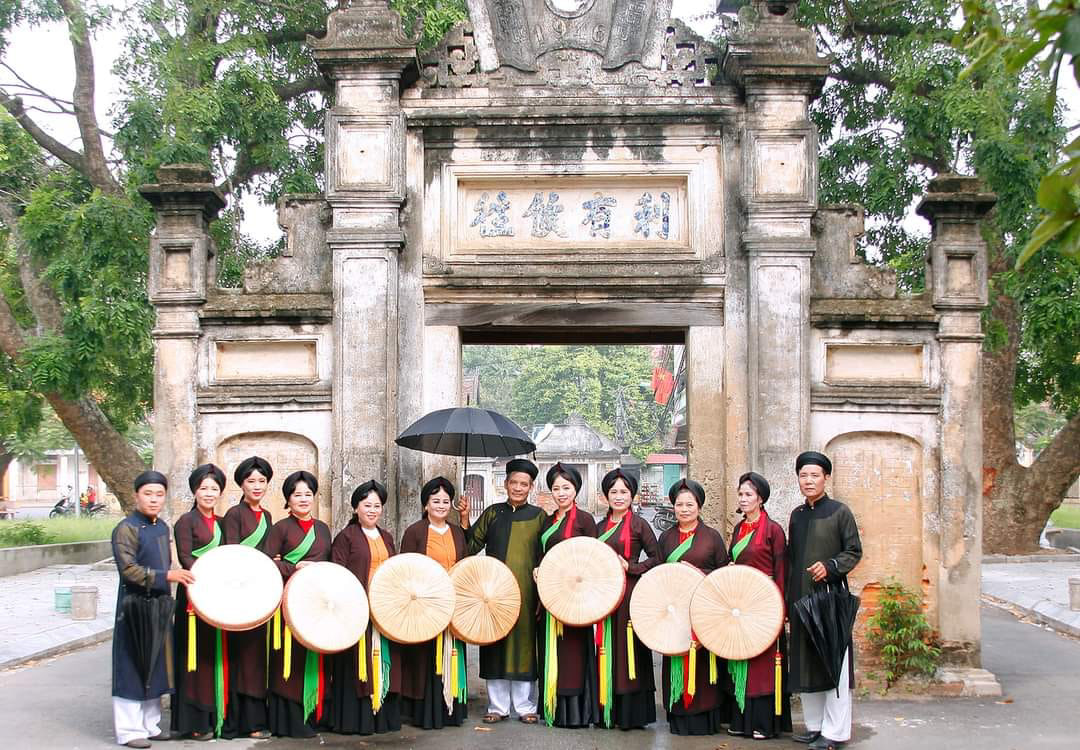
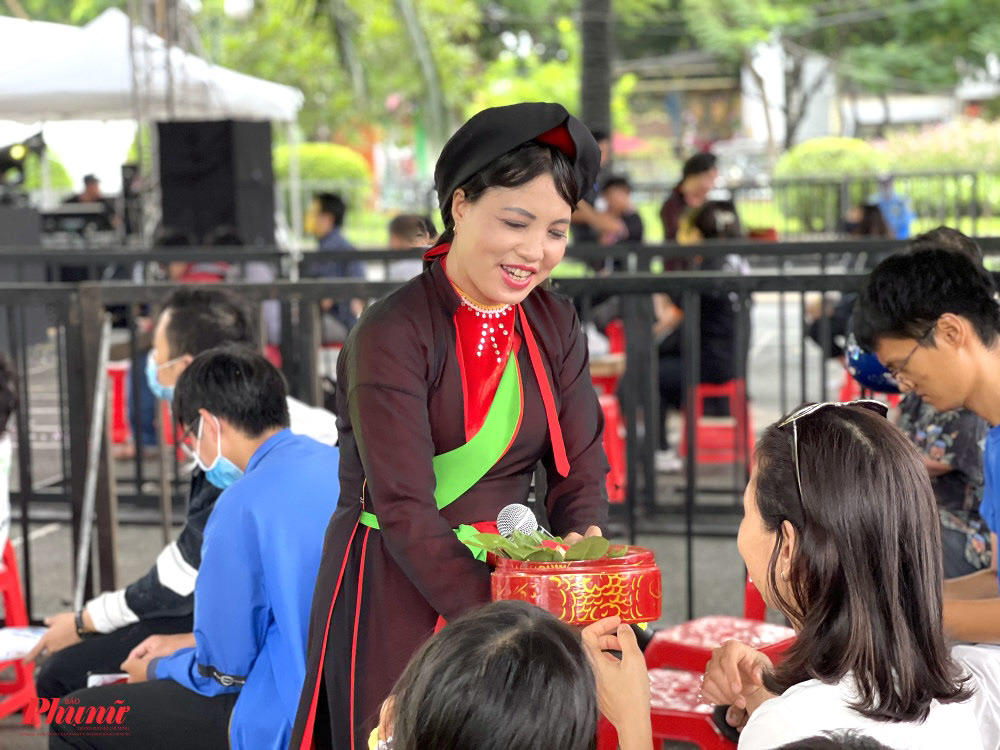
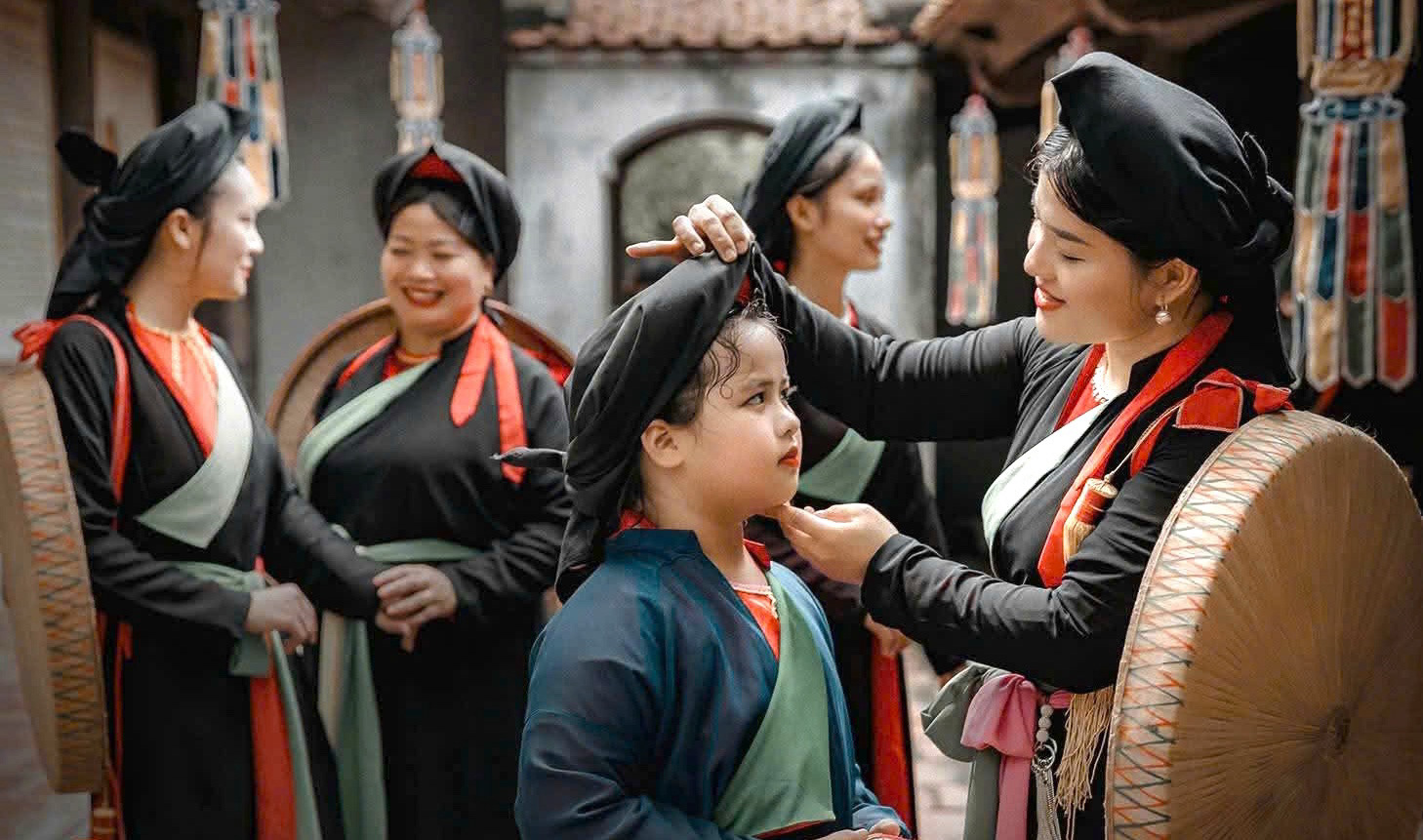
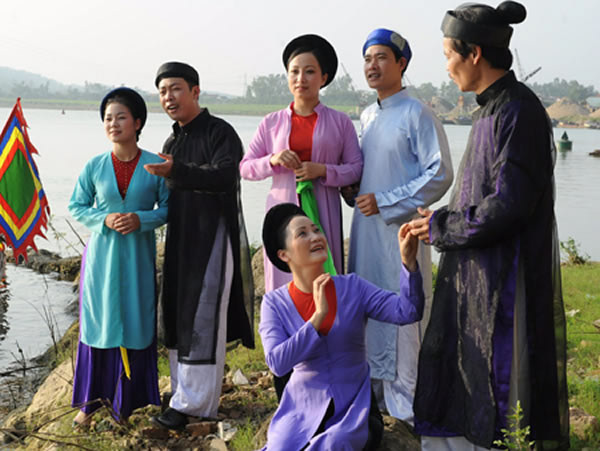
In the provinces of Bắc Ninh and Bắc Giang in northern Viet Nam, many of the villages are twinned, reinforcing their relationship through social customs such as Quan họ Bắc Ninh folk songs. The songs are performed as alternating verses between two women from one village who sing in harmony, and two men from another village who respond with similar melodies, but with different lyrics. The women traditionally wear distinctive large round hats and scarves; the men’s costumes include turbans, umbrellas and tunics. The more than 400 song lyrics, sung with 213 different melody variations, express people’s emotional states of longing and sadness upon separation, and the happiness of the meeting of lovers, but custom forbids marrying a singing partner. Quan họ singing is common at rituals, festivals, competitions and informal gatherings, where guests will perform a variety of verses for their hosts before singing farewell. Younger musicians of both sexes may practice the four singing techniques – restrained, resonant, ringing and staccato – at parties organized around singing. Quan họ songs express the spirit, philosophy and local identity of the communities in this region, and help forge social bonds within and between villages that share a cherished cultural practice.
Inscribed in 2009 on the List of Intangible Cultural Heritage in Need of Urgent Safeguarding
© 2008 Vietnamese Institute for Musicology, Hanoi, Vietnam
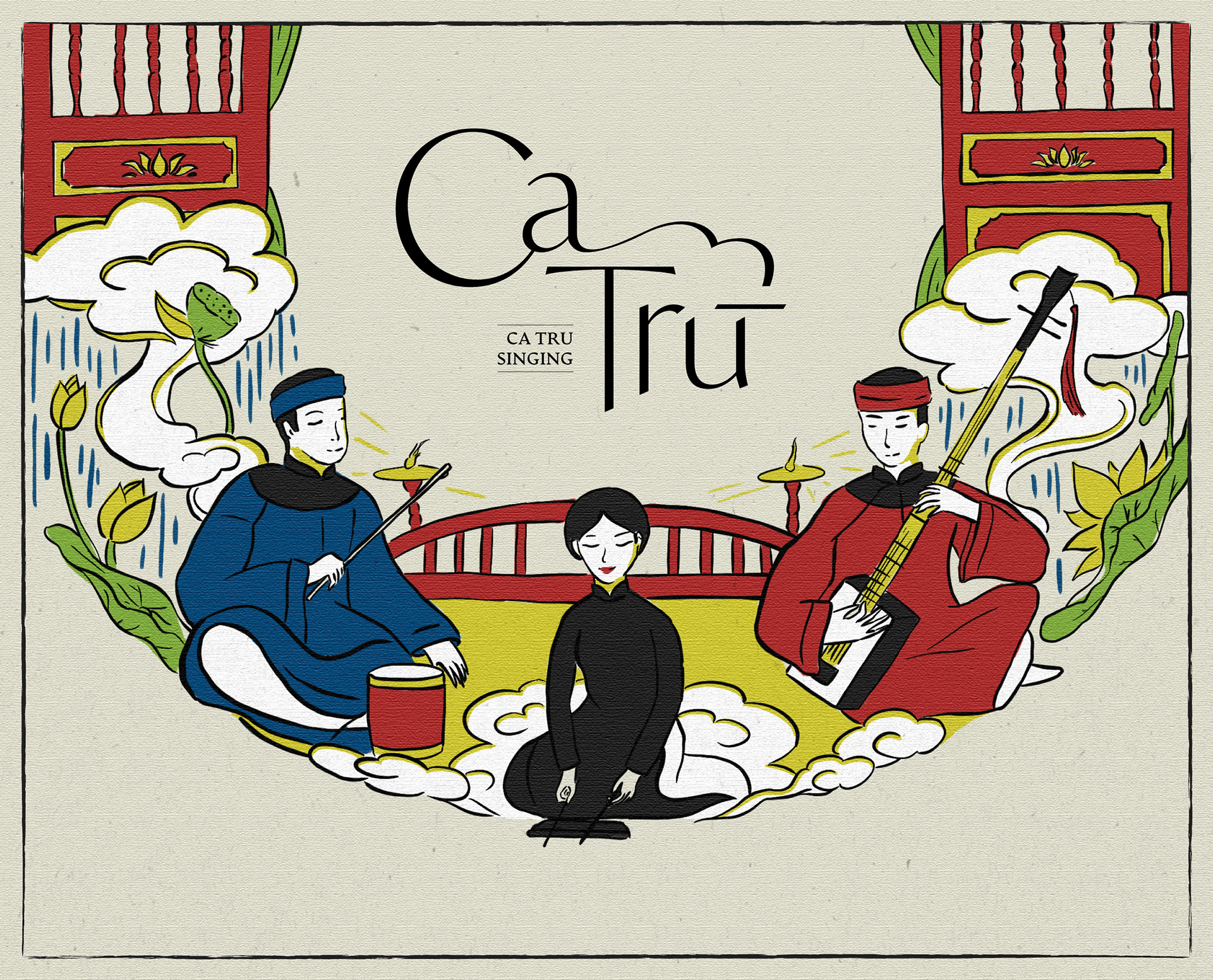
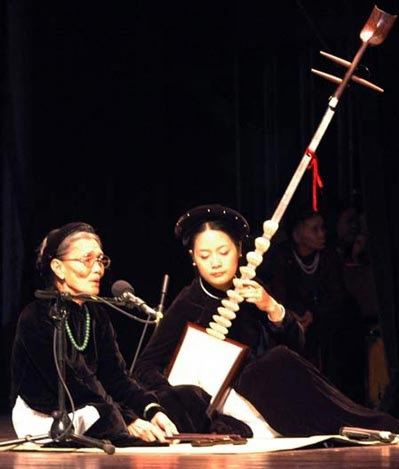
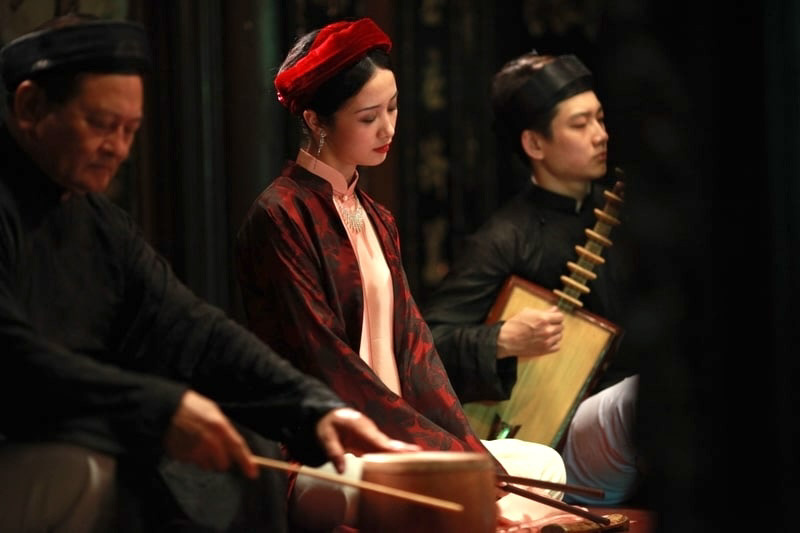
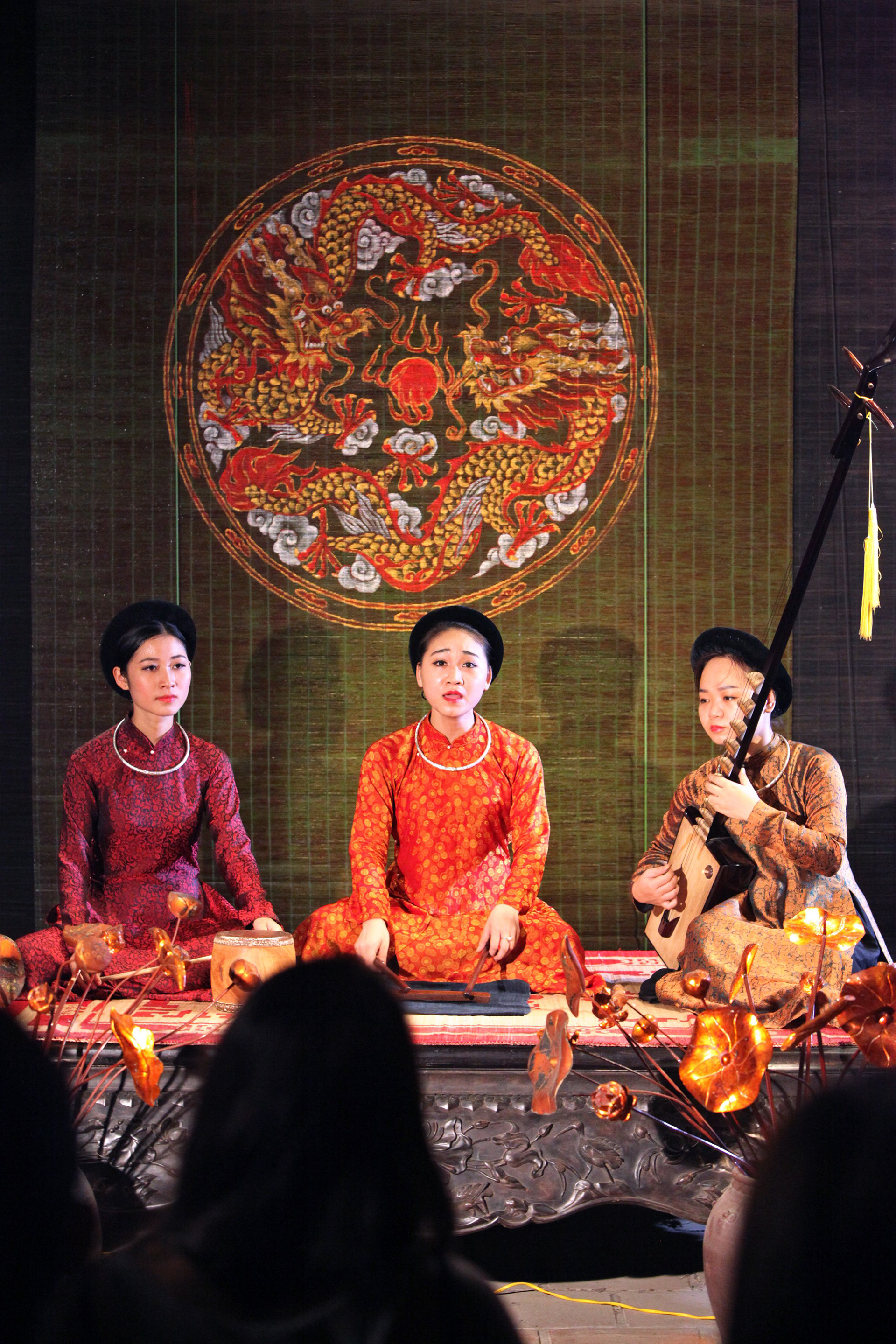
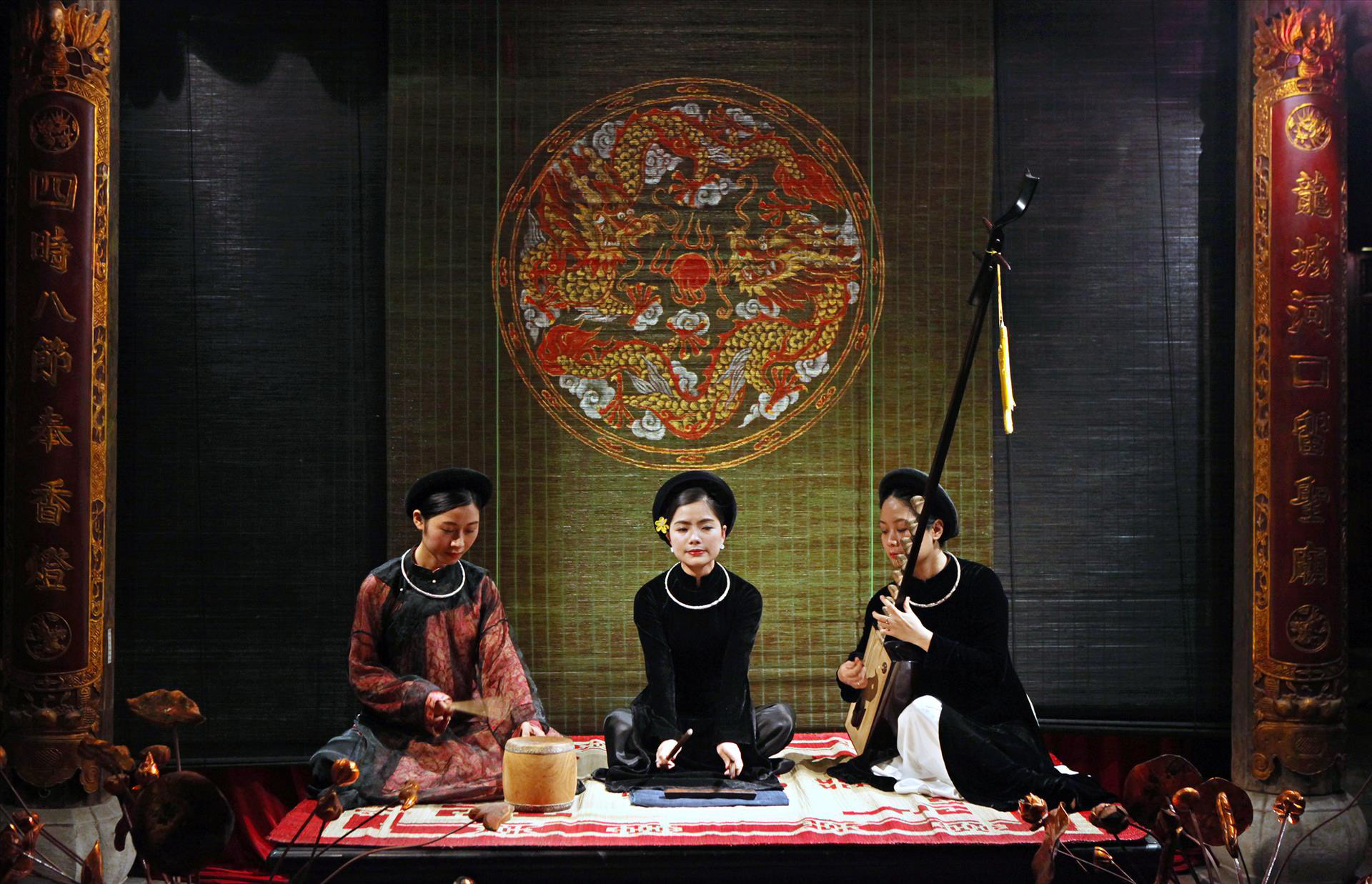
Ca trù is a complex form of sung poetry found in the north of Viet Nam using lyrics written in traditional Vietnamese poetic forms. Ca trù groups comprise three performers: a female singer who uses breathing techniques and vibrato to create unique ornamented sounds, while playing the clappers or striking a wooden box, and two instrumentalists who produce the deep tone of a three-stringed lute and the strong sounds of a praise drum. Some Ca trù performances also include dance. The varied forms of Ca trù fulfill different social purposes, including worship singing, singing for entertainment, singing in royal palaces and competitive singing. Ca trù has fifty-six different musical forms or melodies, each of which is called thể cách. Folk artists transmit the music and poems that comprise Ca trù pieces by oral and technical transmission, formerly, within their family line, but now to any who wish to learn. Ongoing wars and insufficient awareness caused Ca trù to fall into disuse during the twentieth century. Although the artists have made great efforts to transmit the old repertoire to younger generations, Ca trù is still under threat of being lost due to the diminishing number and age of practitioners.
Inscribed in 2010 on the Representative List of the Intangible Cultural Heritage of Humanity
© 2009 Vietnam Institute of Culture and Arts Studies
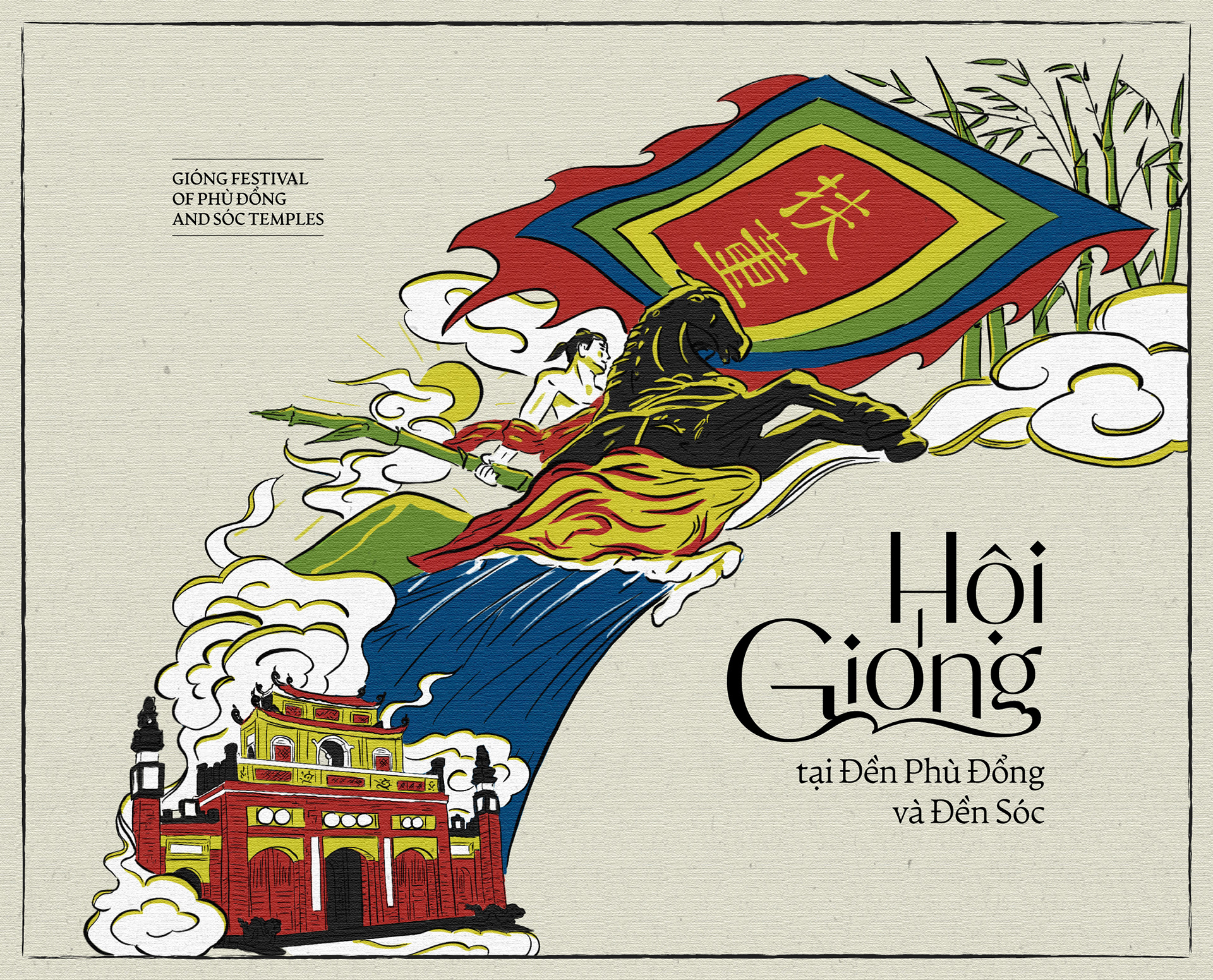
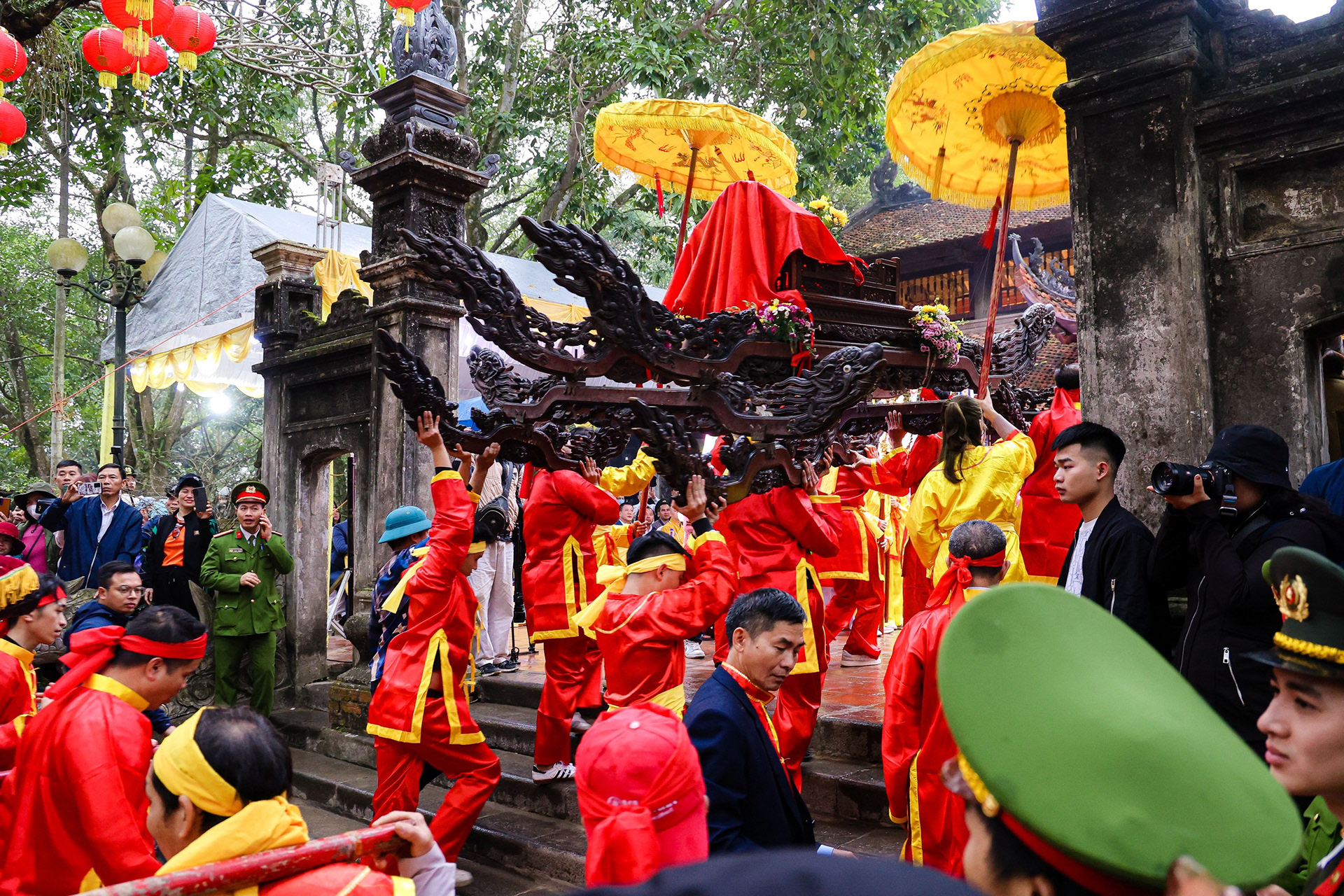
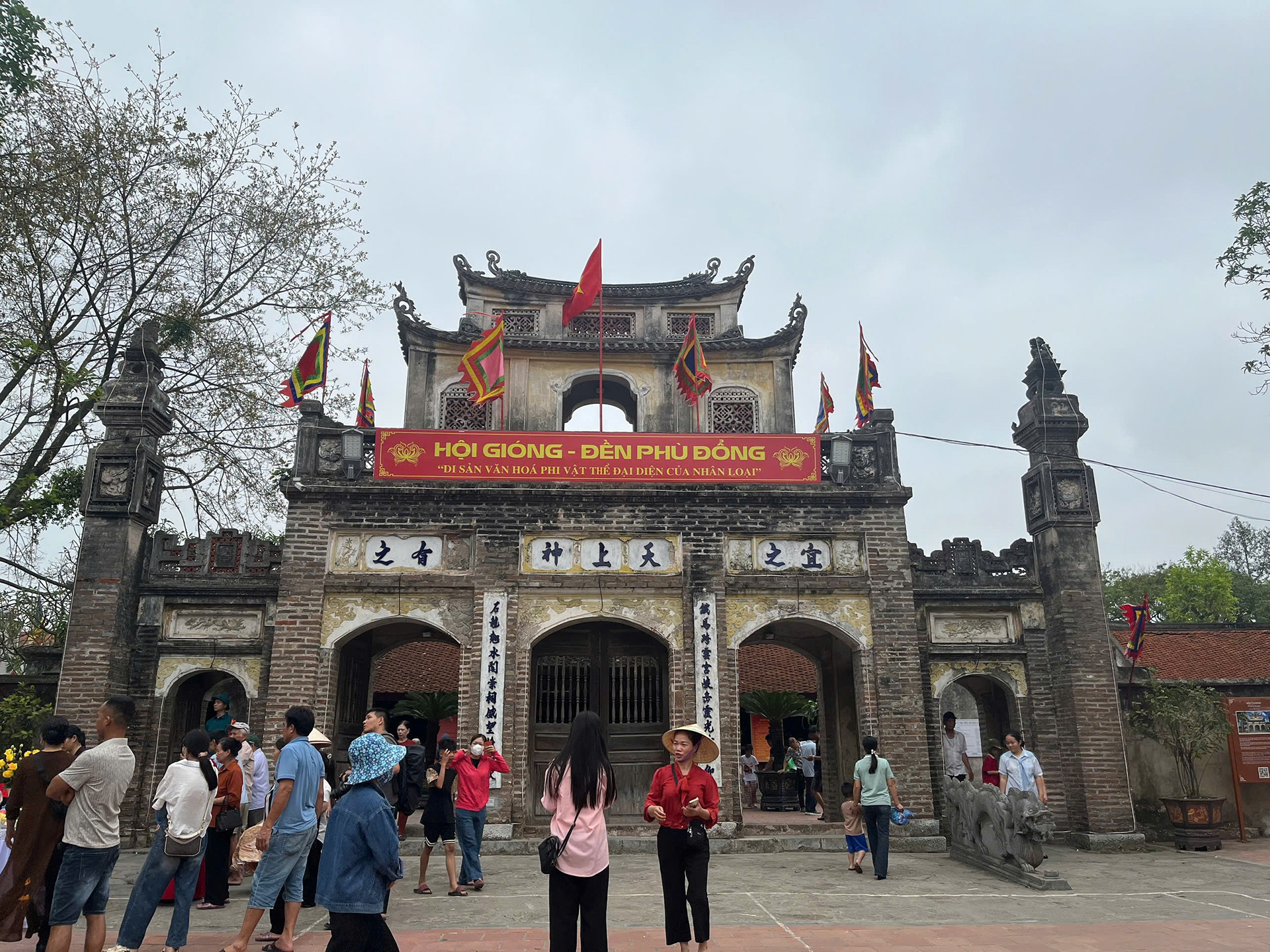
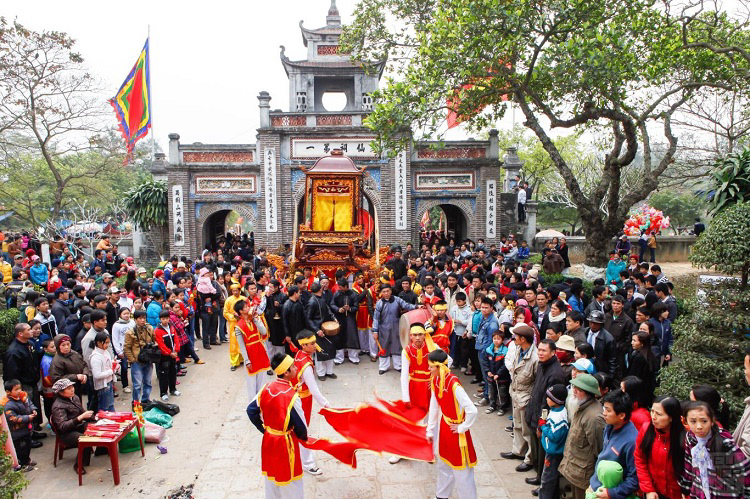
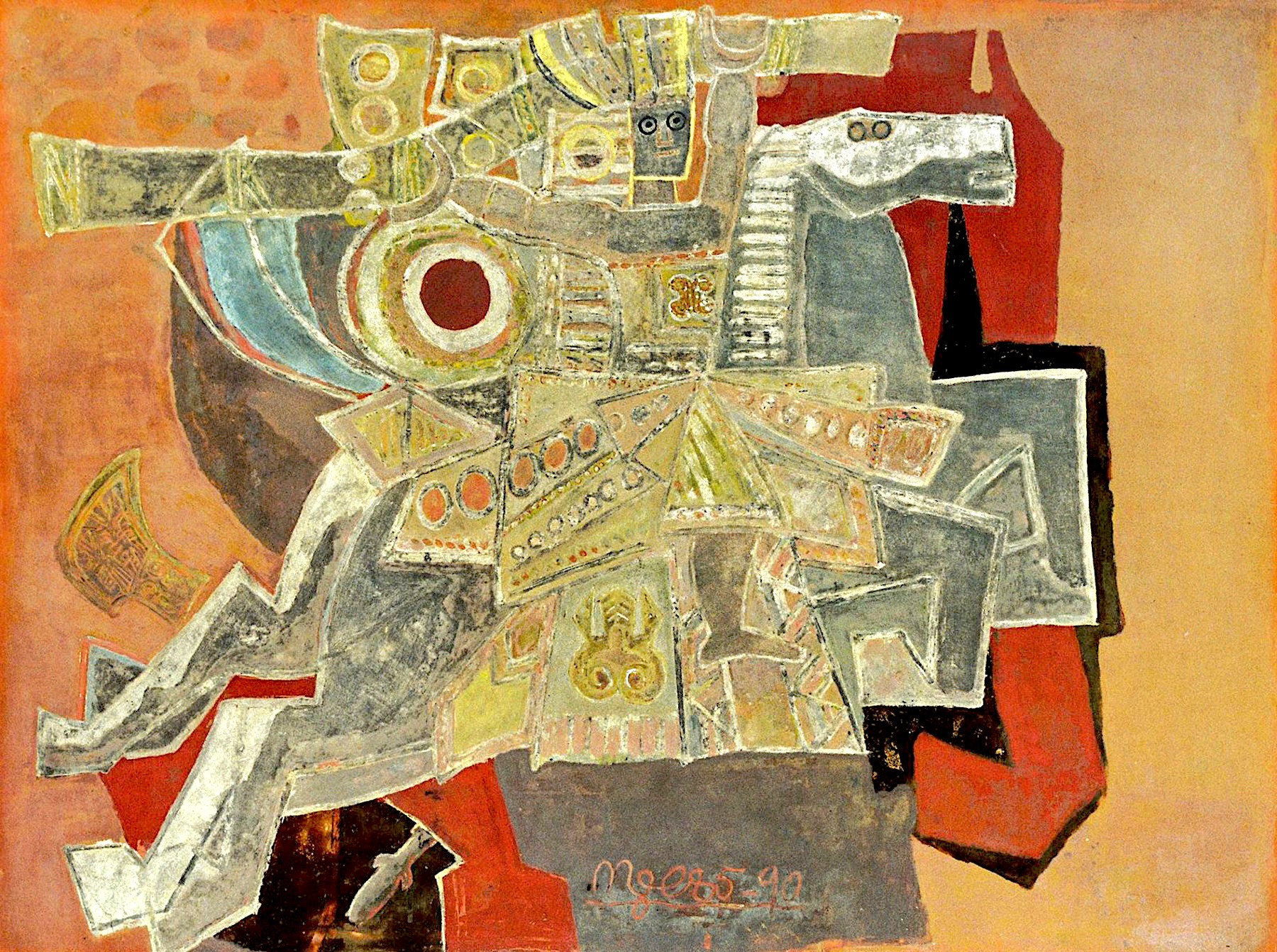
The Gióng festival of Phù Đổng and Sóc temples is celebrated annually in outlying districts of Hanoi, the capital of Viet Nam. Each spring, before the rice harvest, the Việt people honour the mythical hero, god and saint, Thánh Gióng, who is credited with defending the country from foreign enemies, and is worshipped as the patron god of the harvest, national peace and family prosperity. The festival at Phù Đổng temple, which takes place in the fourth lunar month in the village of his birth, symbolically re-enacts his feats through the riding of a white horse into battle and the orchestration of an elaborate flag dance to symbolize the battle itself. Young men receive extensive training to play the roles of Flag Master, Drum Master, Gong Master, Army Master and Children’s Master, while 28 girls aged 9 to 13 are selected to play the enemy generals. The Flag Master’s dancing movements and drum and gong sounds convey the development of the battle, and paper butterflies released from the flag symbolically disperse the invaders. The arrival of rains after the festival is seen as a blessing from the saint for an abundant harvest. The celebrations at Sóc temple, where saint Gióng ascended to heaven, take place in the first lunar month and include the ritual of bathing his statue and a procession of bamboo flowers to the temple as offerings to the saint.
Inscribed in 2012 on the Representative List of the Intangible Cultural Heritage of Humanity
© 2011 Vietnam Institute of Culture and Arts Studies
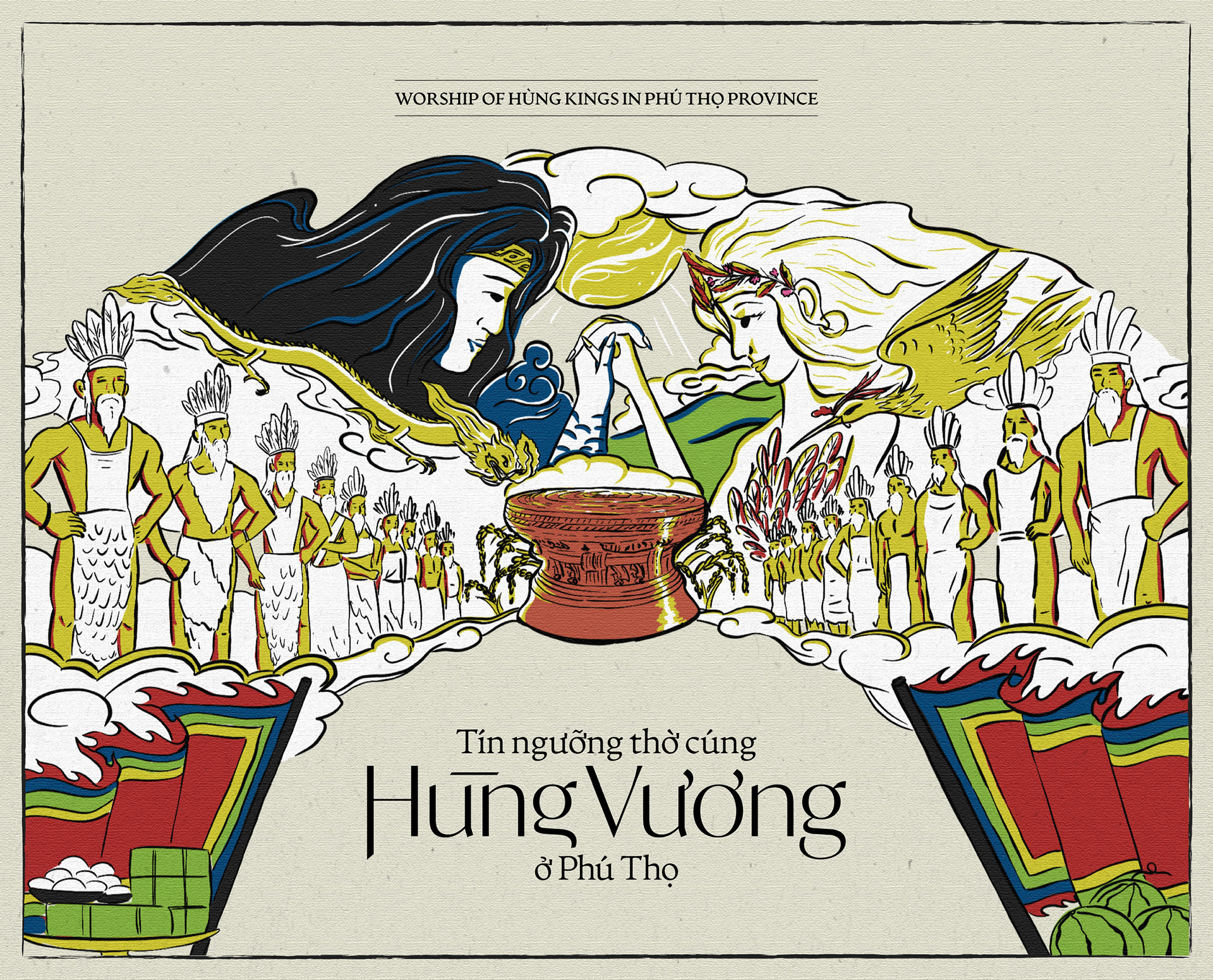
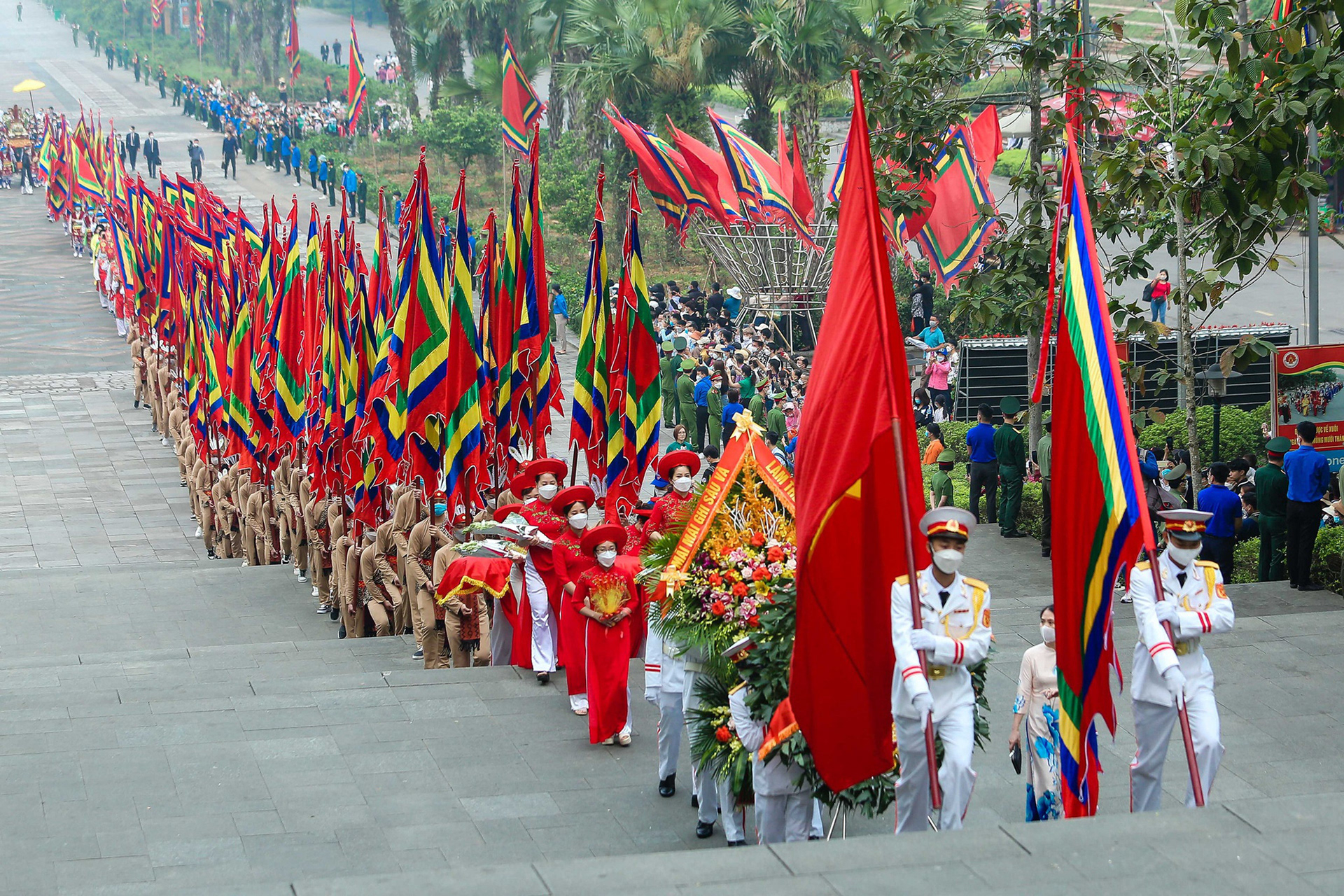
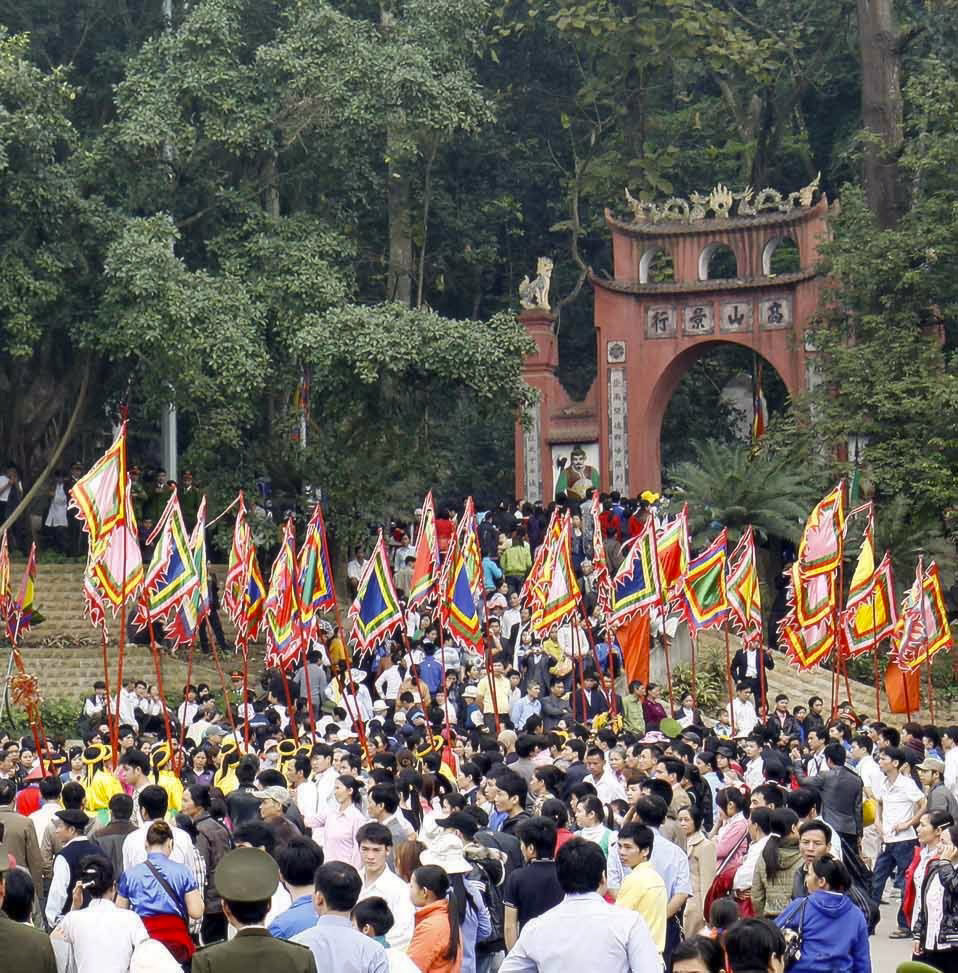
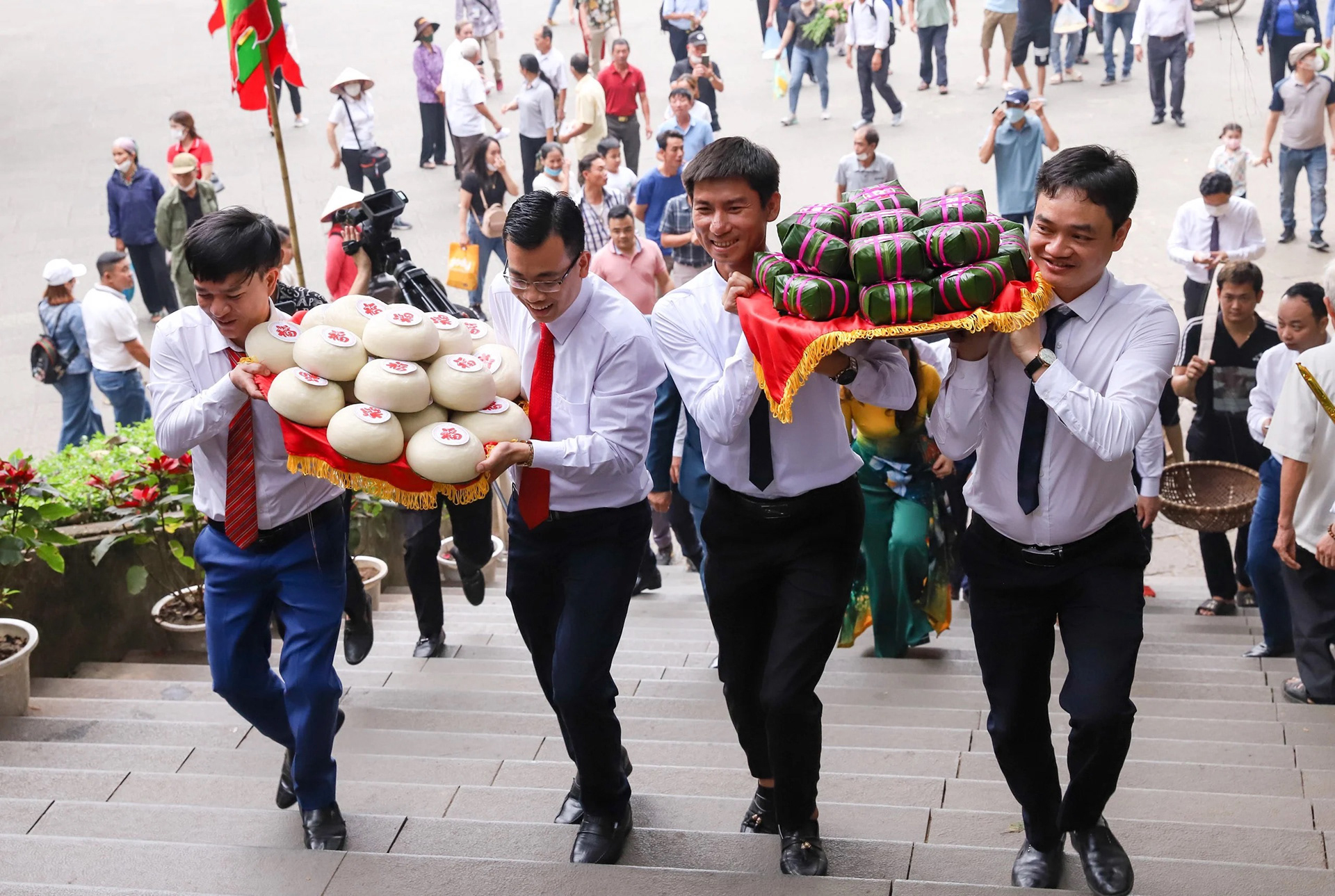
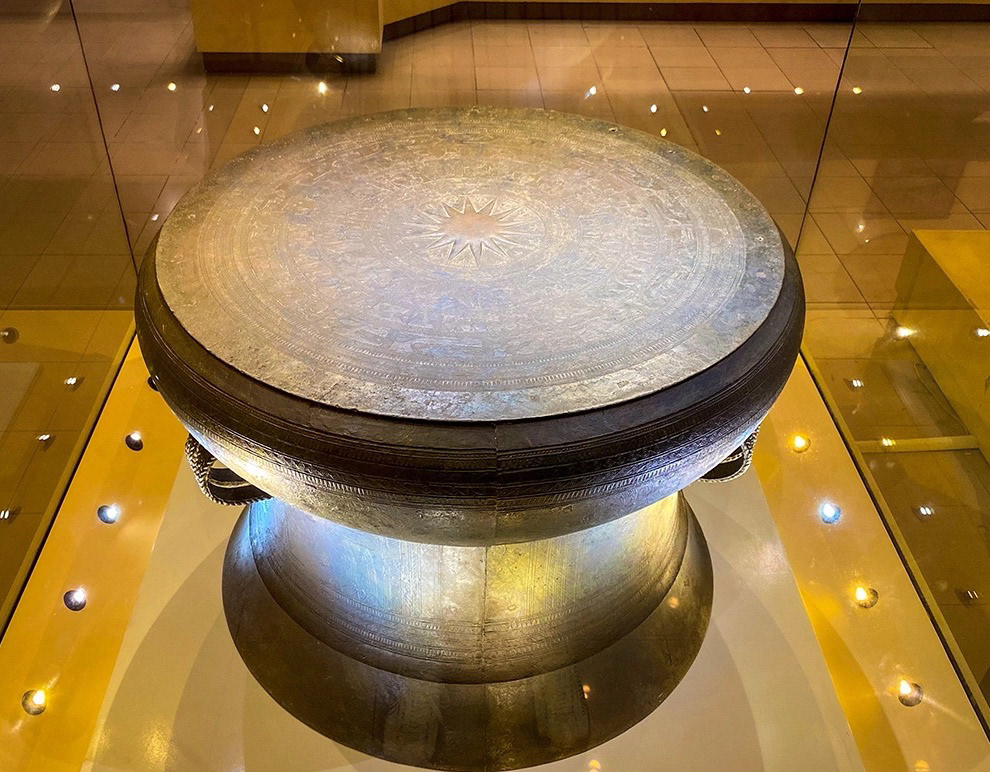
Annually, millions of people converge on the Hùng temple at Nghĩa Lĩnh mountain in Phú Thọ province to commemorate their ancestors and pray for good weather, abundant harvests, good luck and good health. The largest ceremony, the Ancestral Anniversary festival of the Hùng Kings, is celebrated for about one week at the beginning of the third lunar month. People from surrounding villages dress in splendid costumes and compete to provide the best palanquin and most highly valued objects of worship for the key rite in which drums and gongs are conveyed to the main temple site. Communities make offerings of rice-based delicacies such as square cakes and glutinous cakes, and there are verbal and folk arts performances, bronze drum beating, Xoan singing, prayers and petitions. Secondary worship of Hùng Kings takes place at sites countrywide throughout the year. The rituals are led and maintained by the Festival Organizing Board – knowledgeable individuals of good conducts, who in turn appoint ritual committees and temple guardians to tend worship sites, instruct devotees in the key ritual acts and offer incense. The tradition embodies spiritual solidarity and provides an occasion to acknowledge national origins and sources of Vietnamese cultural and moral identity.
Inscribed in 2013 on the Representative List of the Intangible Cultural Heritage of Humanity
© 2011 by Vietnamese Institute for Musicology
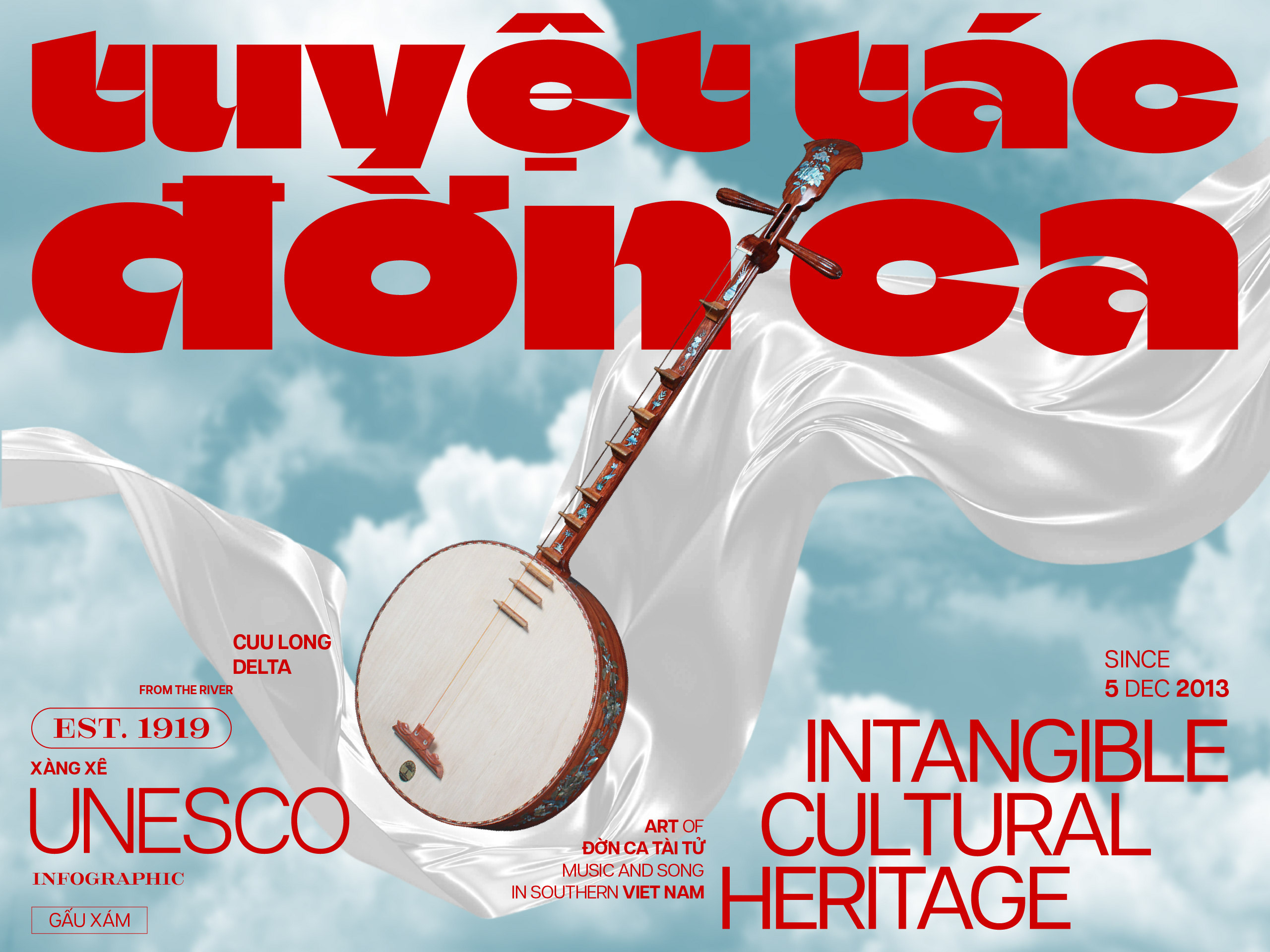
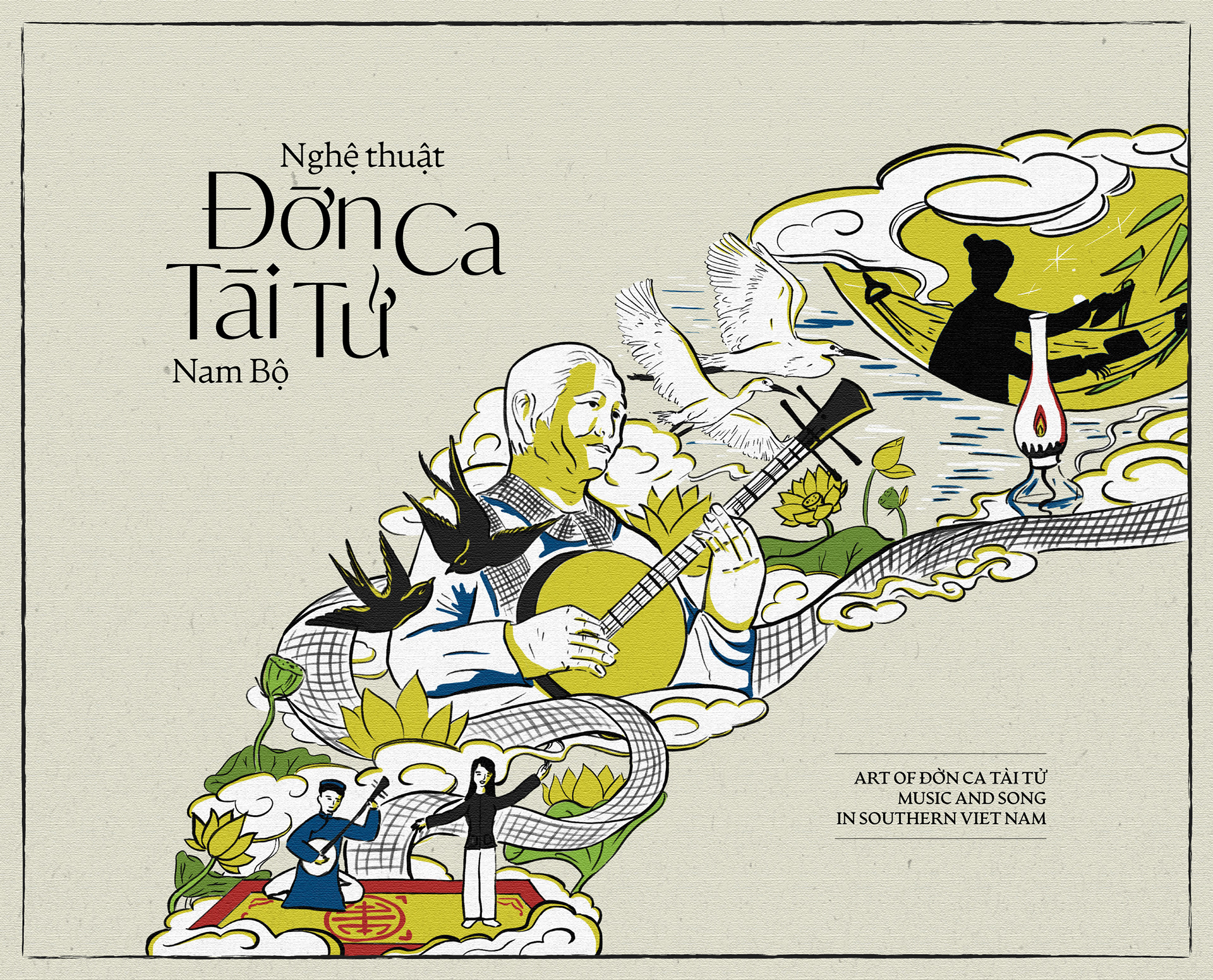
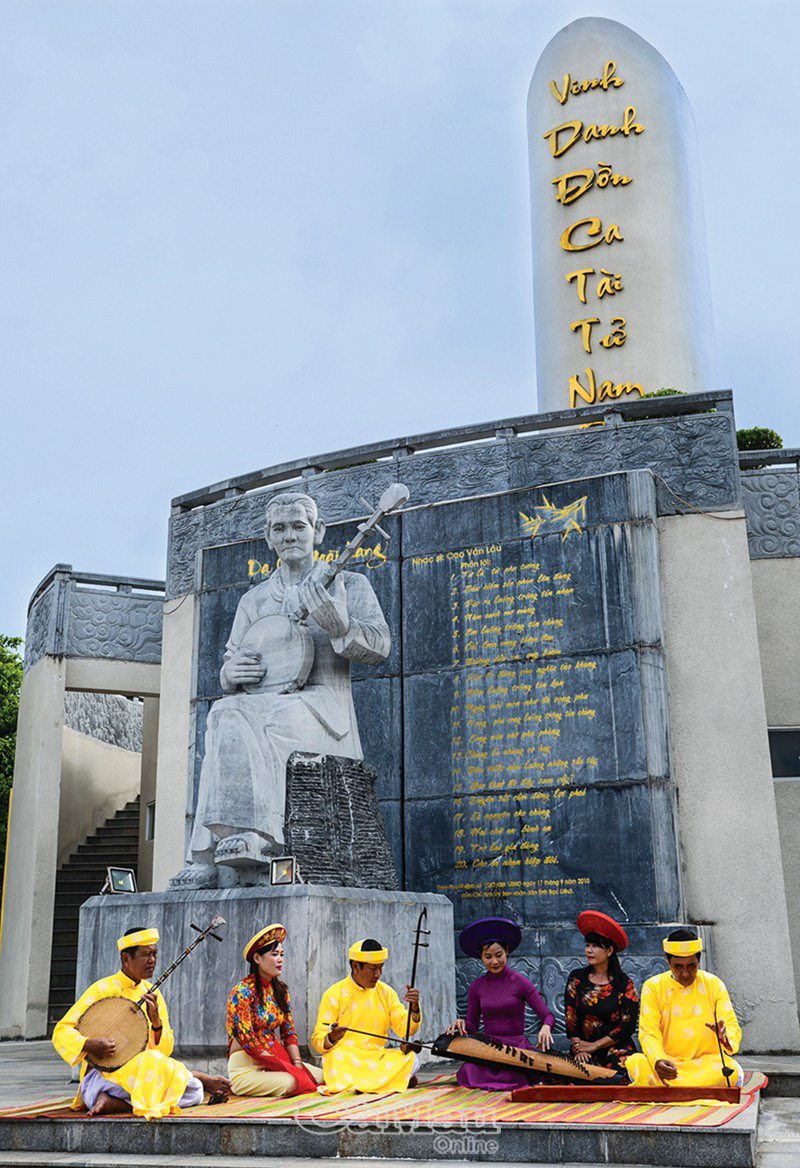
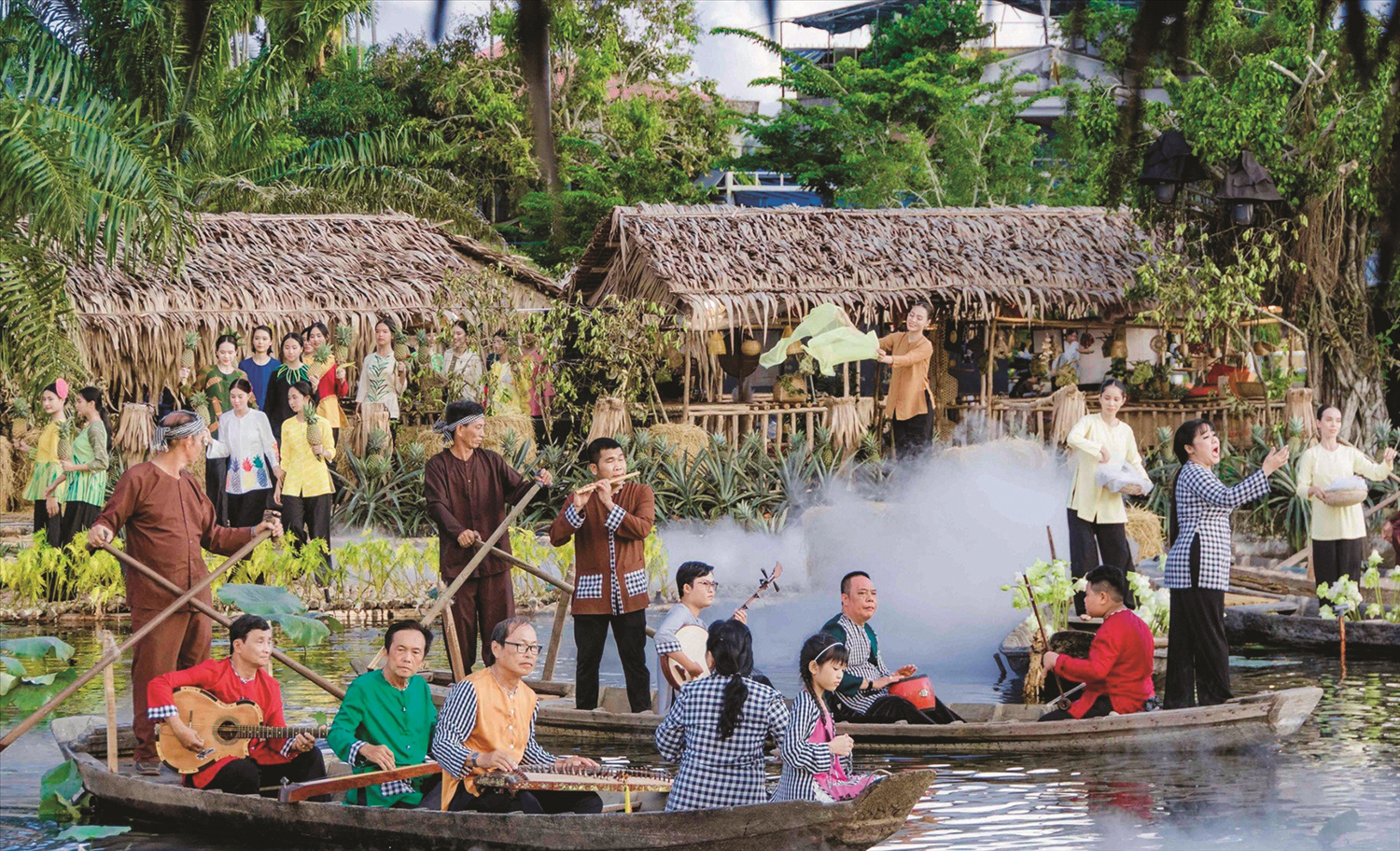
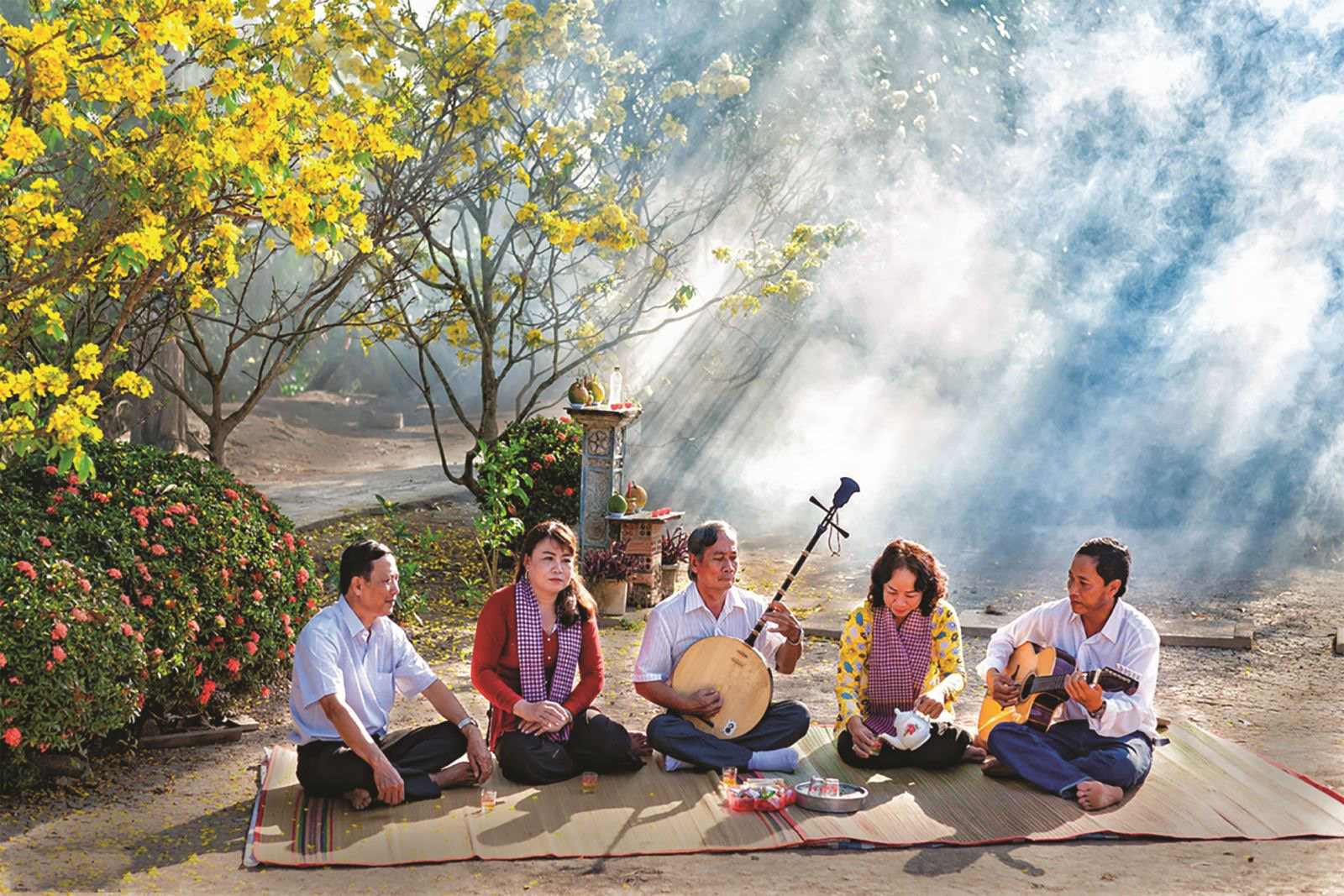
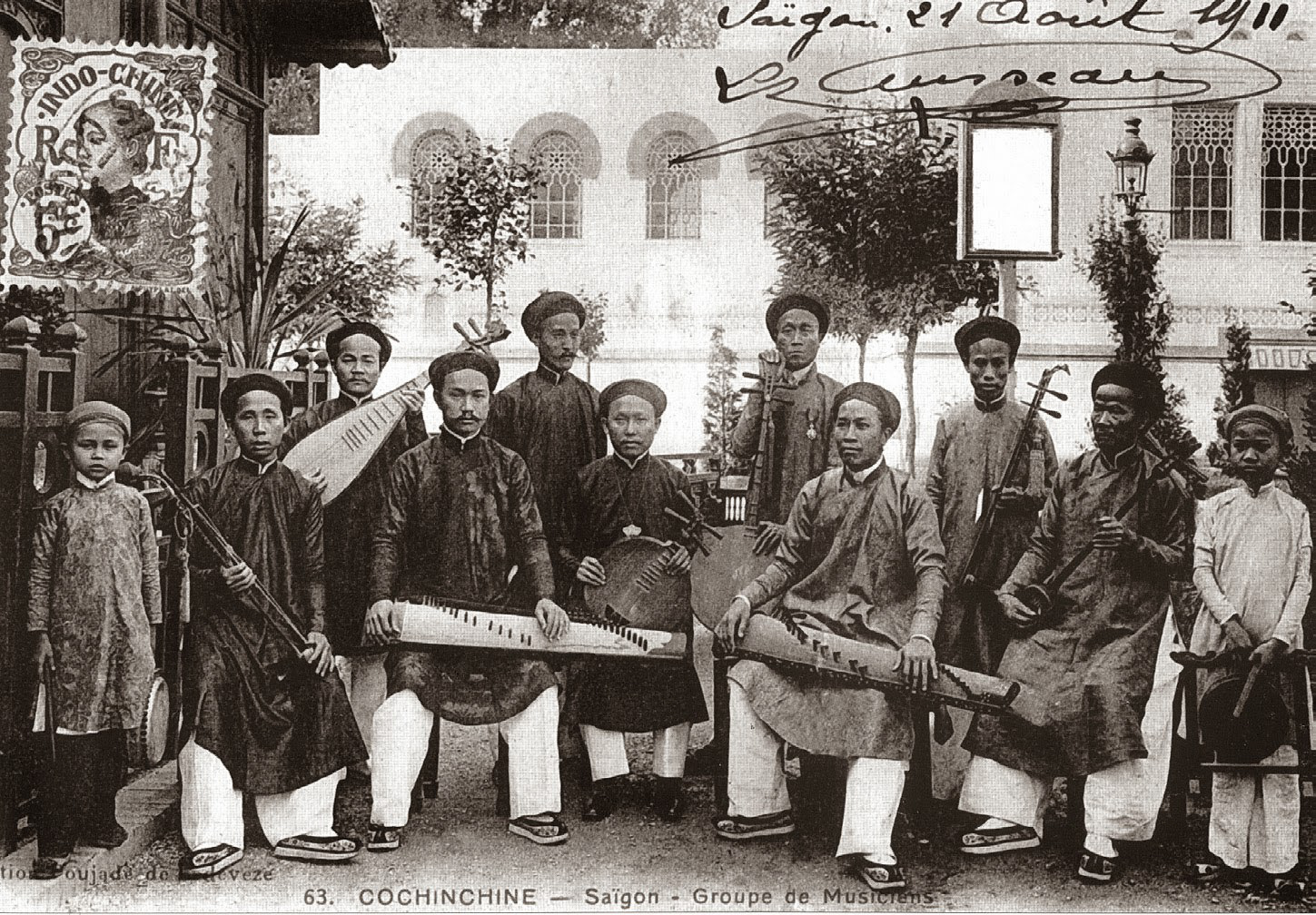
A musical art with both scholarly and folk roots, Đờn ca tài tử is an indispensable part of the spiritual activity and cultural heritage of the people of southern Viet Nam. The music and songs evoke the people’s life and work on the land and rivers of the Mekong Delta region. Performed at numerous events such as festivals, death anniversary rituals and celebrations, Đờn ca tài tử is thus intimately connected with other cultural practices and customs, oral traditions and handicrafts. The performers express their feelings by improvising, ornamenting and varying the ‘skeletal melody’ and main rhythmic patterns of these pieces. Đờn ca tài tử is played on a variety of different instruments, including the moon-shaped lute, two-stringed fiddle, sixteen-stringed zither, pear-shaped lute, percussion, monochord and bamboo flute. Its repertoire is based on twenty principal songs and seventy-two classical songs. The musical art is passed on through oral transmission, based on imitation, from master instrumentalists and singers to students. Musicians need to study for at least three years to learn the basic instrumental techniques and master the musical modes to express different moods and emotions. Vocal students study the traditional songs and learn to improvise subtly, using different ornamentation techniques.
Inscribed in 2014 on the Representative List of the Intangible Cultural Heritage of Humanity
© 2013 Institut de la Culture et des Arts du Viêt Nam [2013]
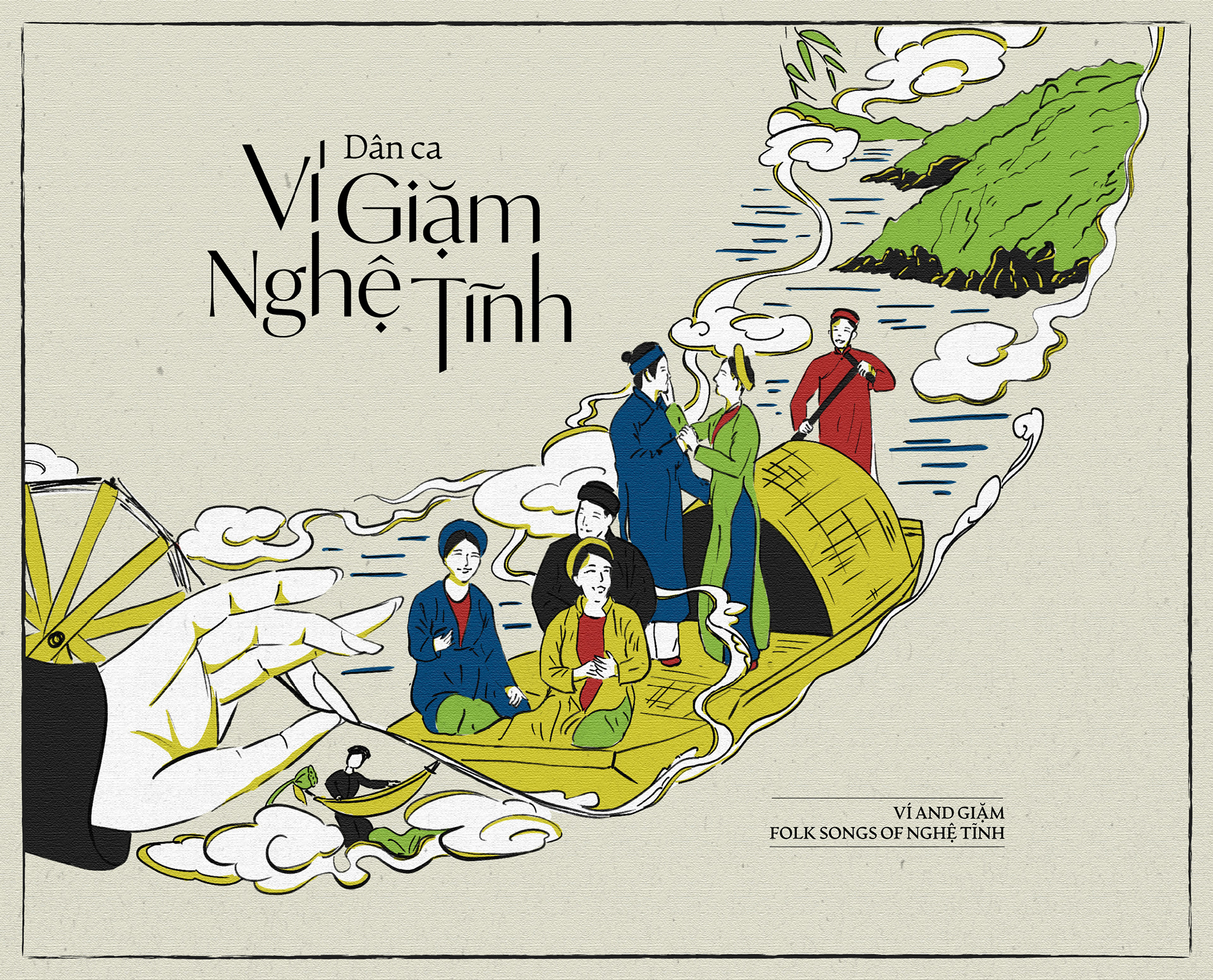
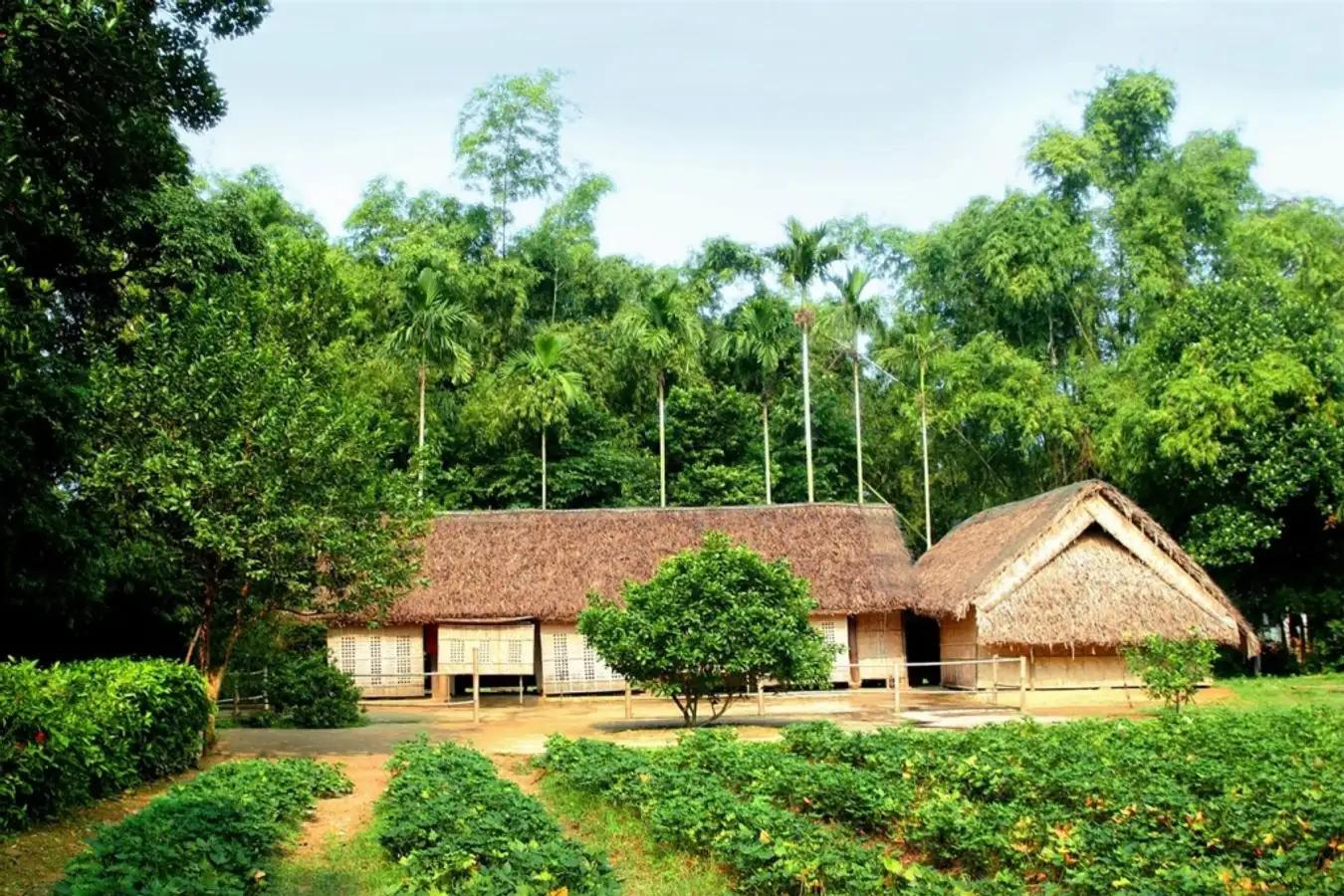
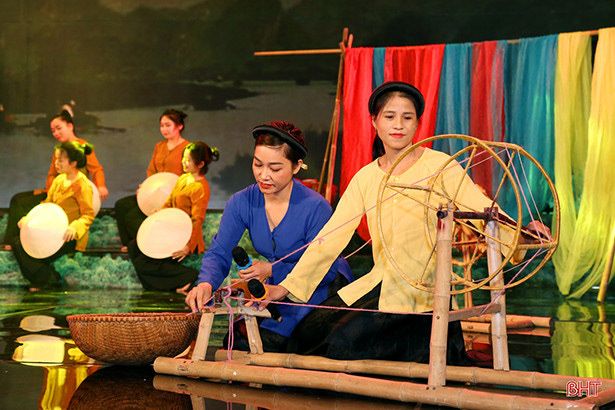
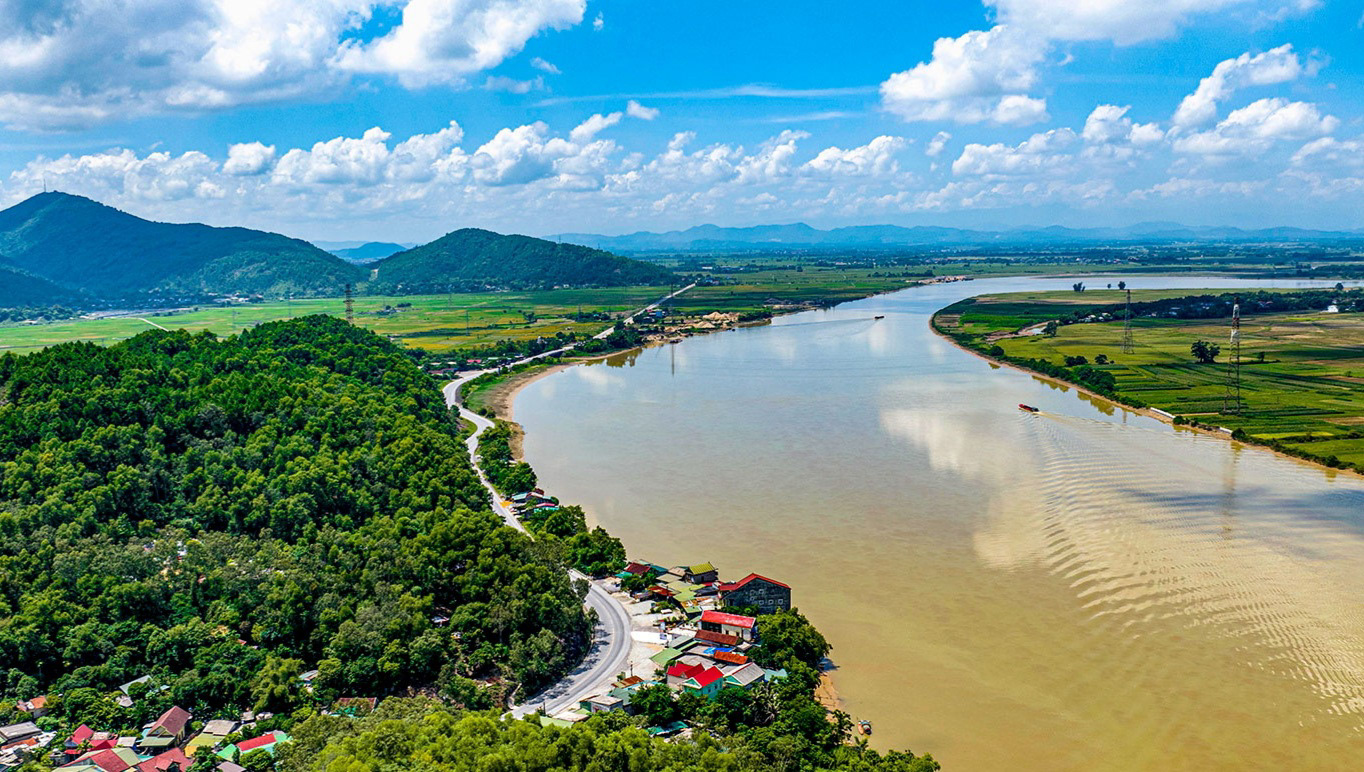
Ví and Giặm songs are sung by a wide range of communities in Nghệ An and Hà Tĩnh Provinces of north-central Viet Nam. Specific songs are sung without instrumental accompaniment while people cultivate rice in the fields, row boats, make conical hats or lull children to sleep. Ví and Giặm lyrics use the specific dialect and linguistic idioms of the Nghệ Tĩnh region and practitioners sing with the particular singing voice of Nghệ Tĩnh people. Many of the songs focus on key values and virtues including respect for parents, loyalty, care and devotion, the importance of honesty and a good heart in the maintenance of village customs and traditions. Singing provides people with a chance to ease hardship while working, to relieve sorrow in their lives, to express feelings of sentiment between men and women, and to exchange feelings of love between unmarried boys and girls. Today Ví and Giặm are commonly performed at community cultural events and are sung by artists in theatres. Ví and Giặm are transmitted, preserved and promoted by master practitioners; and local performances and folk singing festivals provide opportunities for Ví and Giặm groups in villages and schools to transmit and practise the songs.
Inscribed in 2015 on the Representative List of the Intangible Cultural Heritage of Humanity
© B Plus Pictures, 2014
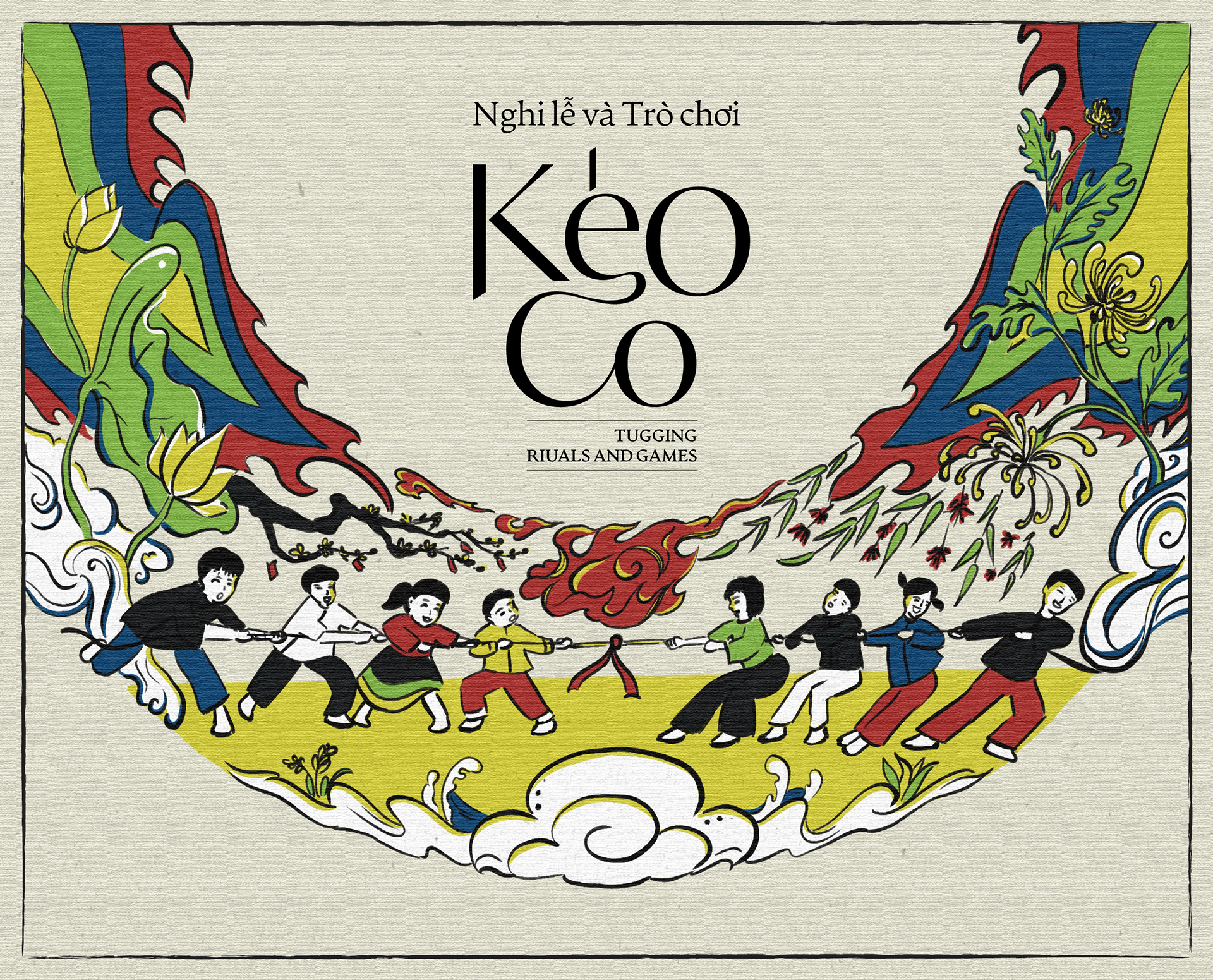
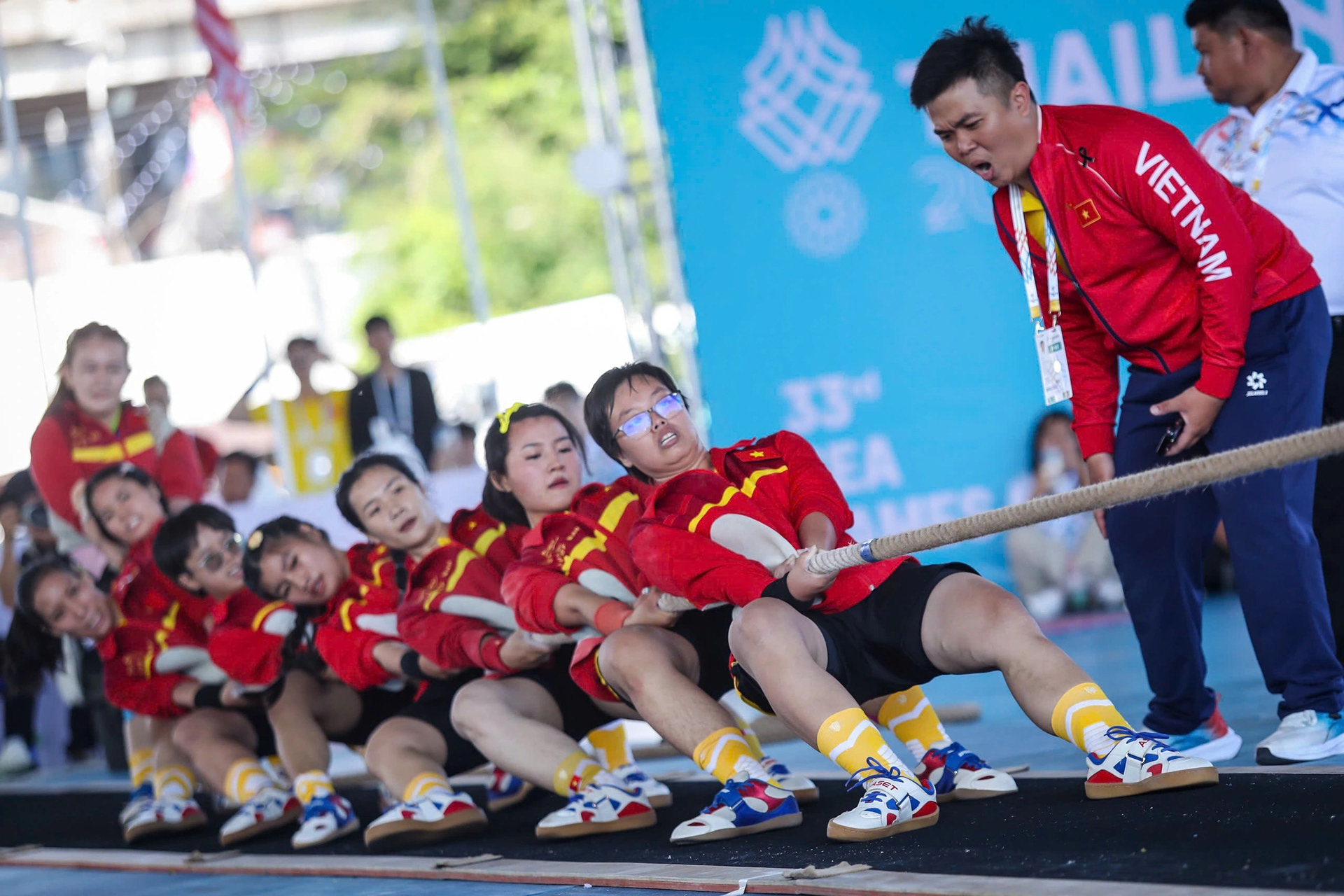
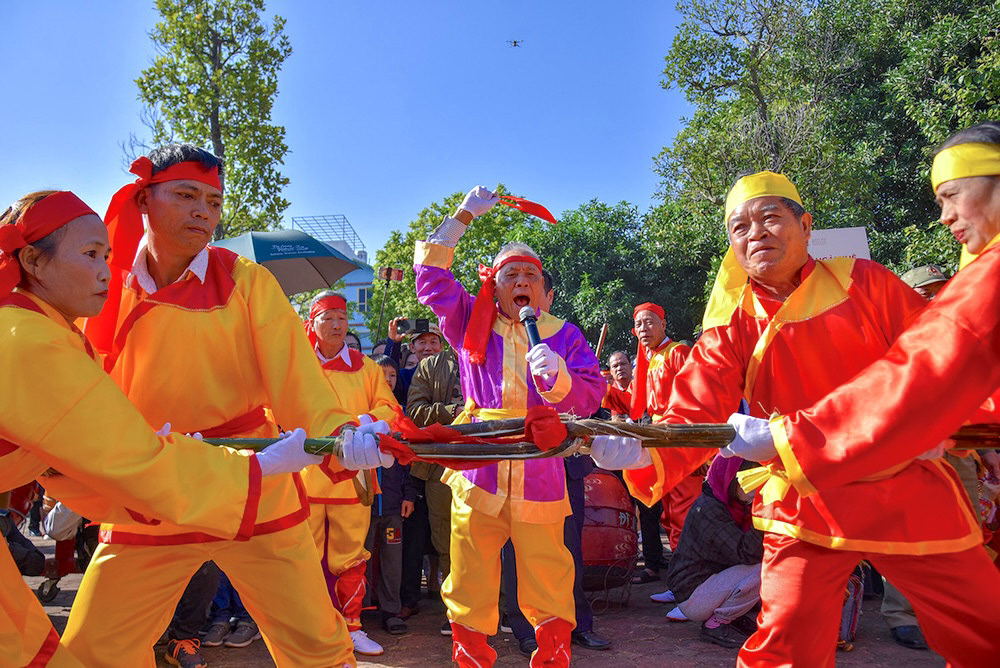
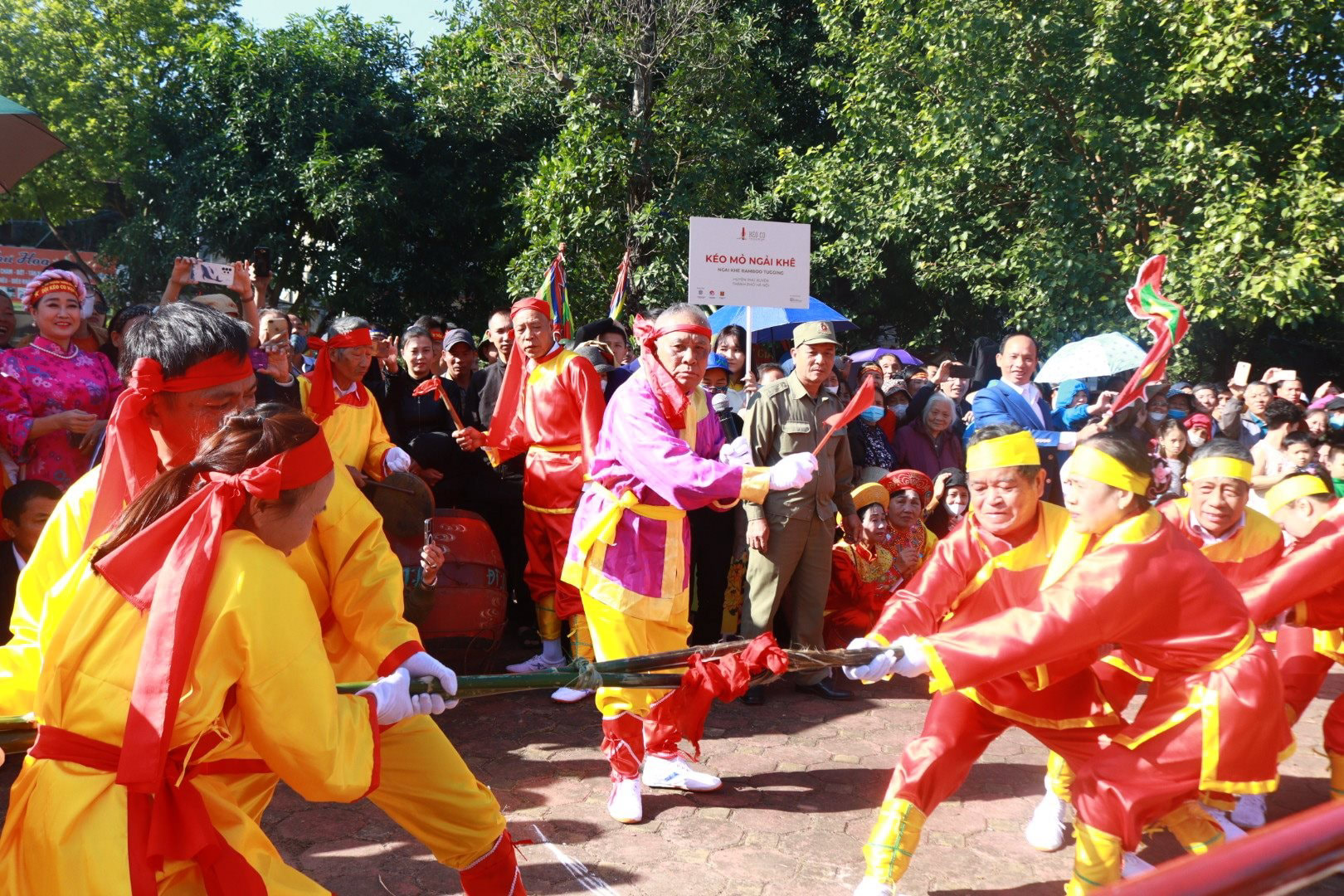
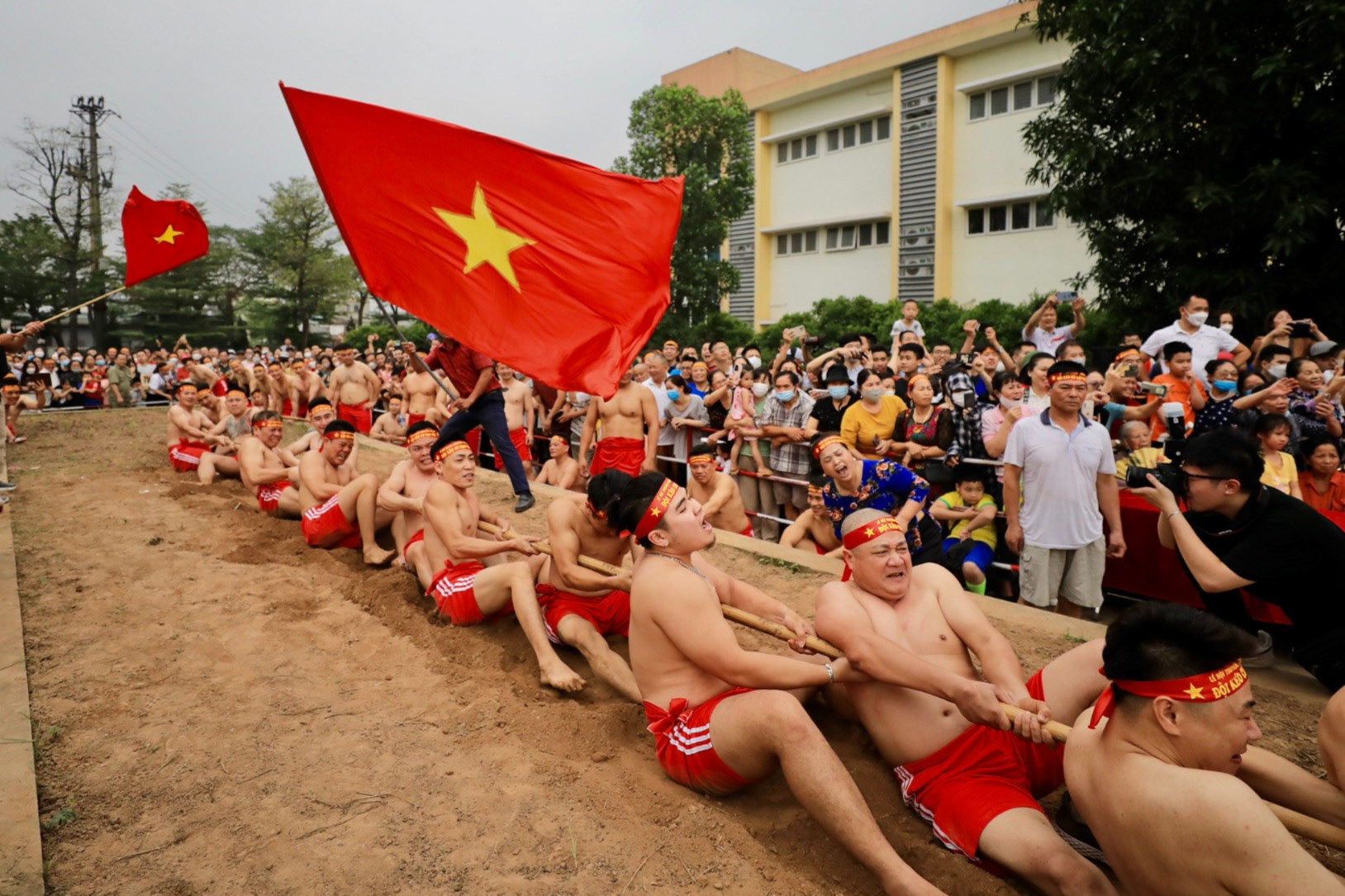
Tugging rituals and games in the rice-farming cultures of East Asia and Southeast Asia are enacted among communities to ensure abundant harvests and prosperity. They promote social solidarity, provide entertainment and mark the start of a new agricultural cycle. Many tugging rituals and games also have profound religious significance. Most variations include two teams, each of which pulls one end of a rope attempting to tug it from the other. The intentionally uncompetitive nature of the event removes the emphasis on winning or losing, affirming that these traditions are performed to promote the well-being of the community, and reminding members of the importance of cooperation. Many tugging games bear the traces of agricultural rituals, symbolizing the strength of natural forces, such as the sun and rain while also incorporating mythological elements or purification rites. Tugging rituals and games are often organized in front of a village’s communal house or shrine, preceded by commemorative rites to local protective deities. Village elders play active roles in leading and organizing younger people in playing the game and holding accompanying rituals. Tugging rituals and games also serve to strengthen unity and solidarity and sense of belonging and identity among community members.
Inscribed in 2016 on the Representative List of the Intangible Cultural Heritage of Humanity
© Viet Nam National Institute of Culture and Arts Studies, 2014
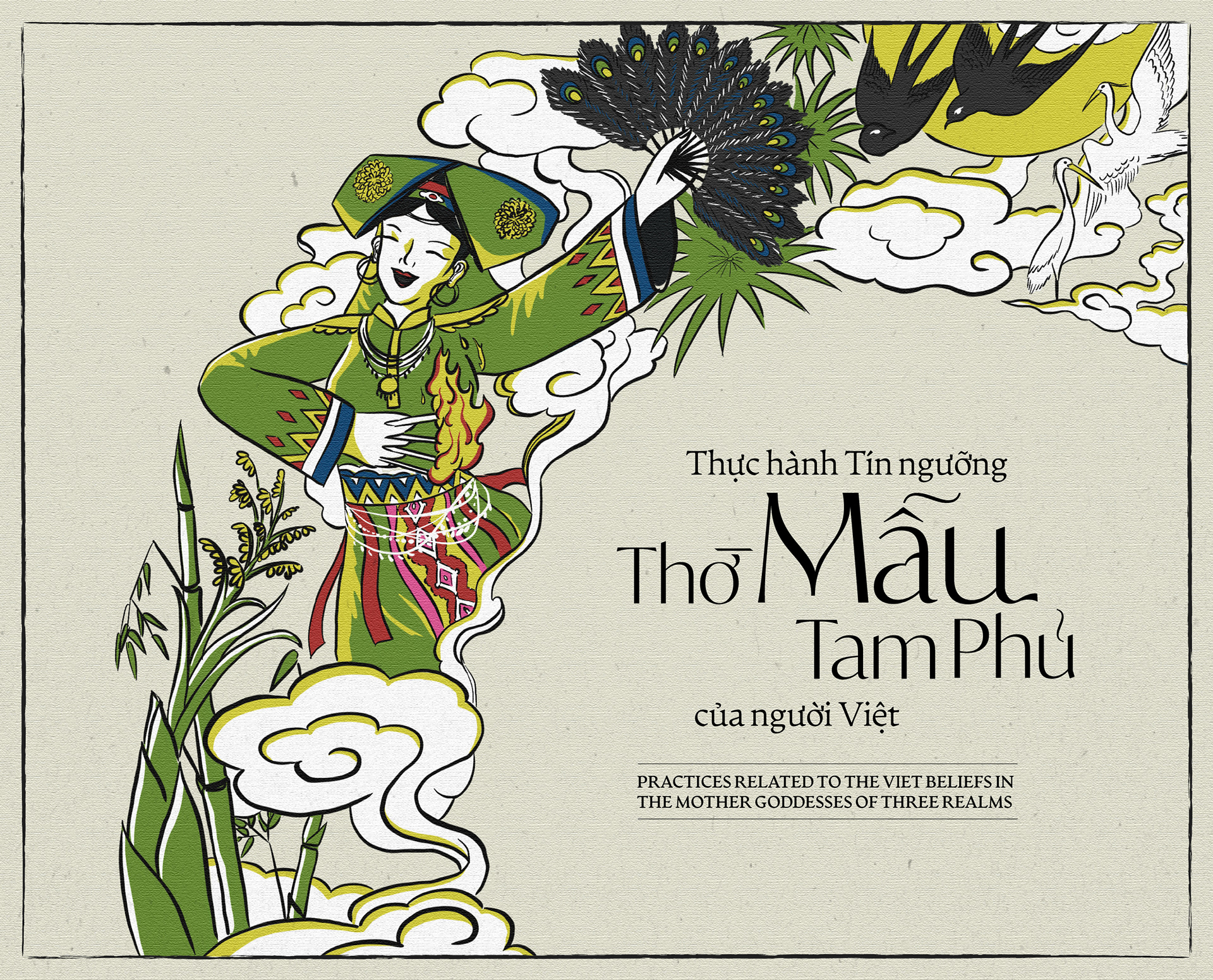
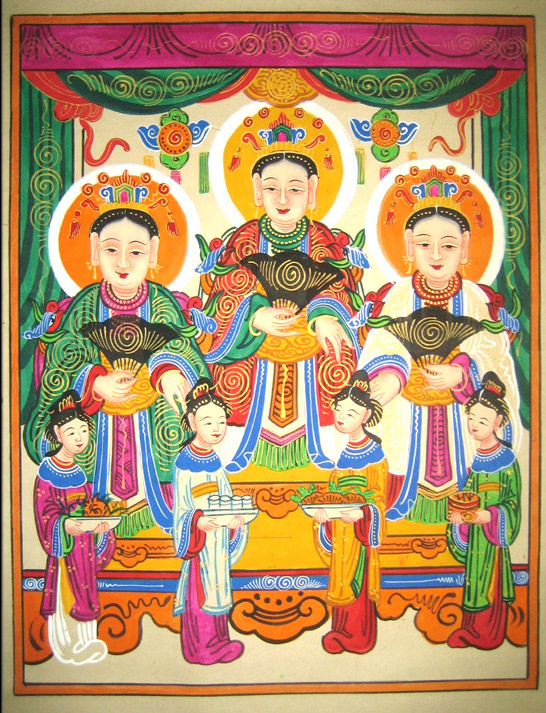
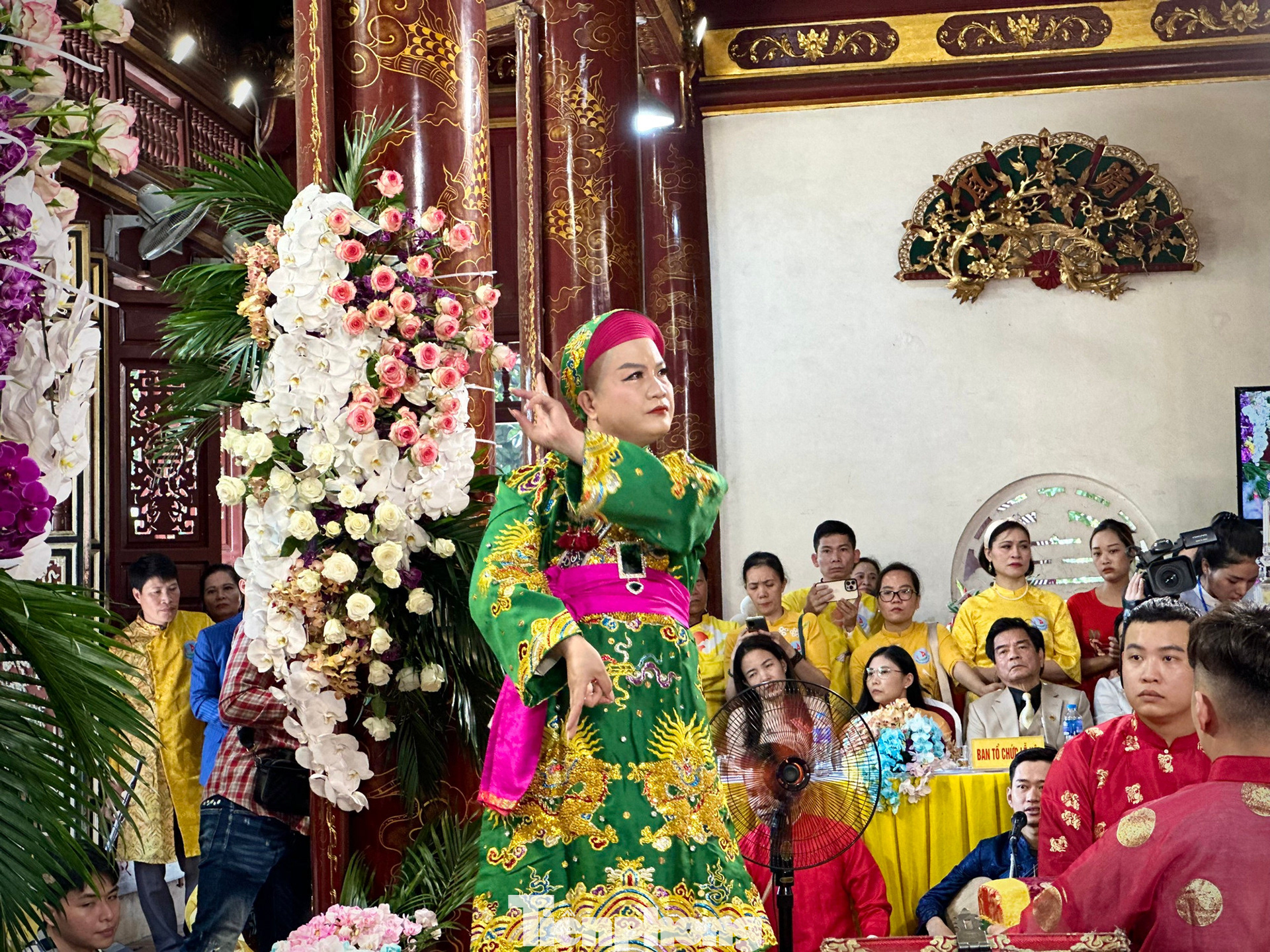
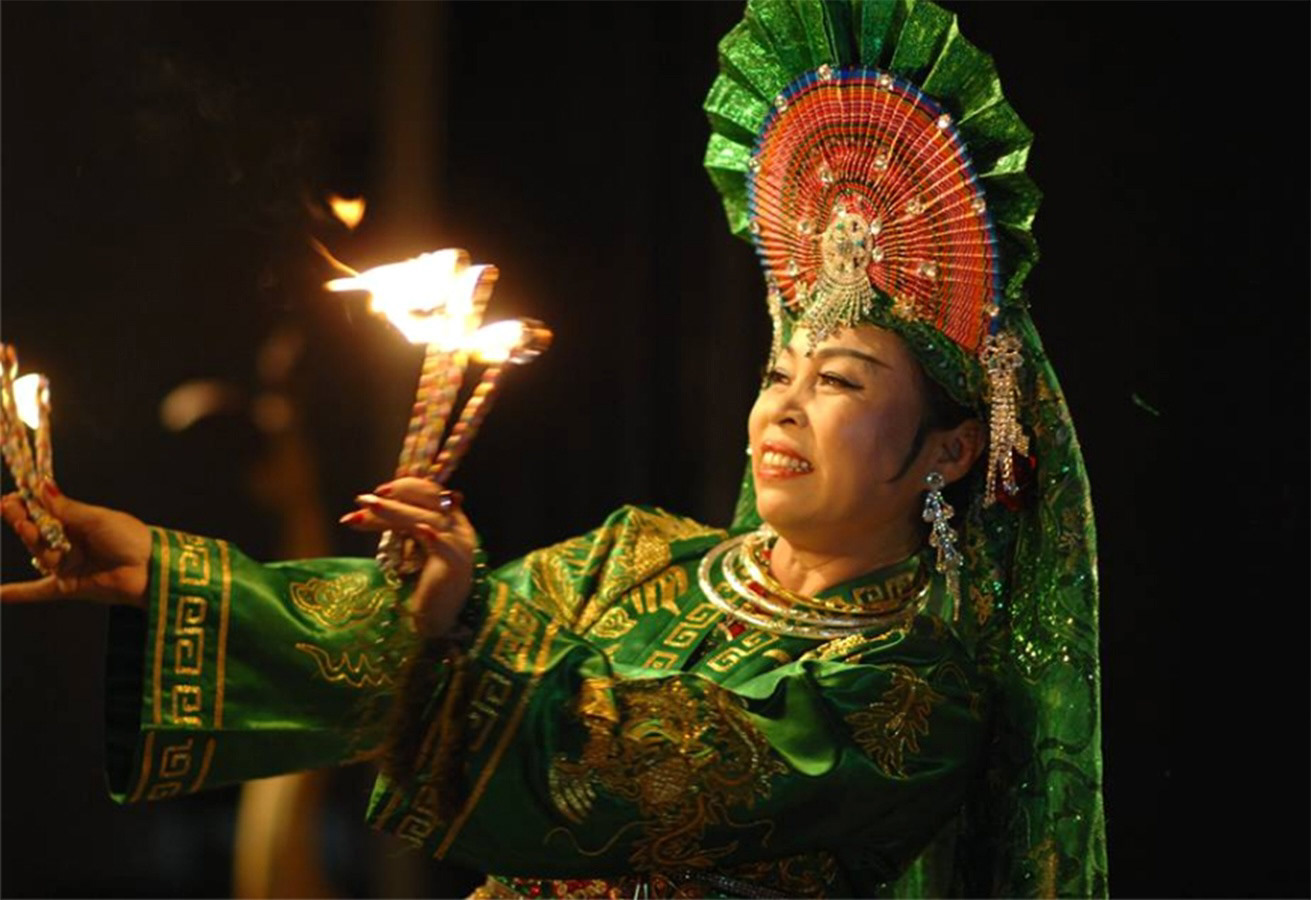
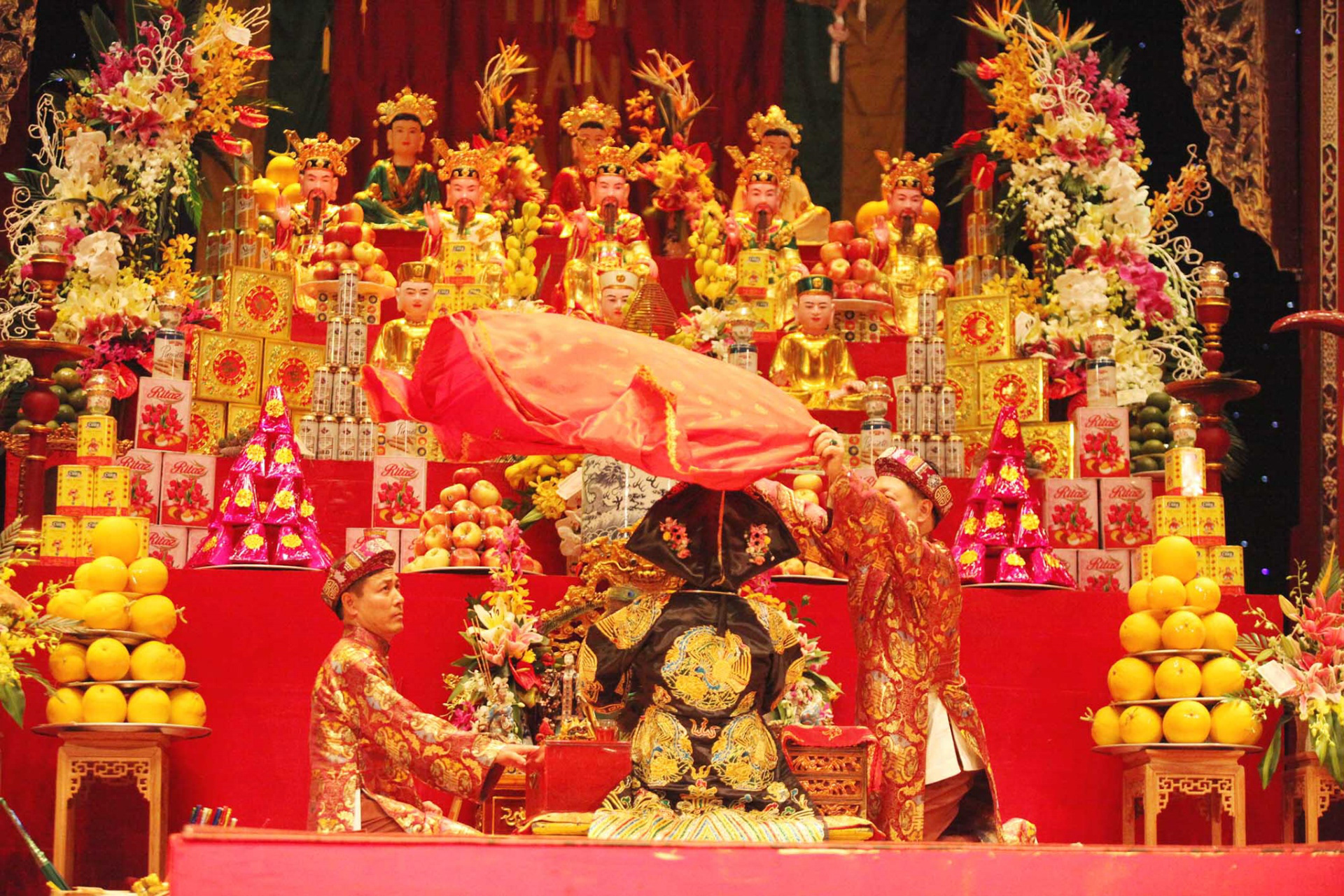
To meet spiritual needs, everyday wishes and gain help in achieving good health and success communities in Viet Nam worship the Mother Goddesses of Three Realms: heaven, water, and mountains and forests. The Mother Goddesses include Liễu Hạnh (a nymph who descended to earth, lived as a human and became a Buddhist nun) referred to as the Mother of the World, and other spirits considered legendary heroes. The traditional practice involves daily worship and participation in ceremonies, rituals like the spirit possession ritual and festivals such as Phủ Dầy that take place at temples dedicated to the Mother Goddesses. These activities associated with the practice help to maintain part of the community’s history, cultural heritage and identity with some aspects incorporating traditional costumes, music and dance. Bearers and practitioners are members of the public, temple guardians, ritual priests, spirit mediums, assistants and musicians who transmit knowledge and skills orally to newcomers and family members. The practice of shared values and strong beliefs in the compassion and grace of the Mother Goddesses provides a basis for social relations connecting members of participating communities. The worshipping of the Mother Goddesses also contributes to the appreciation of women and their roles in society.
Inscribed in 2017 on the Representative List of the Intangible Cultural Heritage of Humanity
© Vietnamese Institute for Musicology, 2015
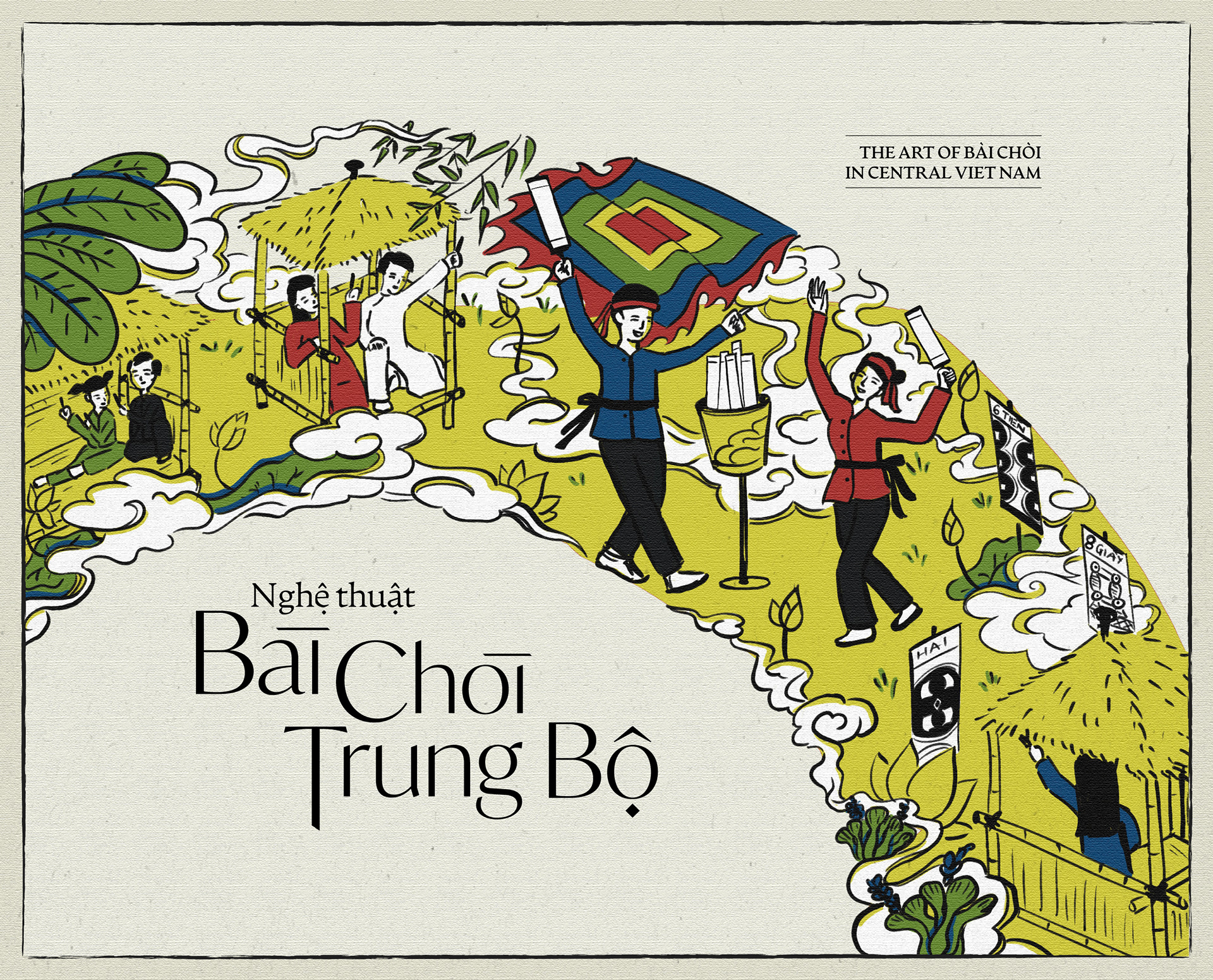
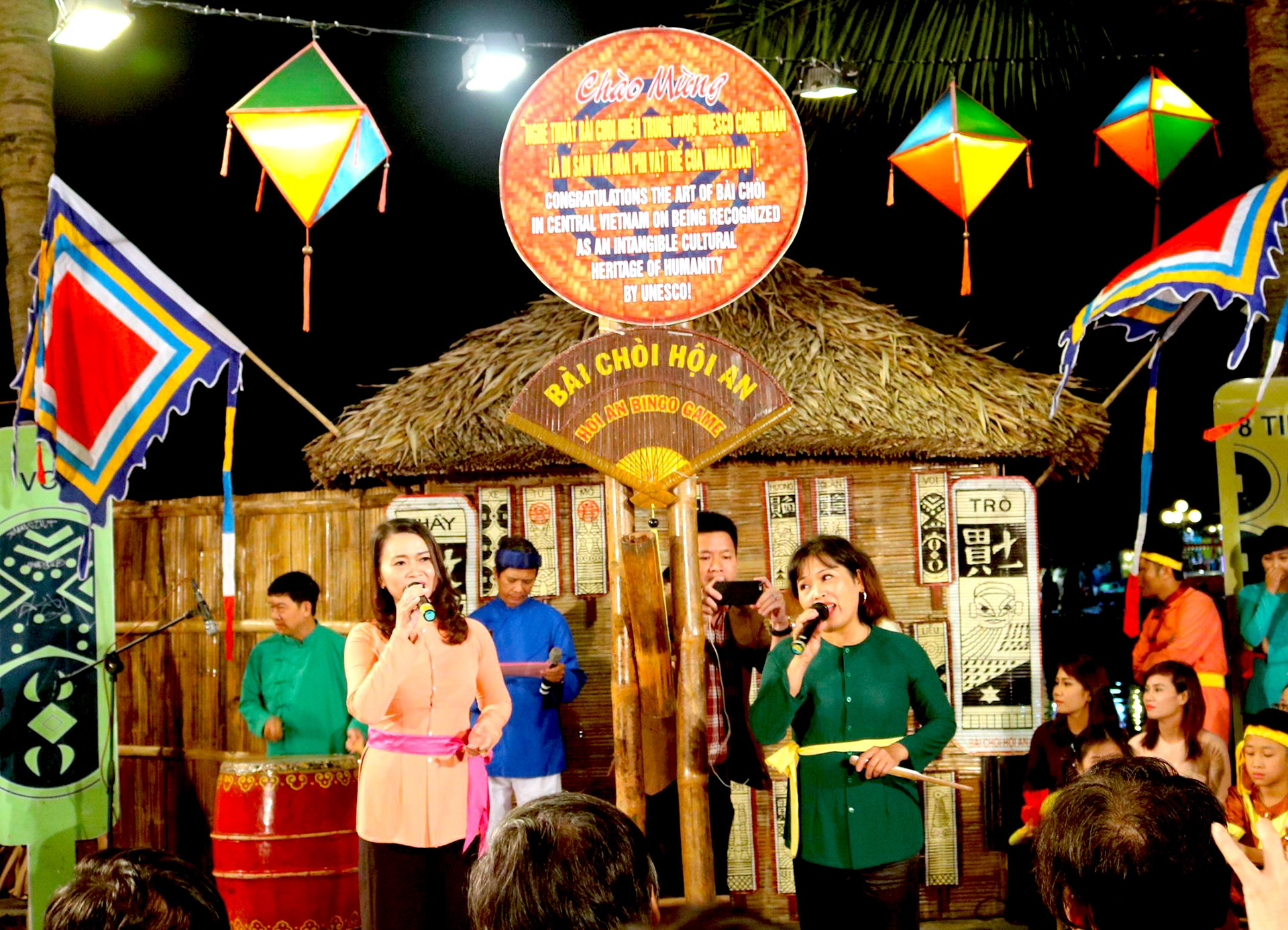
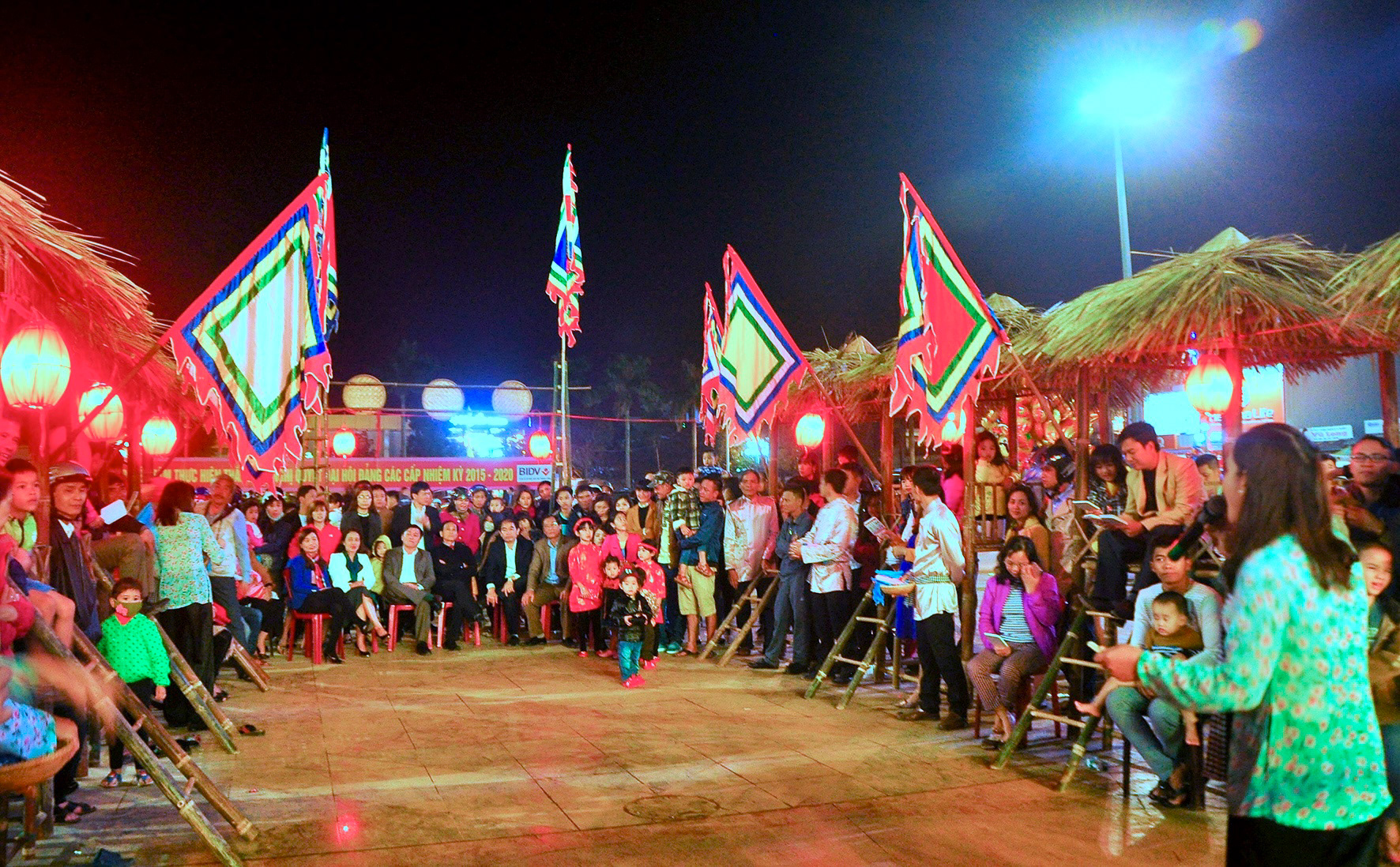
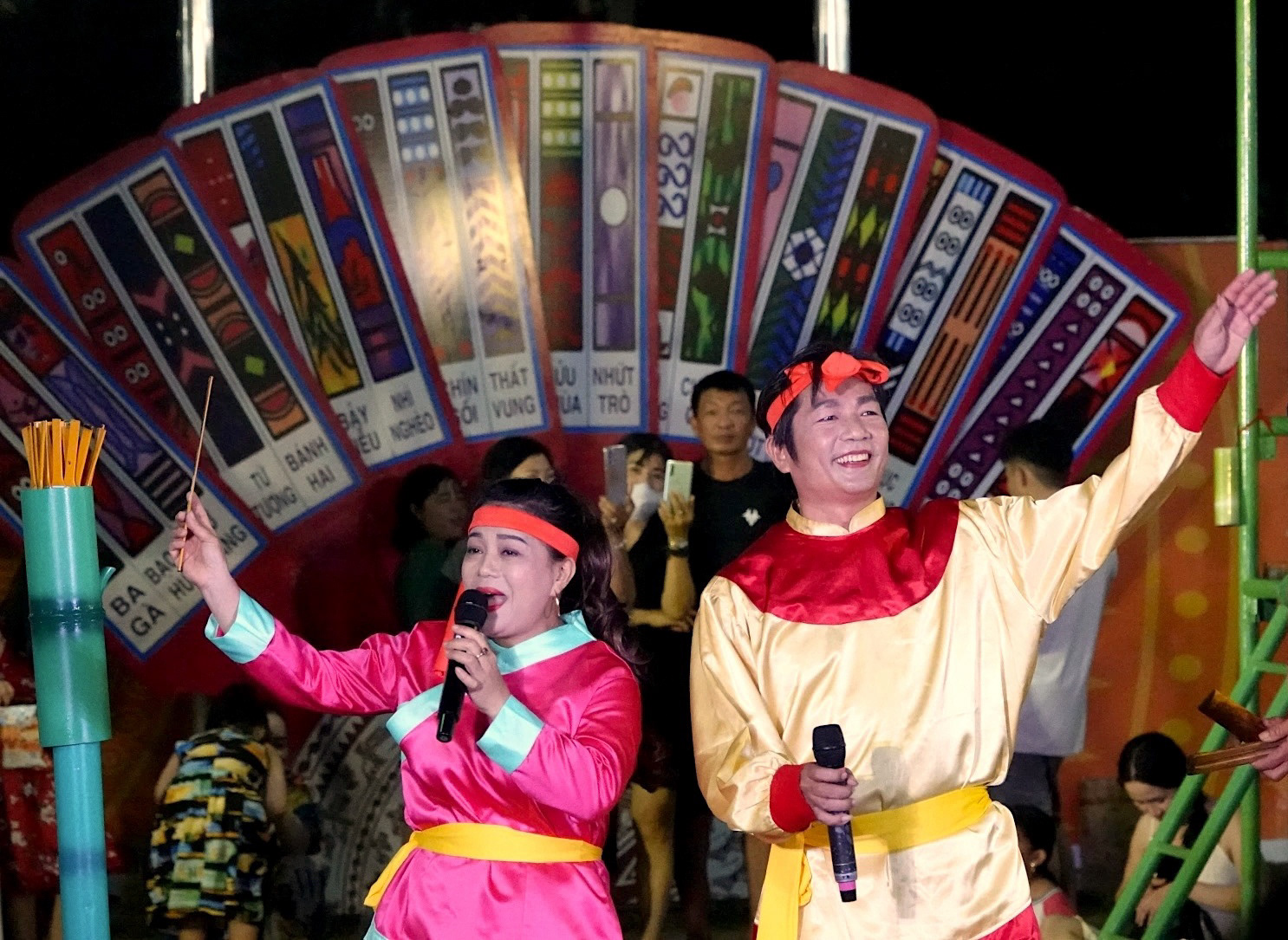
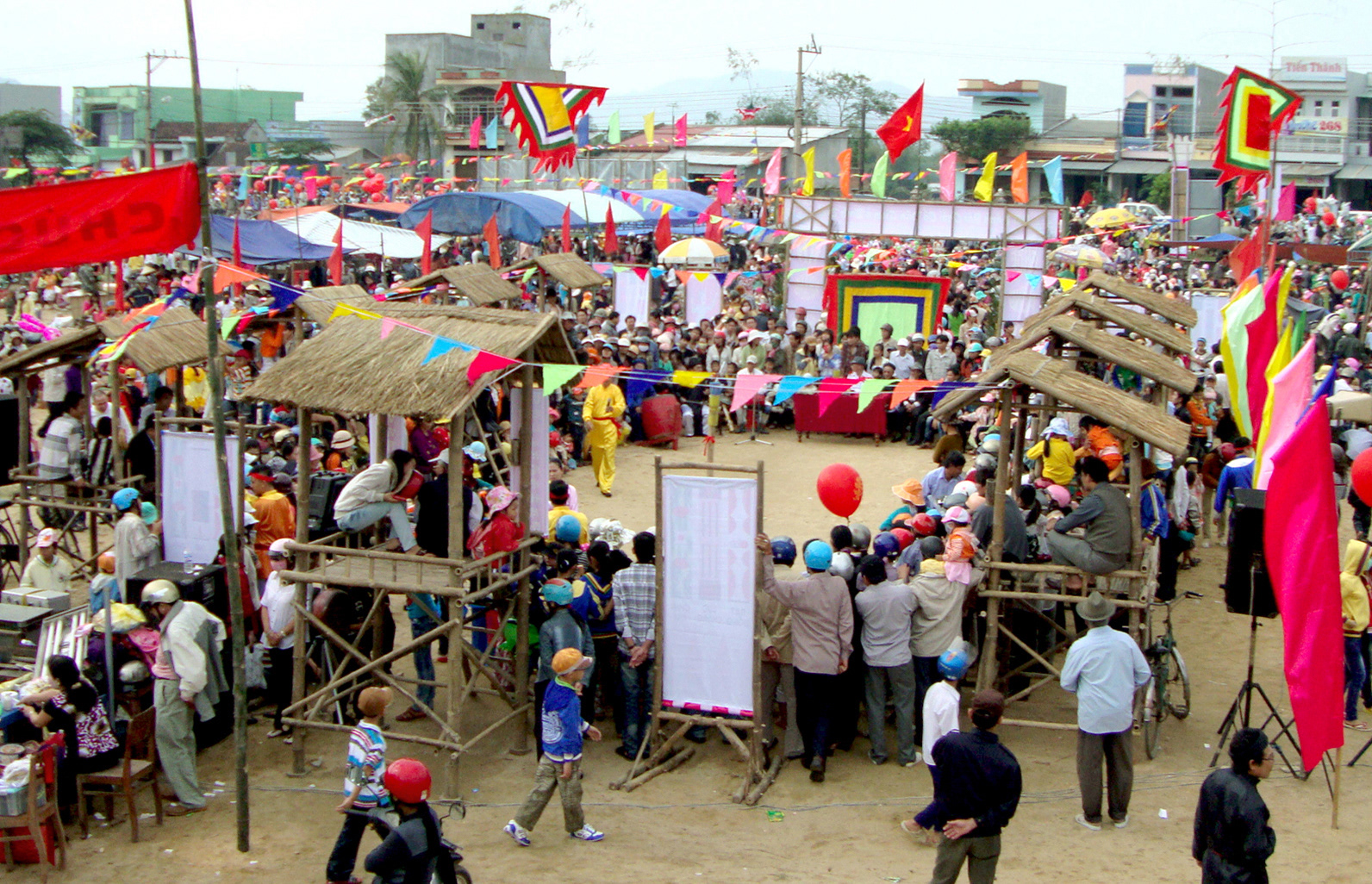
The art of Bài Chòi in Central Viet Nam is a diverse art combining music, poetry, acting, painting and literature. It takes two main forms: ‘Bài Chòi games’ and ‘Bài Chòi performance’. Bài Chòi games involve a card game played in bamboo huts during the Lunar New Year. In Bai Choi performances, male and female Hieu artists perform on a rattan mat, either moving from place to place or in private occasions for families. The bearers and practitioners of the art of Bài Chòi are Hieu artists, solo Bài Chòi performers, card-making folk artists and hut-making folk artists. The art of Bài Chòi is an important form of culture and recreation within village communities. Performers and their families play a major role in safeguarding the practice by teaching song repertoires, singing skills, performance techniques and card-making methods to younger generations. Together with communities, these performers have set up nearly 90 Bài Chòi teams, groups and clubs to practise and transmit the art form, which attracts wide community participation. Most performers of the art learn their skills within the family and the skills are mainly transmitted orally, but artists specializing in Bài Chòi also transmit knowledge and skills in clubs, schools and associations.
Inscribed in 2017 on the Representative List of the Intangible Cultural Heritage of Humanity
© 2016 by Phú Thọ Department of Culture, Sports and Tourism, Viet Nam
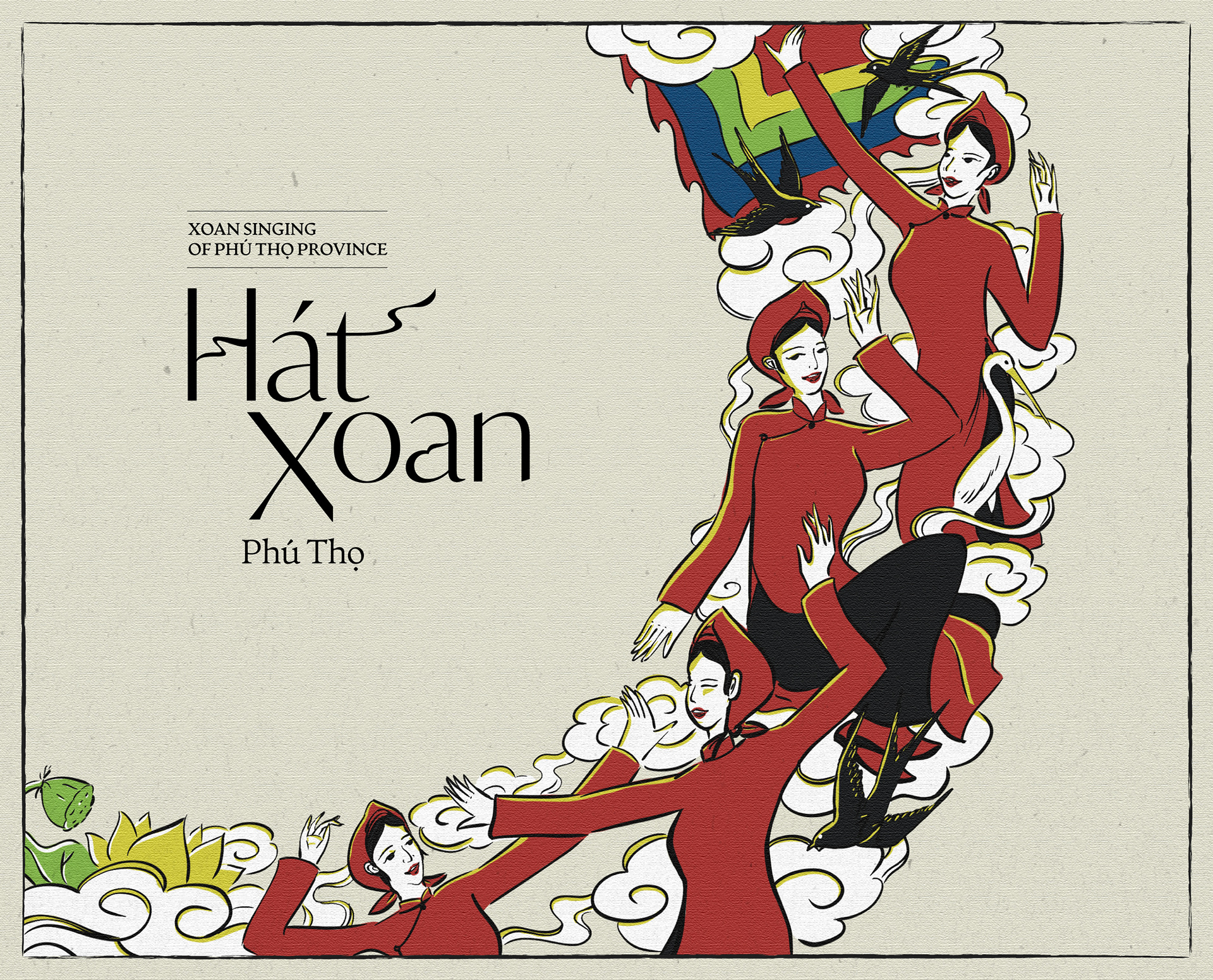
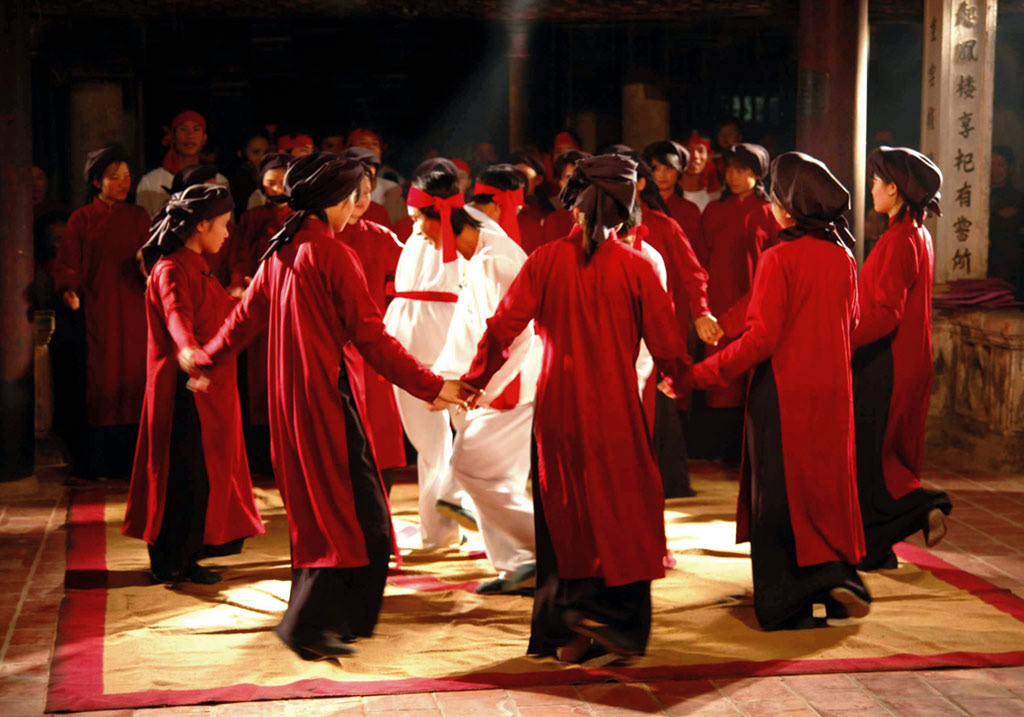
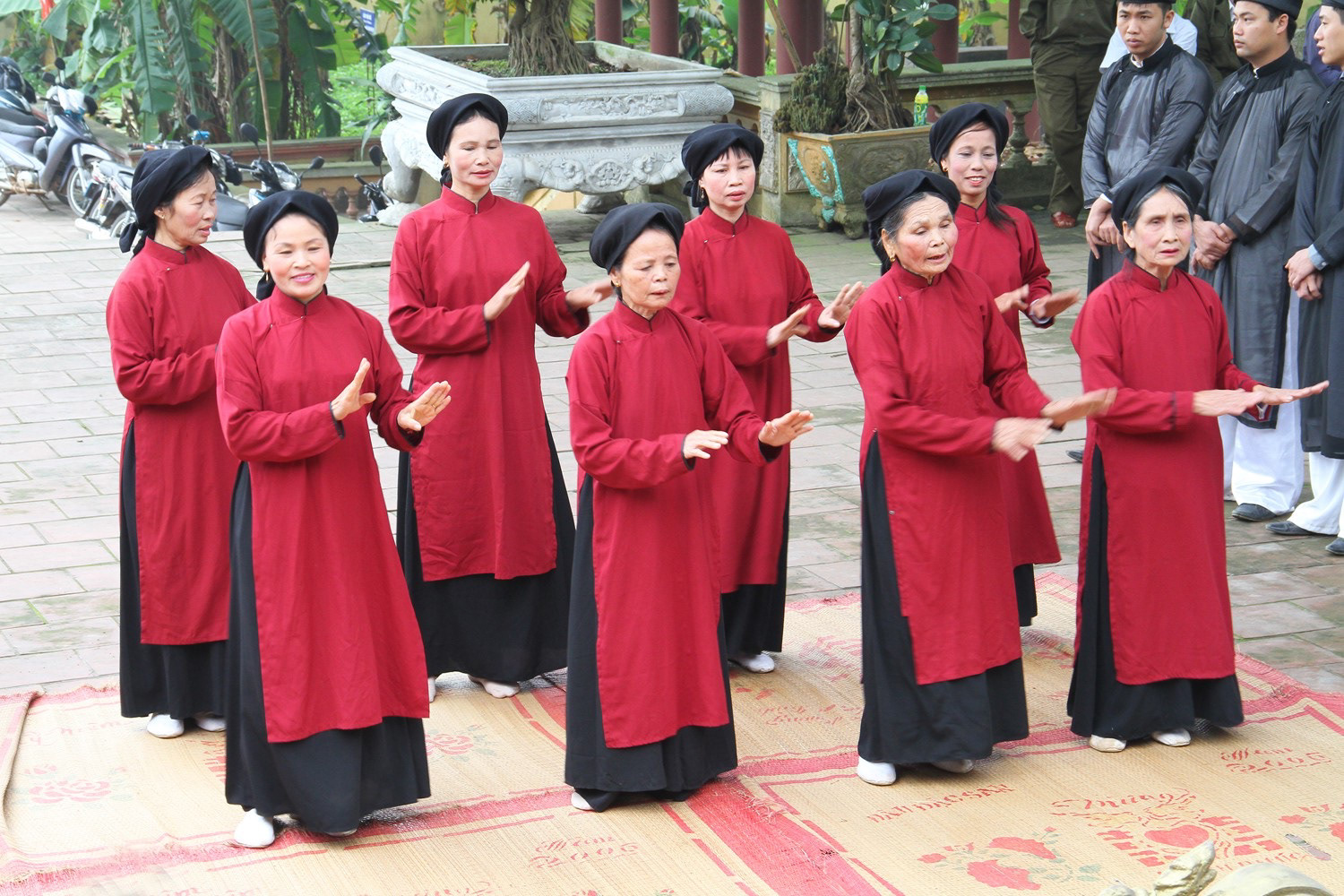
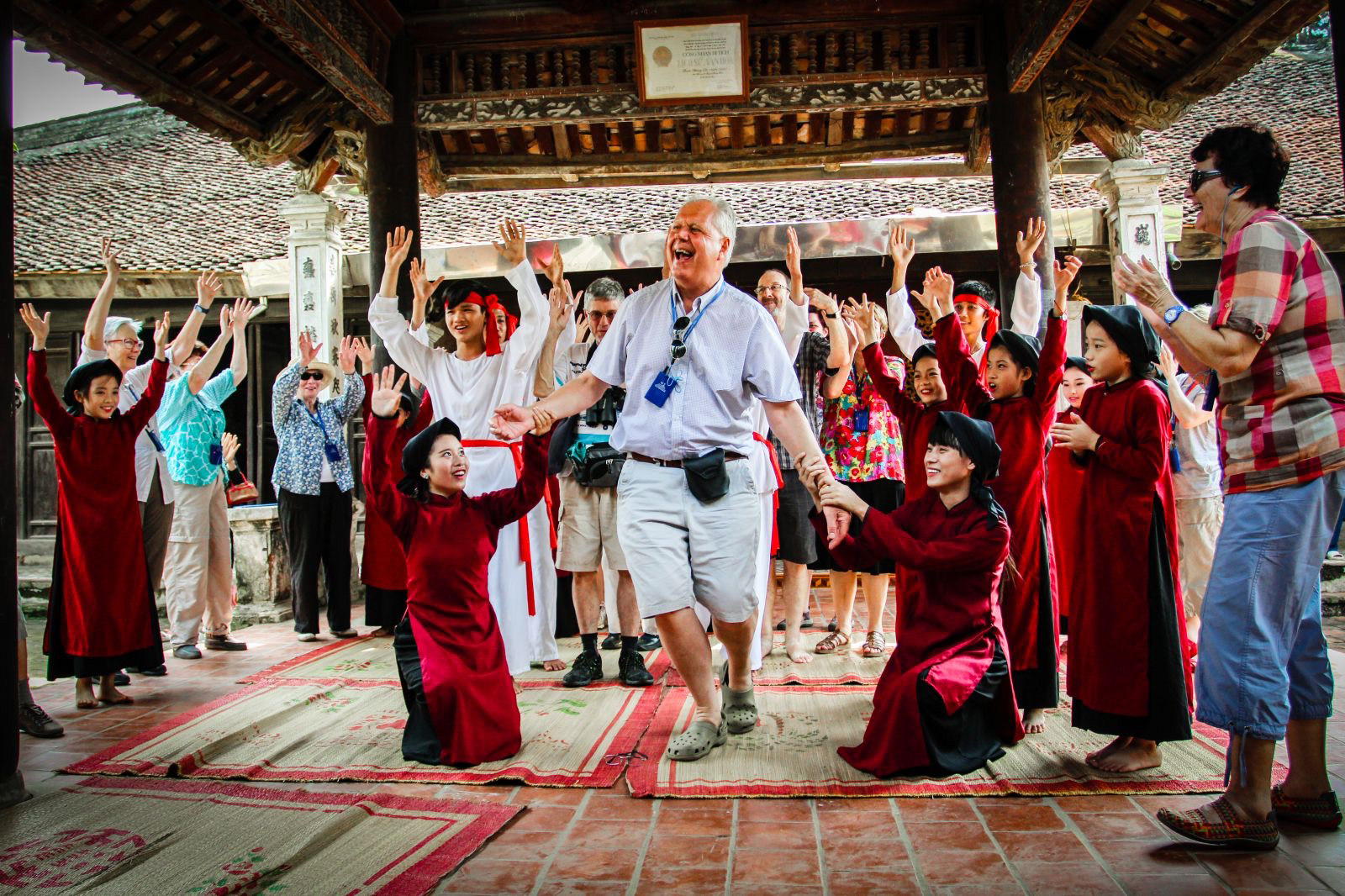
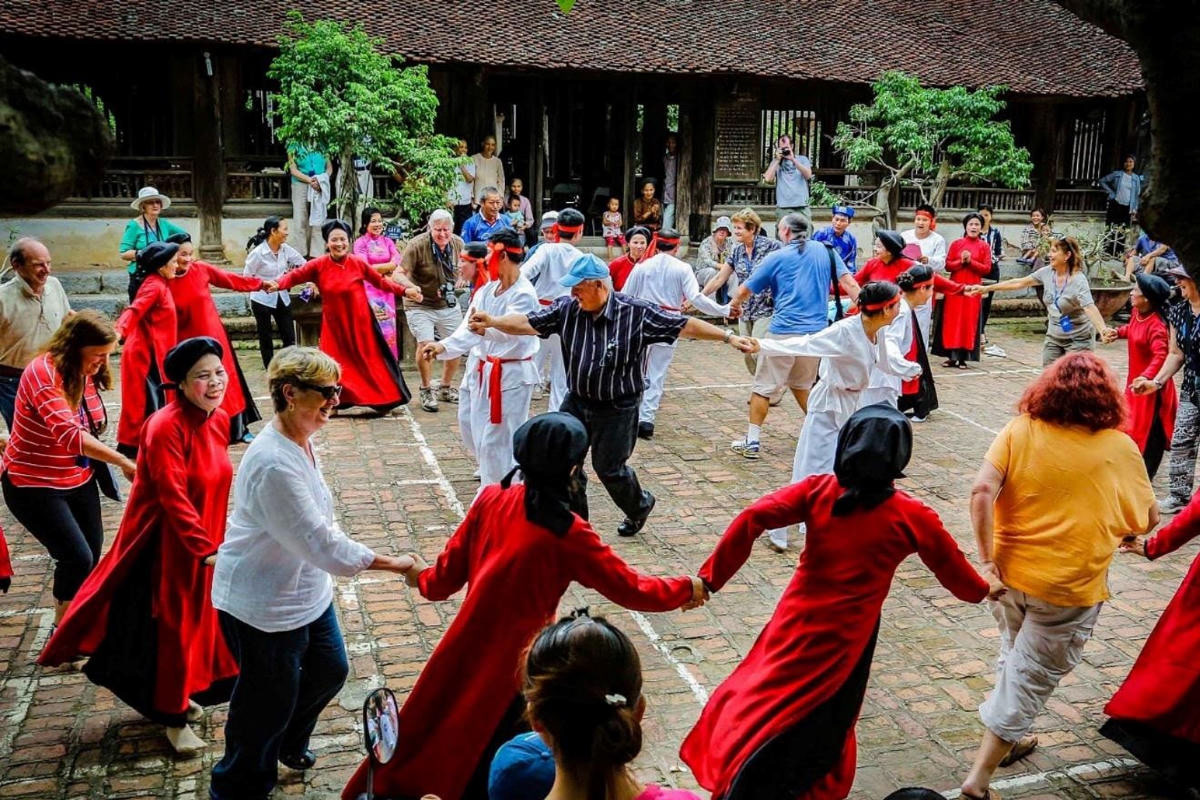
As a performing art, Xoan singing of Pho Tho province includes singing, dancing, drumming and clapper beating. It is closely linked to the worship of the Hung Kings, a belief rooted in the ancestor worship practice of the Viet people. Bearers and practitioners form four guilds, in which the male and female Trum play the most important role; they preserve the songs, select students, transmit the singing styles and repertoires and organize practices. They are also active in introducing and teaching Xoan singing at the four Xoan guilds, and in clubs and guilds. As a community performing art, Xoan singing fosters cultural understanding, community cohesion and mutual respect. The Vietnamese Institute for Musicology has collected 31 Xoan songs, and thanks to the efforts of several Xoan artists four guilds have been established. 33 dedicated clubs also exist, and seminars are held to expand knowledge of Xoan. Leaders and senior Xoan artists transmit the singing orally, combined with the use of written songs and audio and visual recordings. Experienced artists also teach Xoan singing to members of clubs and to music teachers in schools, who then transmit this knowledge to other club members and students.
Inscribed in 2019 on the Representative List of the Intangible Cultural Heritage of Humanity
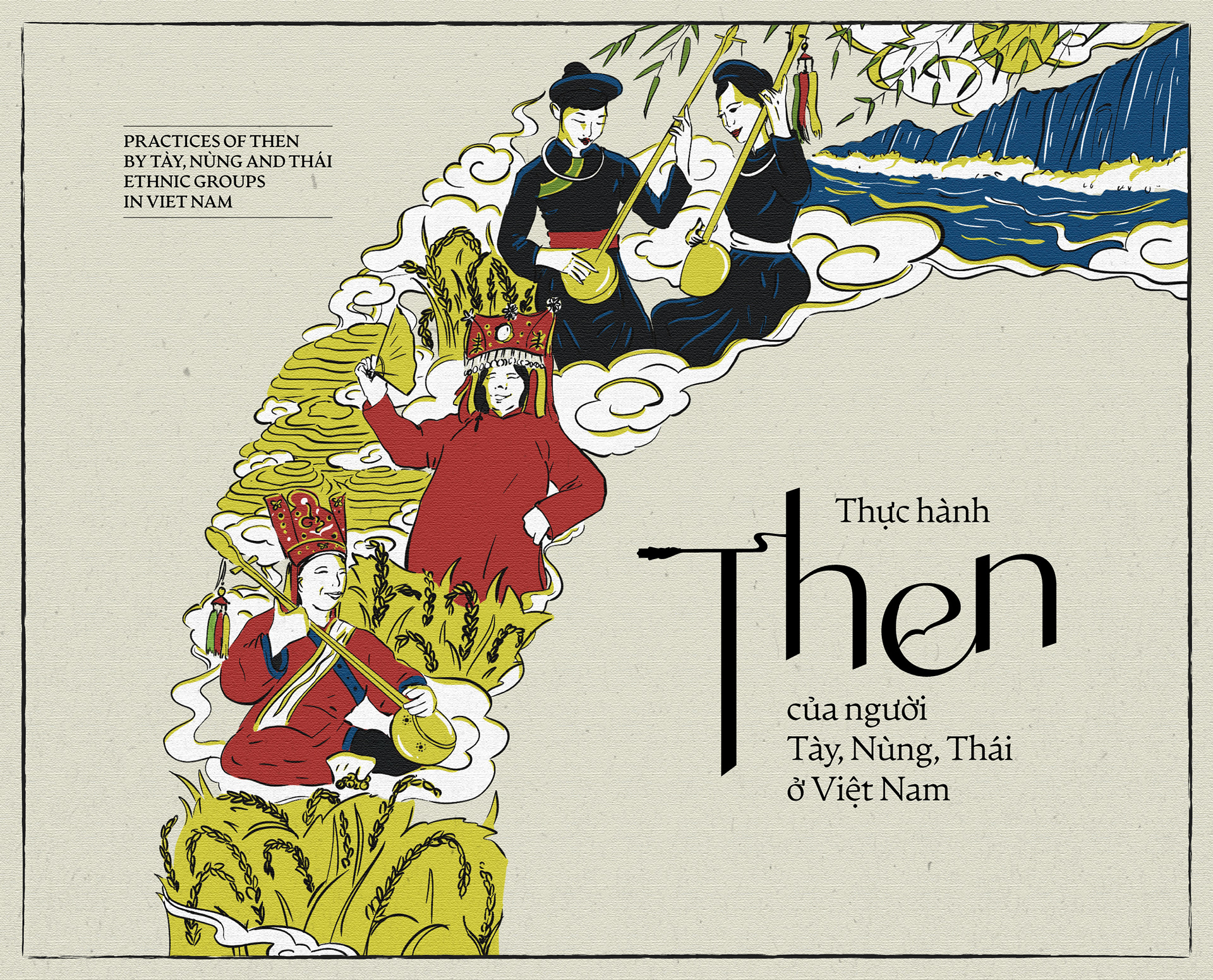
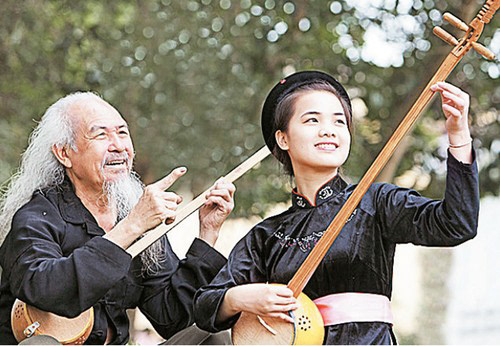
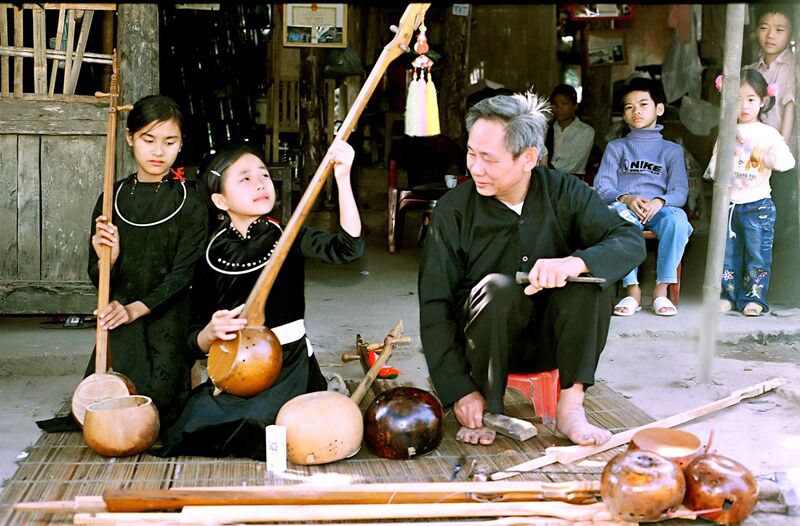
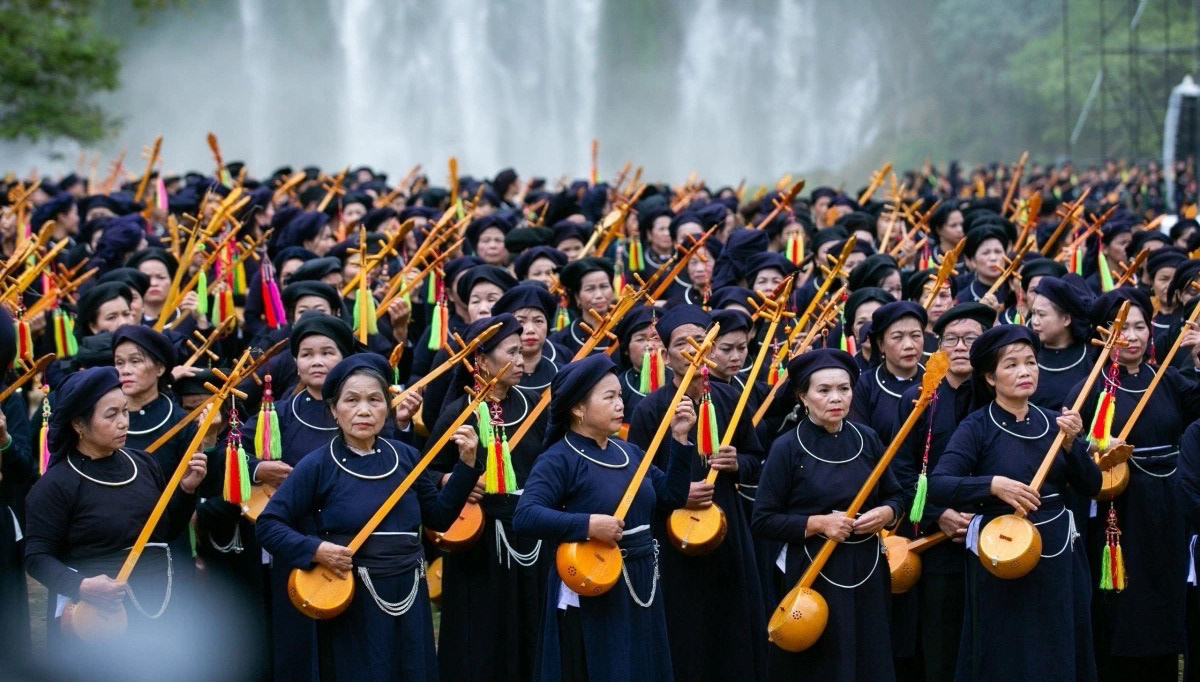
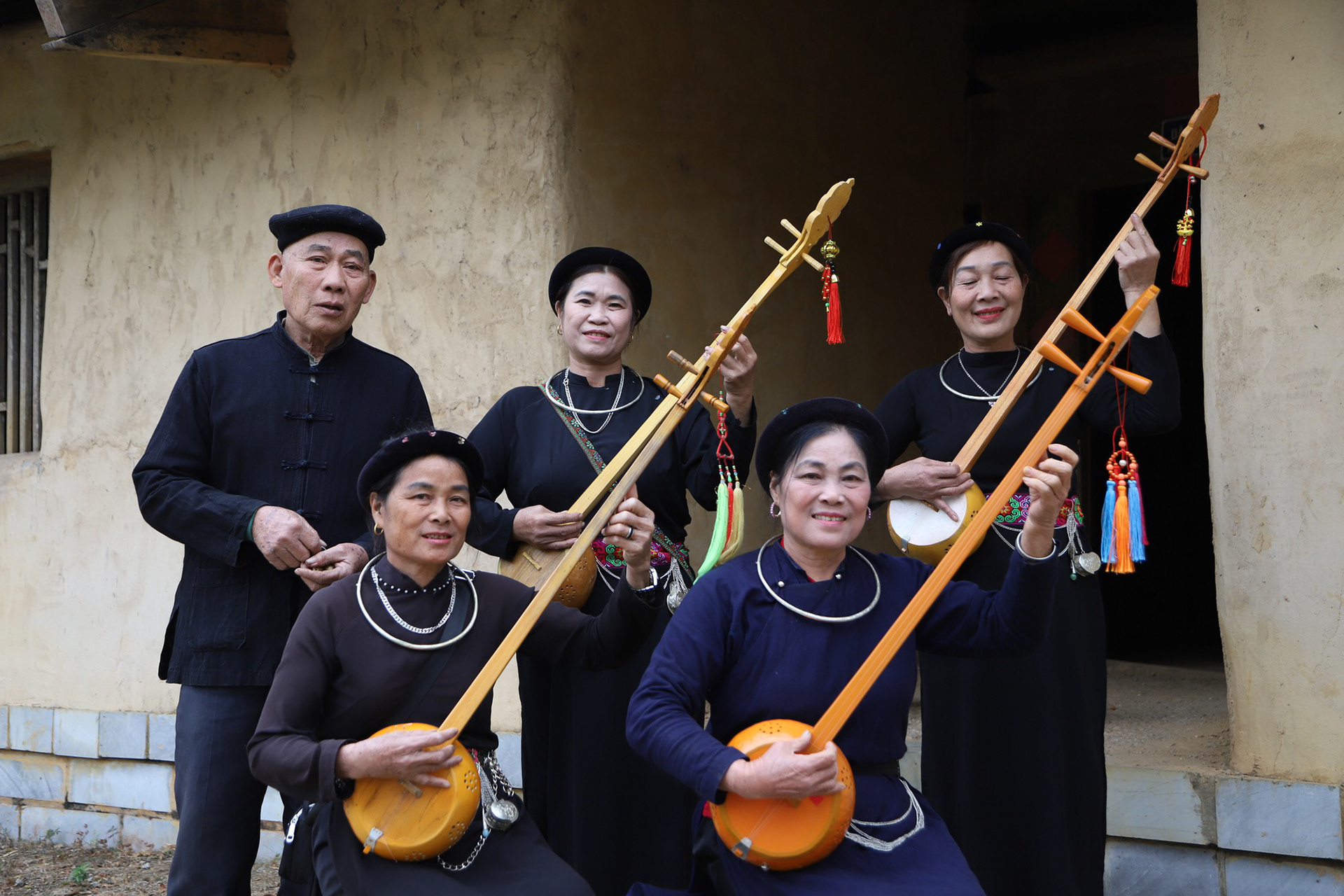
Then, an essential ritual practice in the spiritual life of the Tày, Nùng and Thái ethnic groups in Viet Nam, reflects concepts about human beings, the natural world and the universe. Then ceremonies describe a journey in which the Then Master (male or female) controls ghost soldiers travelling from the earth realm to the heaven realm, to offer items of worship and present their prayers for peace, for treating illnesses, good crops, a happy new year, etc. The Then Master starts the journey by singing and plucking a tính lute. Depending on the worshipping purposes, Then masters arrange worship trips to pray to different native Gods. Then masters use various items – such as a demon-expelling sword, a yin and yang rod, a bell, etc. – to perform ceremonies in the believer’s house, outdoors or at the Then alter of the Master’s house. The Master wears ceremonial dress, sings in the language of their ethnic group, plays the tính lute, shakes rattle-bells and waves a fan. Some ceremonies are accompanied by a female dancing group. Then is always transmitted orally while its rituals are conducted, reflecting its succession between the generations, and Then Masters play a key role in passing on the related skills and know-how, with some conducting around 200 ceremonies a year.
Inscribed in 2021 on the Representative List of the Intangible Cultural Heritage of Humanity
© Viet Nam National Institute of Culture and Arts Studies, 2019
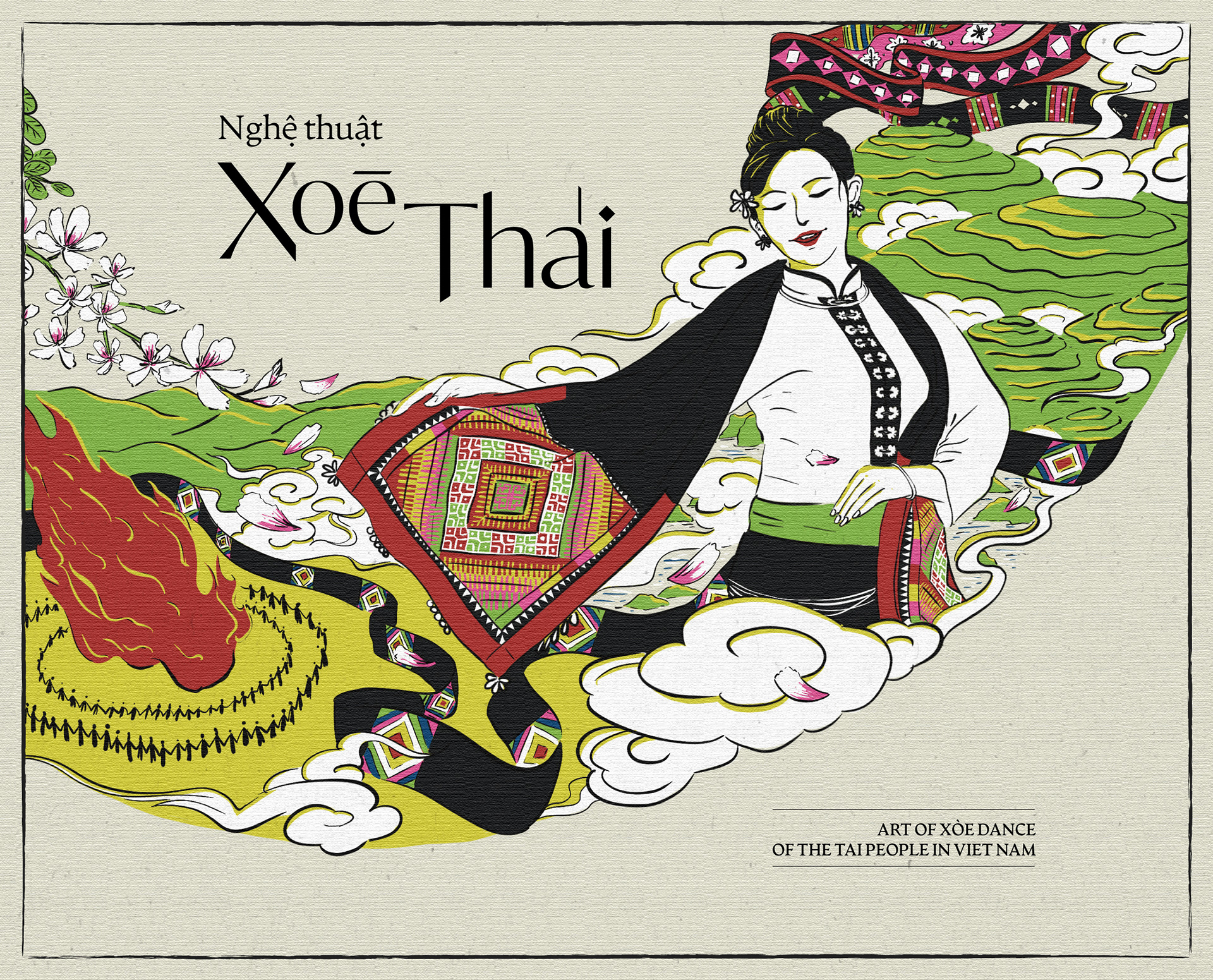
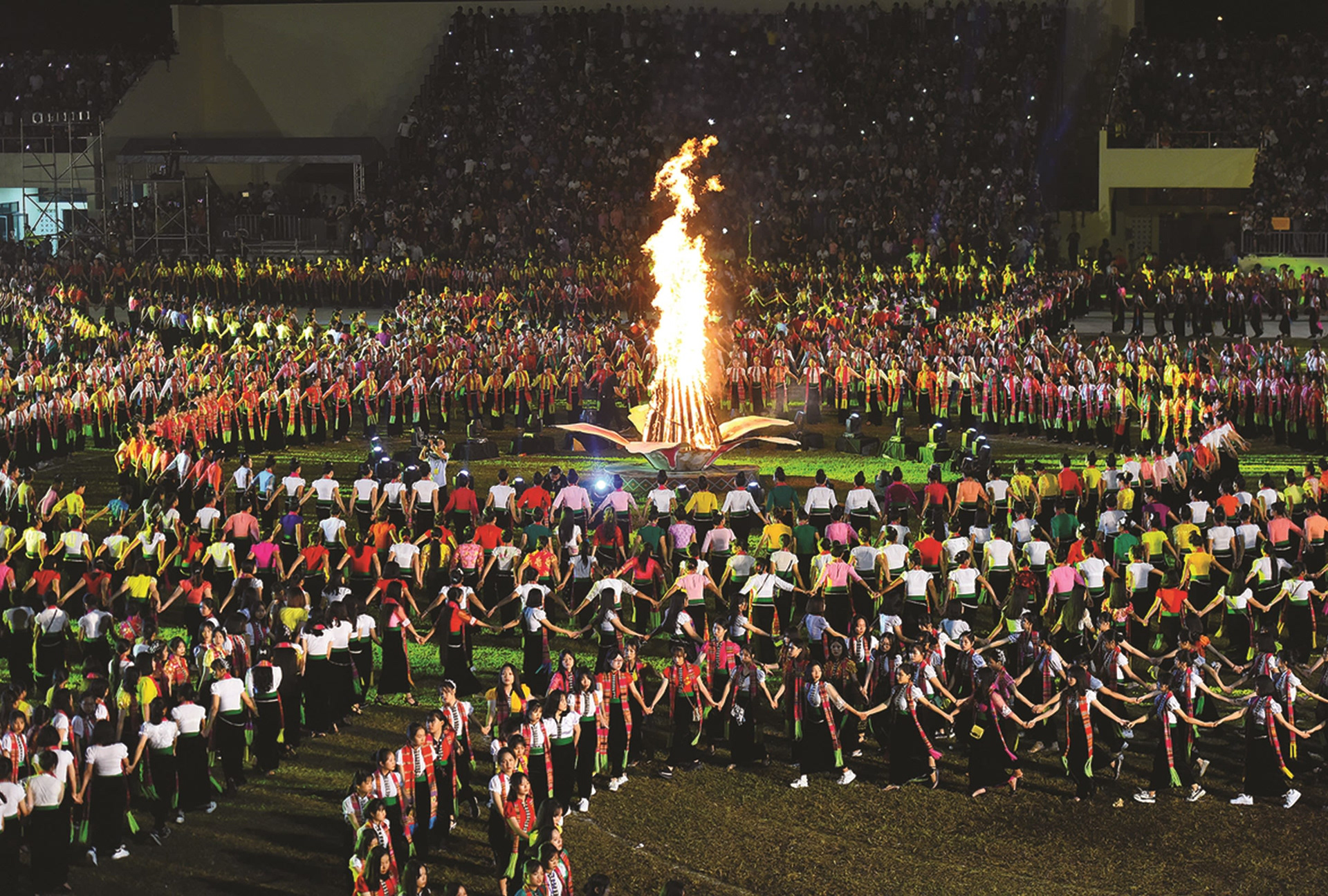
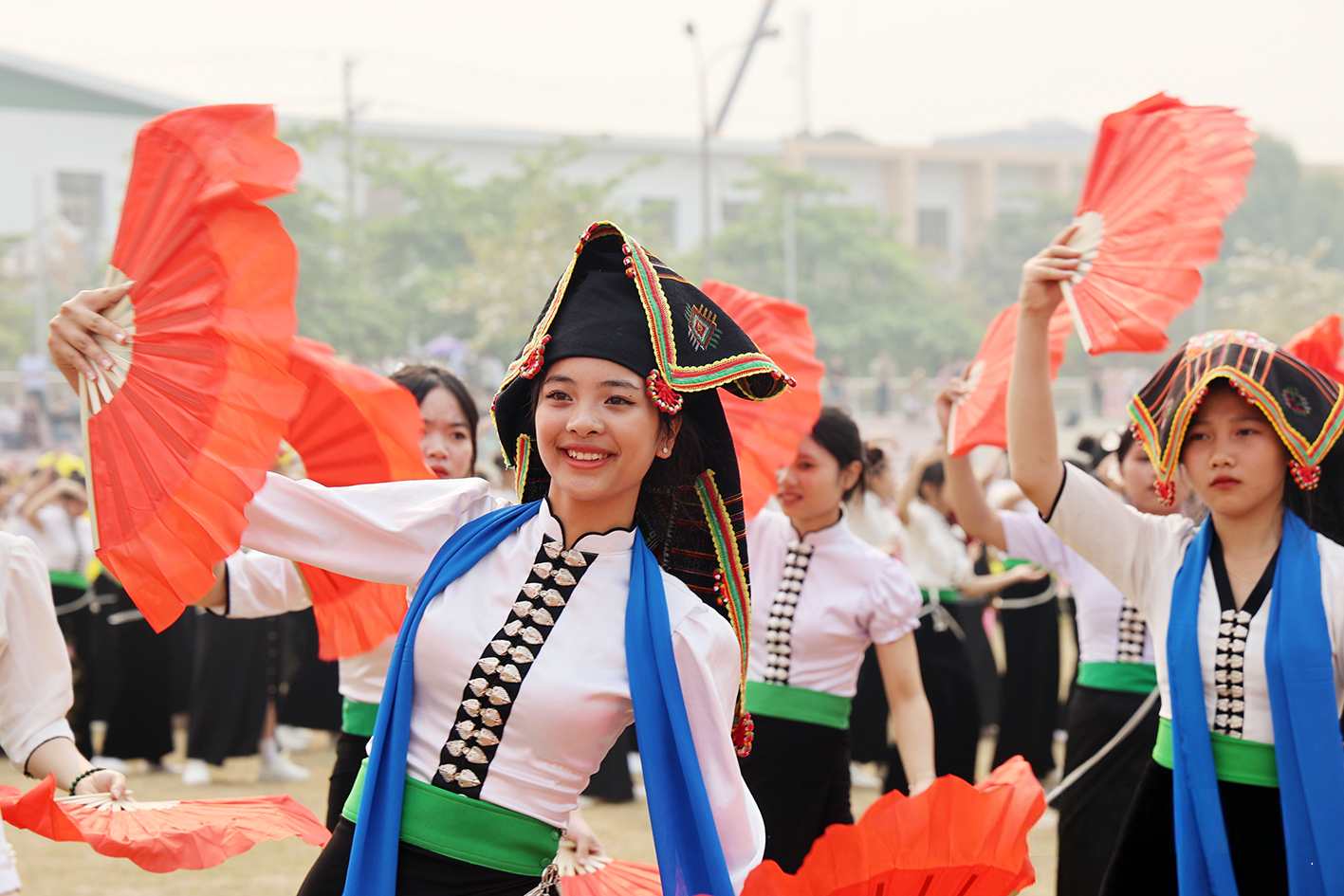
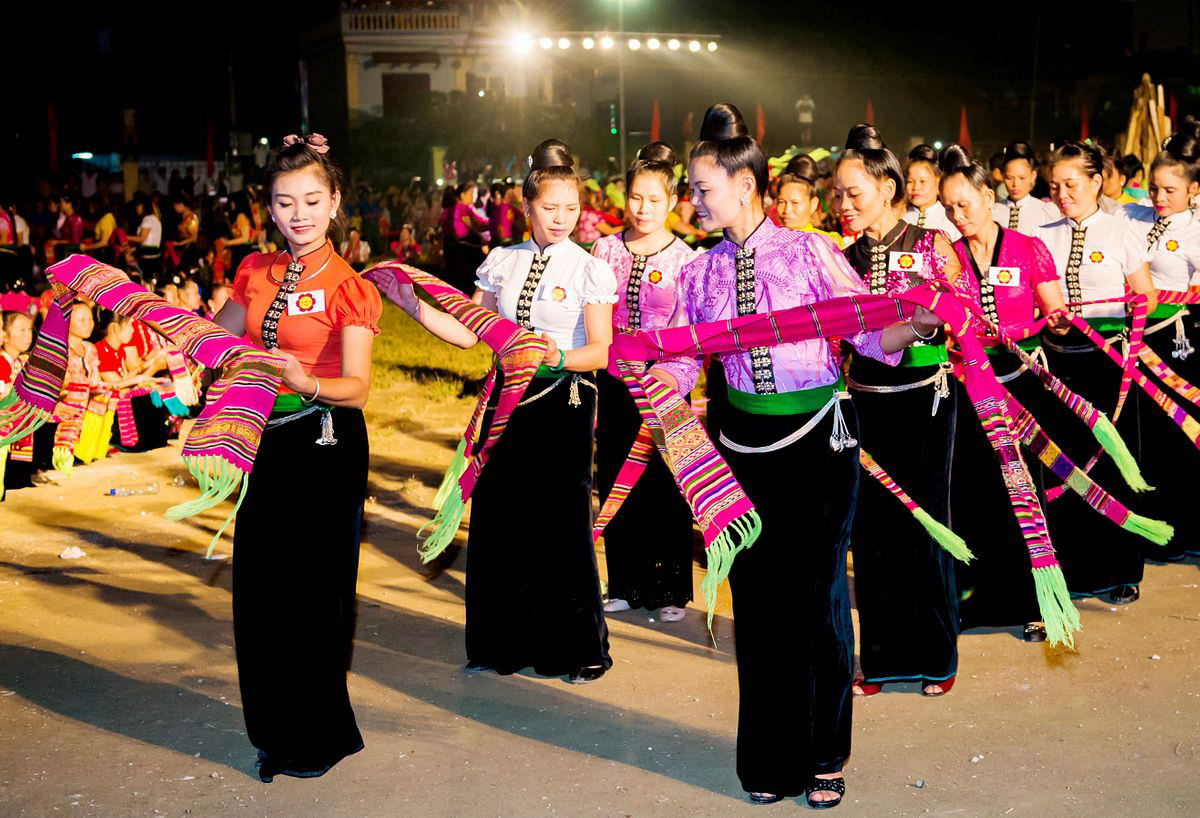
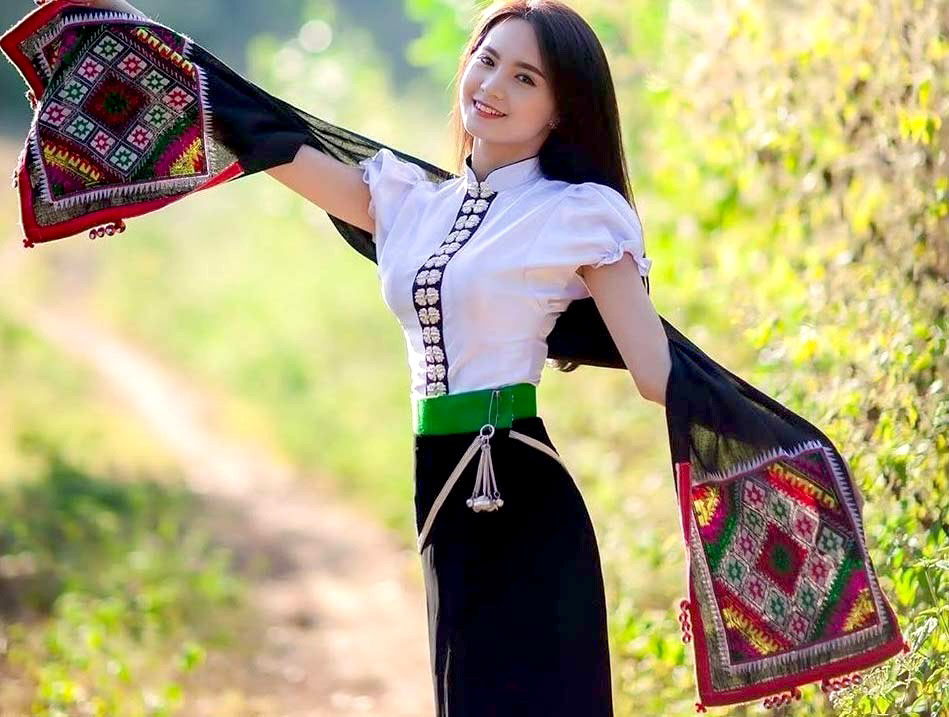
Xoè is a form of Vietnamese dancing with movements that symbolize human activities in ritual, culture, life and work. It is performed at rituals, weddings, village festivals and community events. There are three main types of xòe: ritual, circle and presentational. The ritual and presentational xòe dances are named after props used during certain performances. For instance, there is scarf xòe, conical hat xòe, fan xòe, bamboo pole xòe, music xòe, stick xòe and flower xòe. But the most popular form is circle xòe, wherein dancers form a circle and perform in harmony. The basic movements include raising and opening the hands, then lowering them and clasping the hands of the adjacent person. The dancers follow rhythmic footsteps, slightly arching the chest and leaning backwards. Although simple, the dance movements symbolize wishes for community health and harmony. The dance is accompanied by various musical instruments, including gourd lutes, mouth organs, drums, gongs, cymbals and reed flutes. The instrumental music blends with the vocals and the jingling of the silver jewellery hanging around the waists of the women. Transmitted from generation to generation within families, dance troupes and schools, the xòe dance has become a symbol of hospitality and an important identity marker for the Tai people in north-western Viet Nam.
Inscribed in 2022 on the List of Intangible Cultural Heritage in Need of Urgent Safeguarding
© Vietnam National Sub-Institute of Culture and Arts Studies in Ho Chi Minh City, 2018
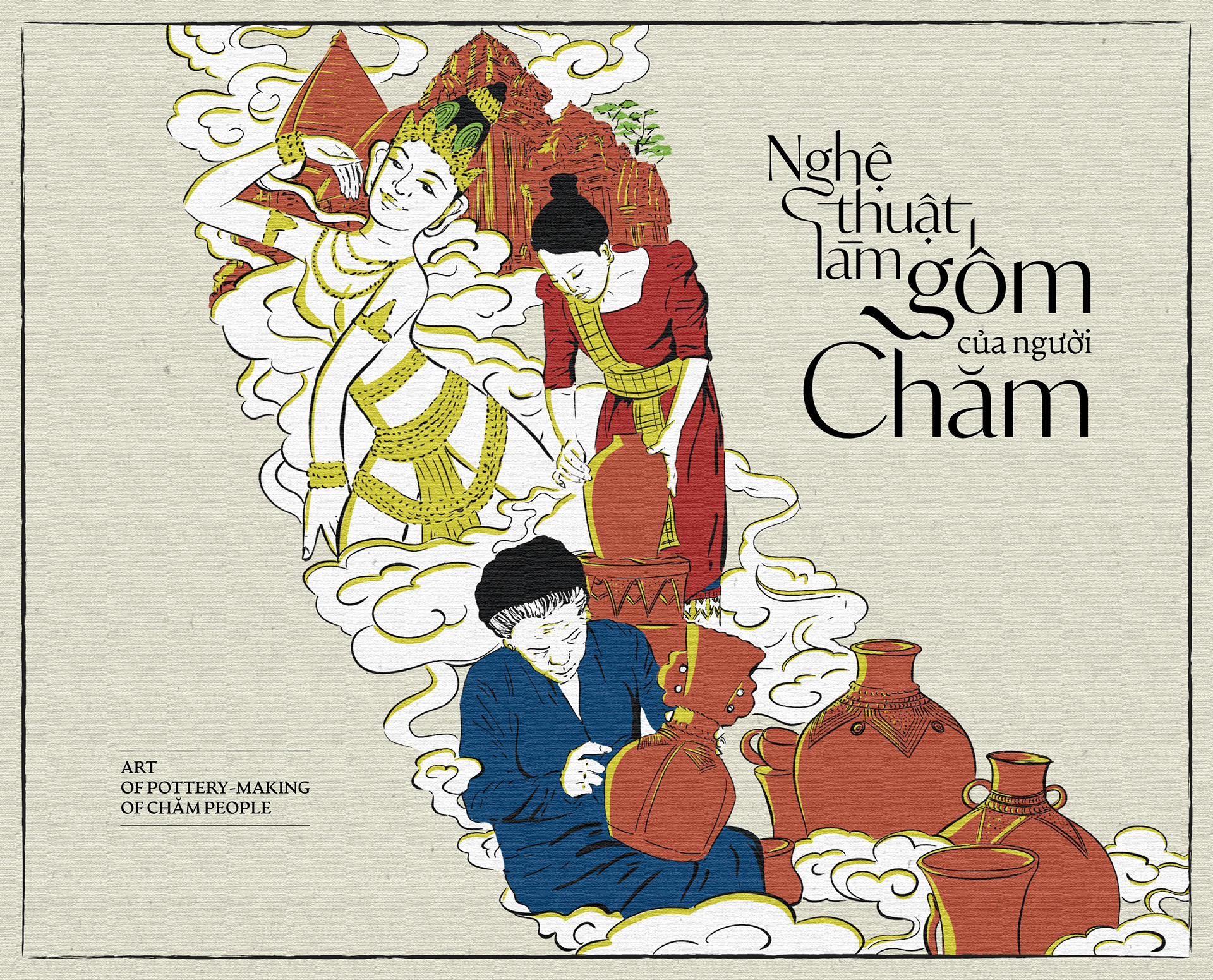
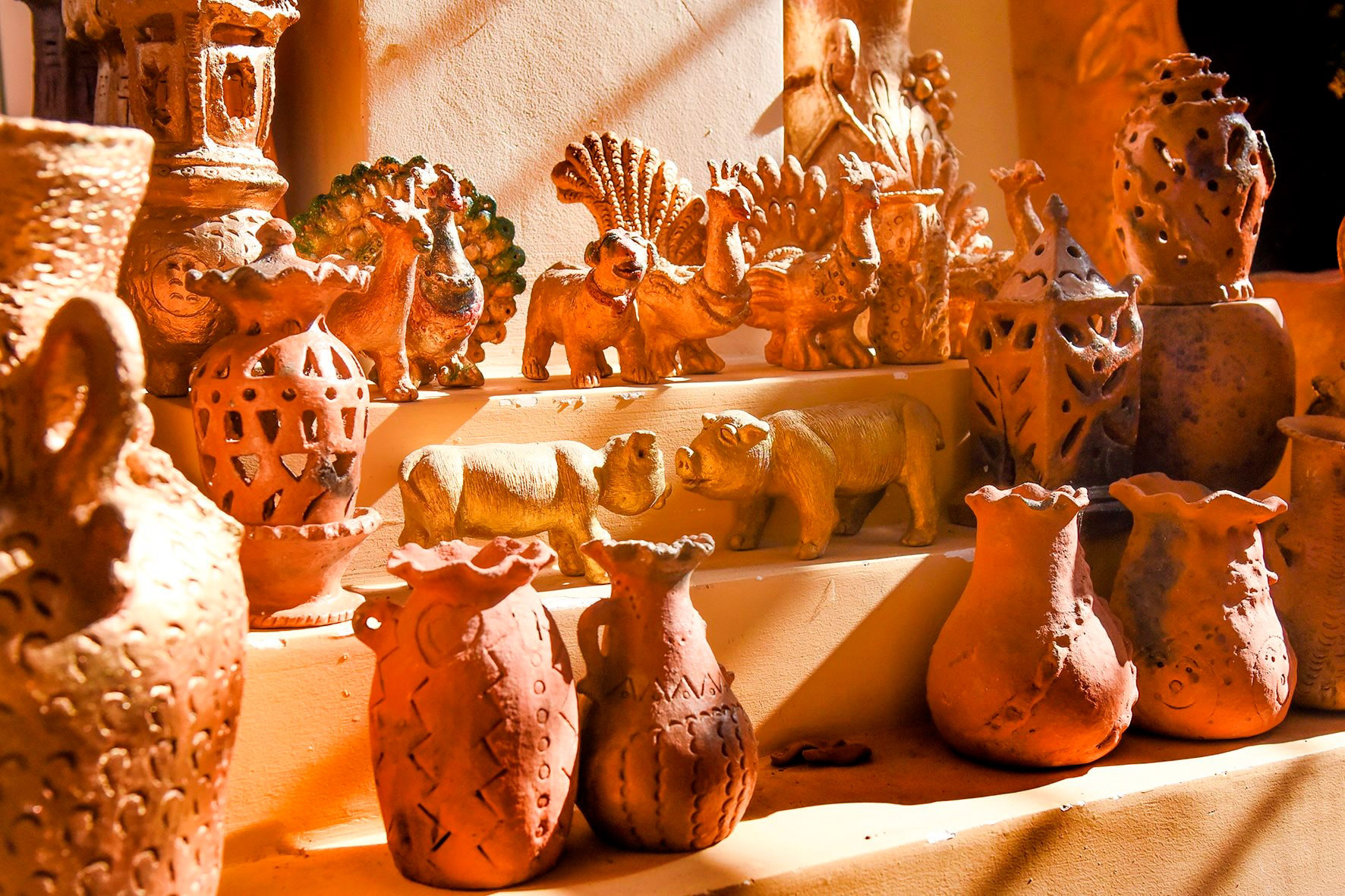
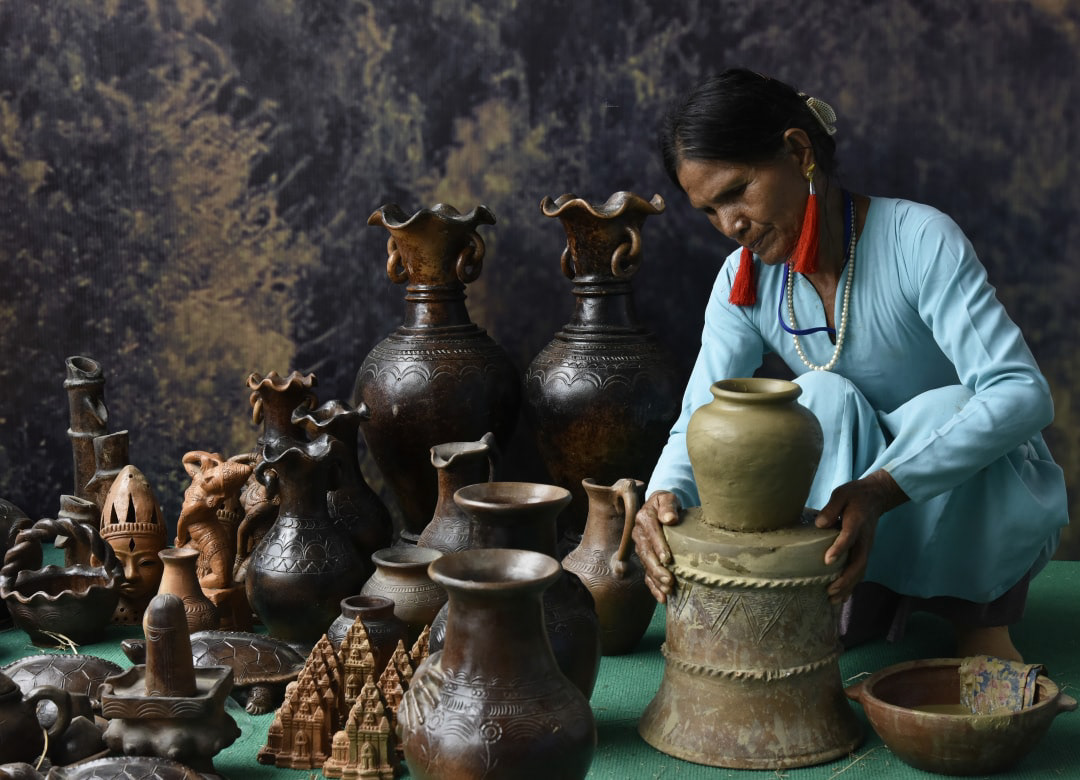
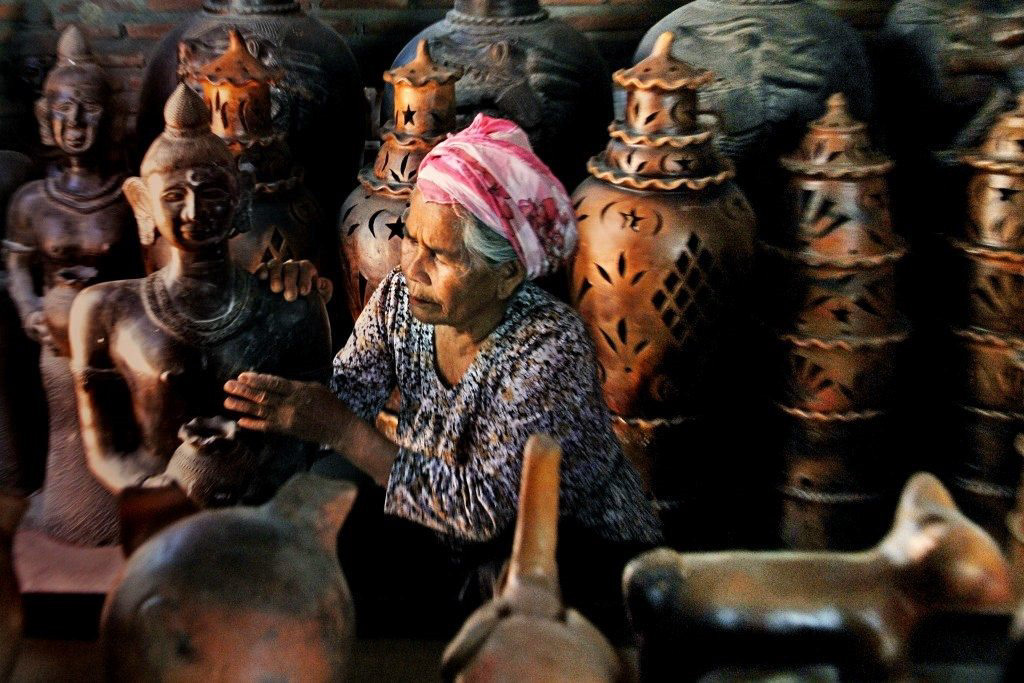
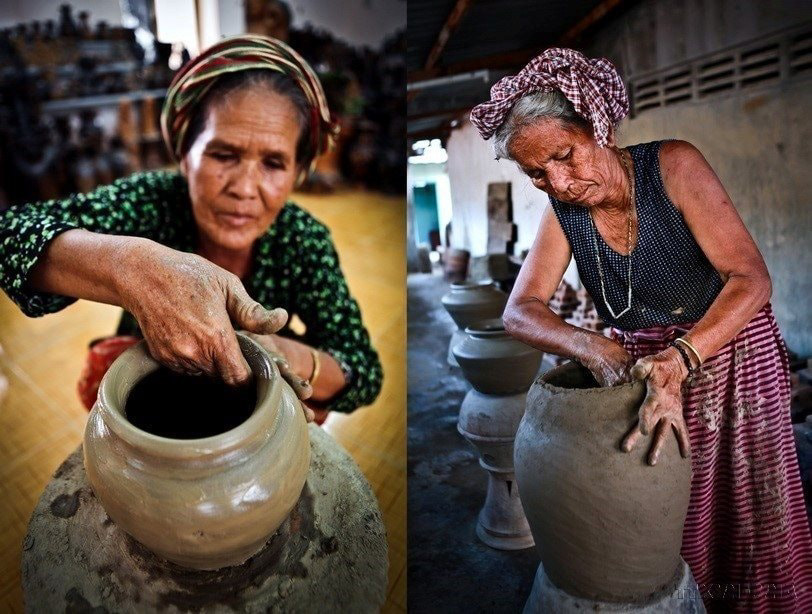
Chăm pottery products are mainly household utensils, religious objects and fine art works, including jars, pots, trays and vases. They are made by women and viewed as an expression of individual creativity based on the knowledge transmitted within the community. Instead of using a turntable, the women revolve around the piece to shape it. The pottery is not glazed but fired outdoors with firewood and straw for seven to eight hours, at a temperature of about 800 degrees Celsius. Raw materials (clay, sand, water, firewood and straw) are collected locally, and the knowledge and skills are passed on to younger generations within families through hands-on practice. The practice gives women the opportunity to exchange and interact with each other in productive labour and social activities as well as in vocational education for their children, further enhancing their role in society. It can also help bolster family income and safeguard the habits, customs and cultural identities of Chăm people in Viet Nam. However, despite many safeguarding efforts, the viability of the craft is still at risk for several reasons, including the impact of urbanization on access to raw materials, insufficient adaptation to the market economy and lack of interest among younger generations.
Inscribed in 2024 on the Representative List of the Intangible Cultural Heritage of Humanity
© Châu Đốc People's Committee, Viet Nam, 2022
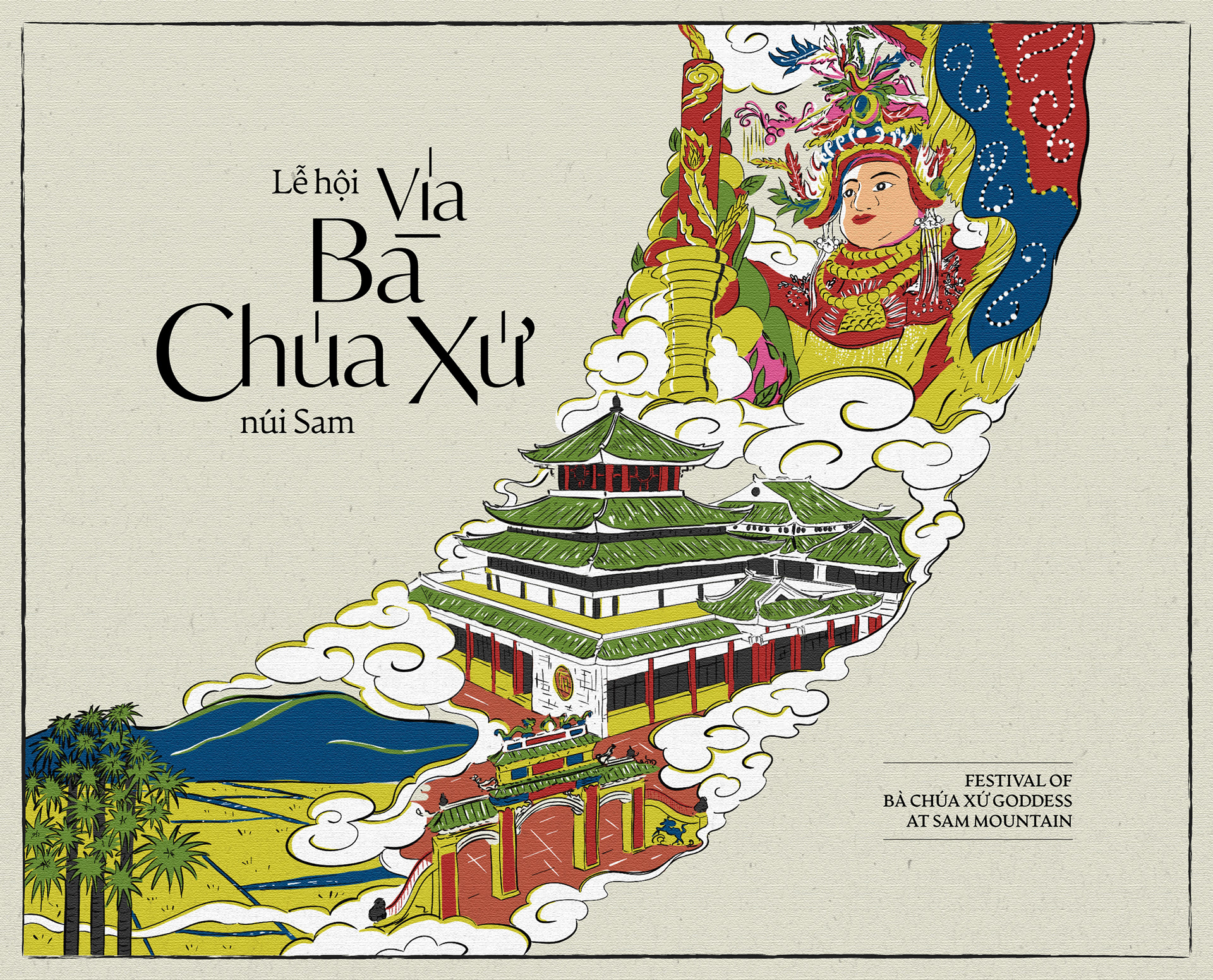
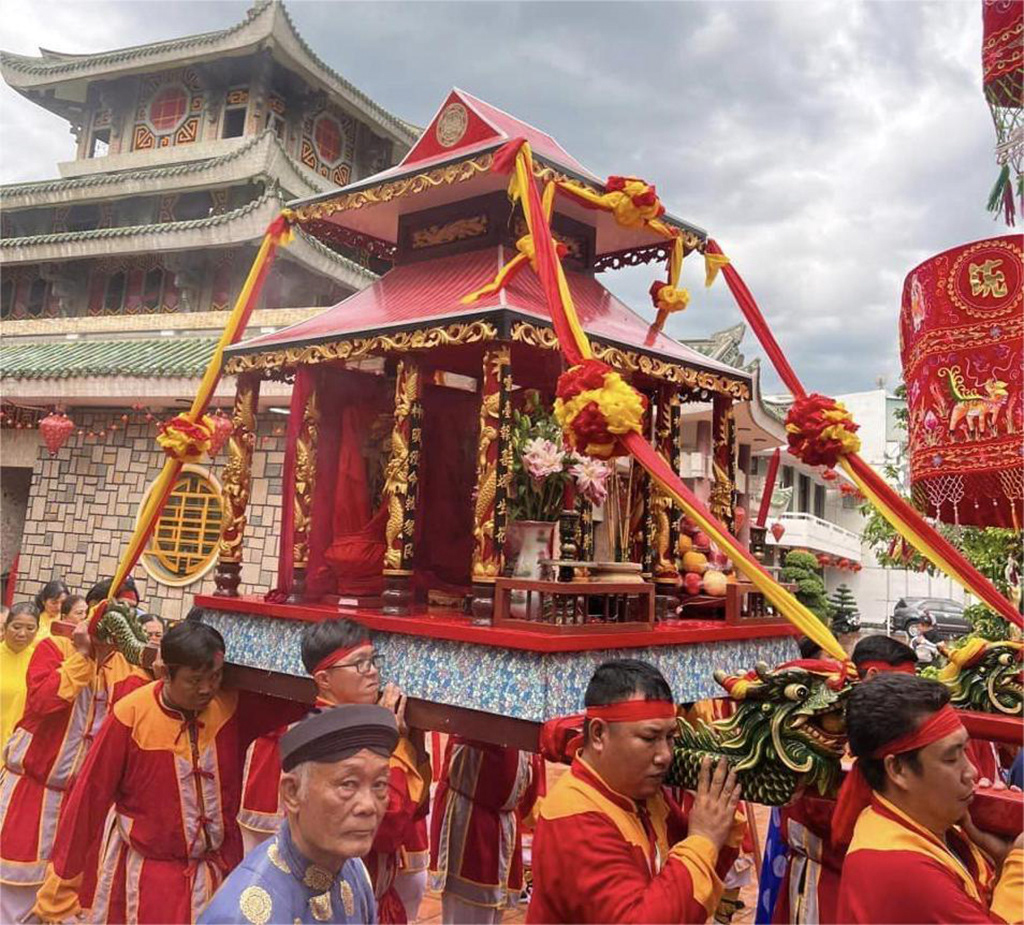
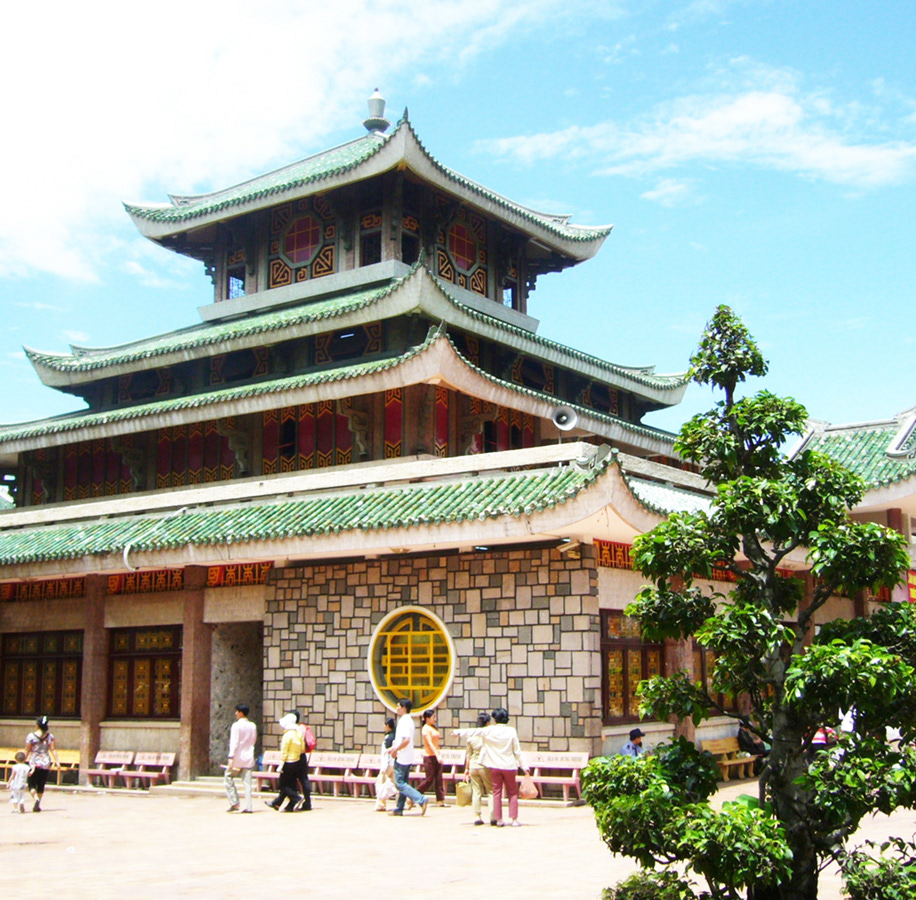
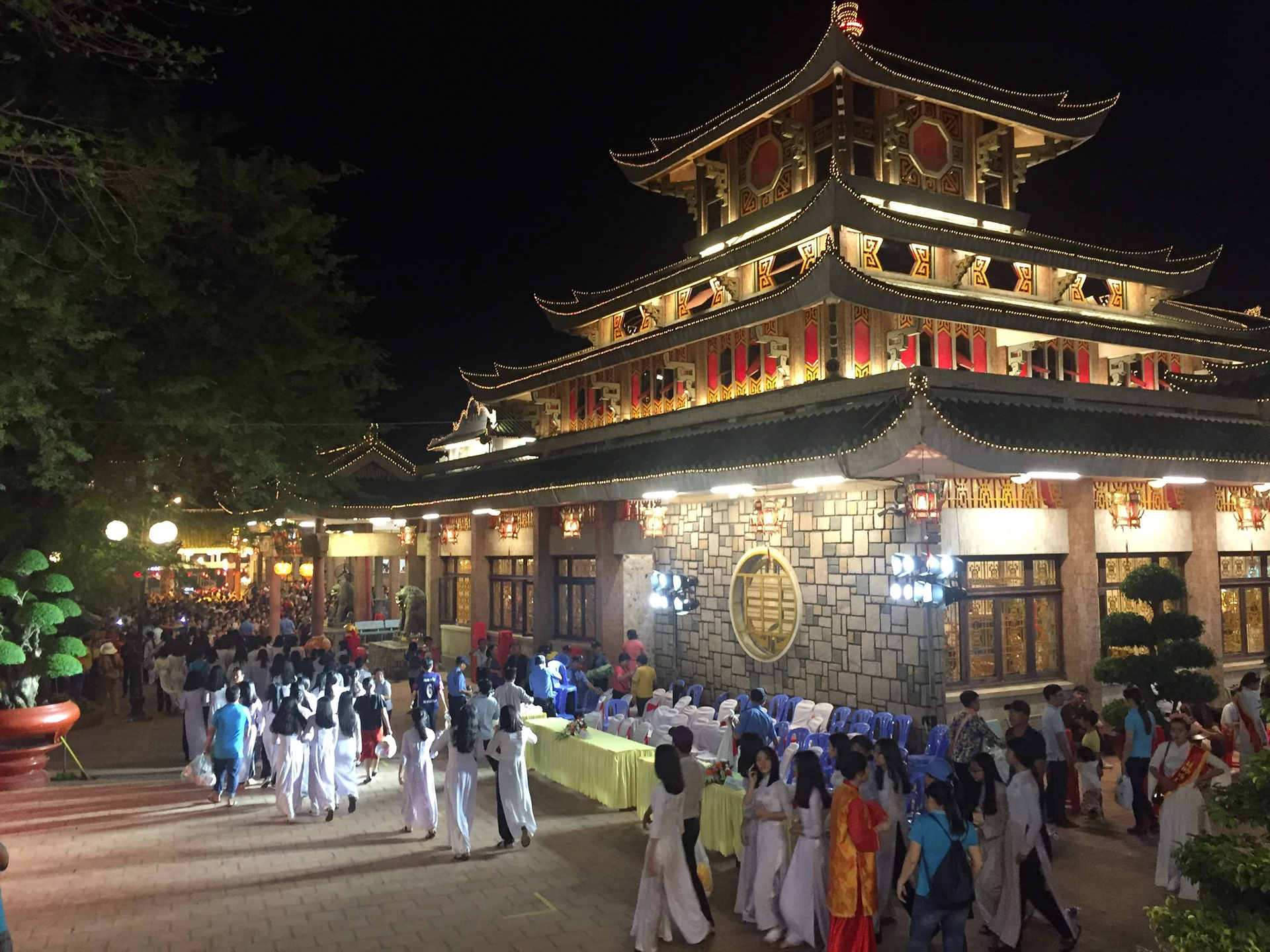
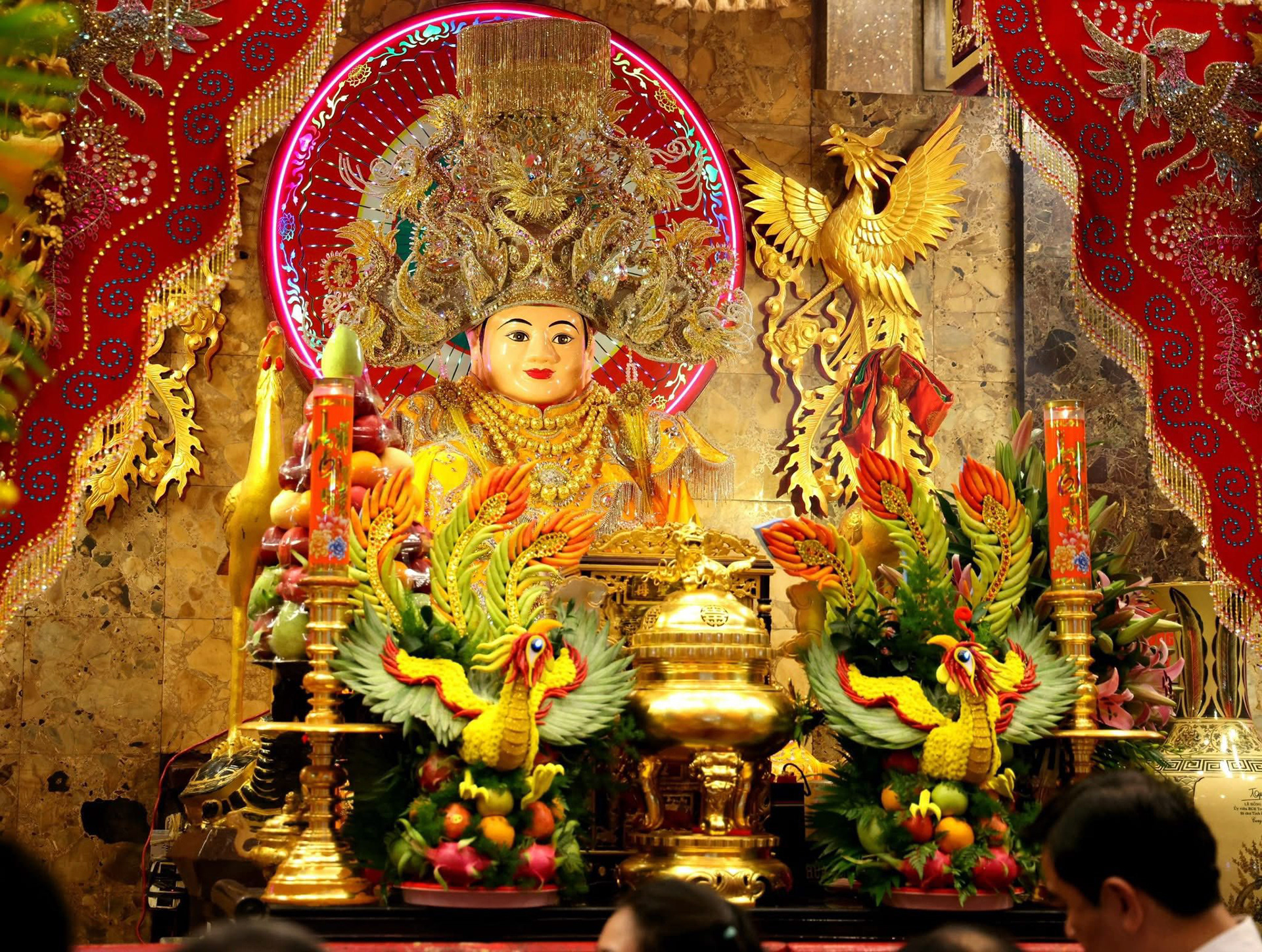
The festival of Bà Chúa Xứ Goddess at Sam Mountain takes place from the 22nd to the 27th day of the fourth lunar month. Observed by the Kinh, Khmer, Cham and Hoa communities in Châu Đốc city, it entails performing religious ceremonies and music and dance to express gratitude to the Mother Earth goddess, who is believed to grant protection and promote prosperity, health and peace. Some key components of the festival include a palanquin procession, a bathing ceremony to change the clothes and jewelry of the statue of the goddess, and the preparation and presentation of offerings. A management board is nominated to coordinate the festivities, and each community contributes to a key component of the event. This collaborative approach underscores the cultural integration and harmony of different communities that share a geographic location and similar beliefs. The rituals and customs of the festival are transmitted within families and communities through hands-on practice and participation in the festival. A source of cultural exchange and social cohesion, the festival of Bà Chúa Xứ Goddess at Sam Mountain is also an opportunity to transmit common values, celebrate the role of women in society, and commemorate the contributions of ancestors to the nation’s history.
Inscribed in 2025 on the List of Intangible Cultural Heritage in Need of Urgent Safeguarding
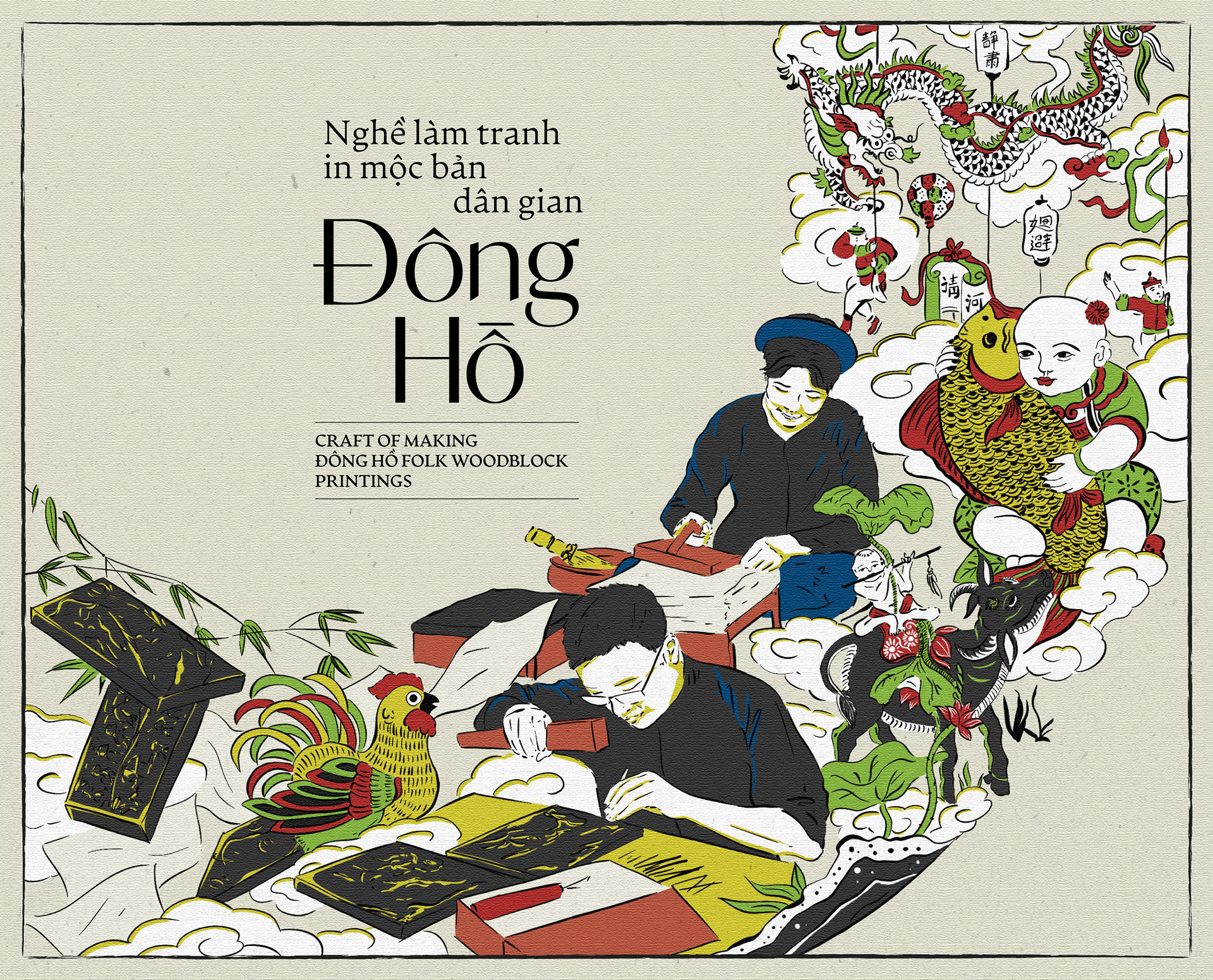
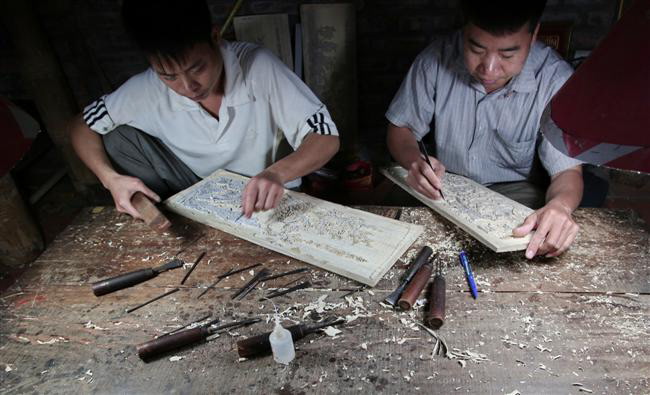
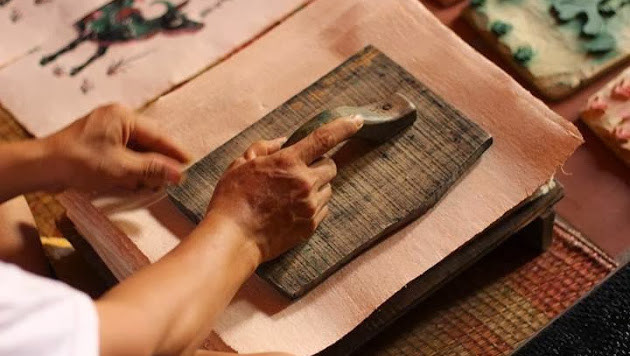
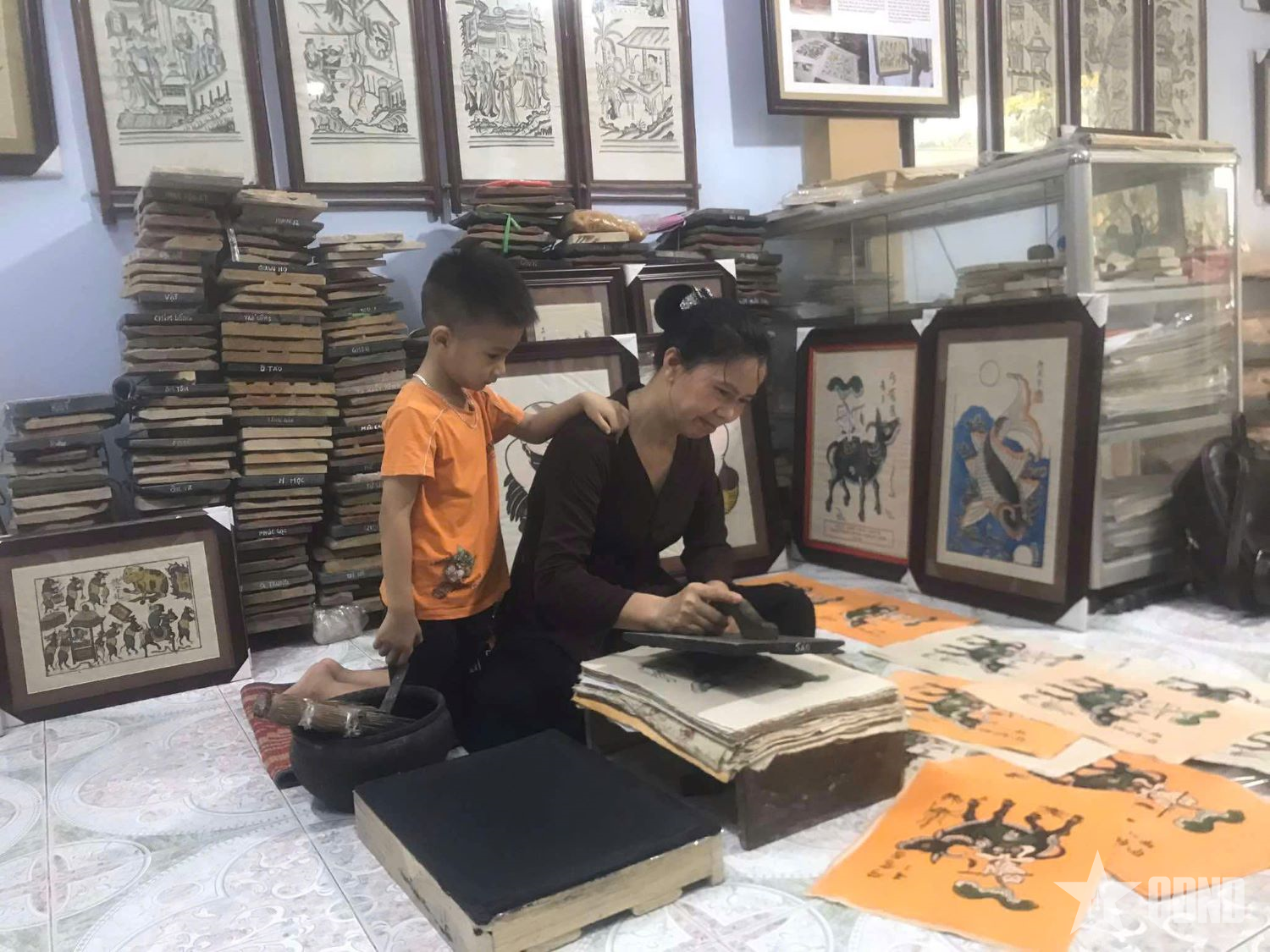
Đông Hồ Folk woodblock printing is the practice of creating colourful prints using carved wooden blocks, observed in a village forming part of Bắc Ninh province. The themes of these prints often include worship, history, daily life and landscapes. The entire process is carried out by hand, from drawing the design with ink on special paper, to carving the image onto woodblocks, preparing natural colour pigments, and printing the image on a special paper coated with scallop powder. Colours are applied in a specific order, with black outlines added in the final step to complete the picture.
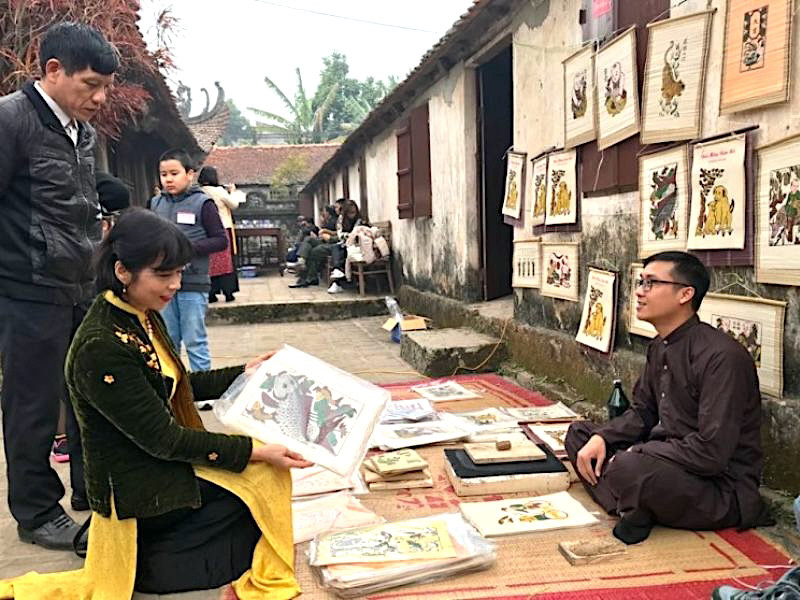
Đông Hồ Folk woodblock printings are closely linked to important festivals such as the Lunar New Year and the Mid-Autumn Festival, as well as to rituals honouring ancestors and deities. Today, a small number of families continue this craft, passing down the related knowledge and skills within their households and to apprentices through hands-on training and close mentorship. Some parts of the process, such as designing images and carving blocks, require dedicated training and are mastered over many years. The woodblocks used for printing are treasured family heirlooms that are handed down through generations.
For more information about my project
Update everyday